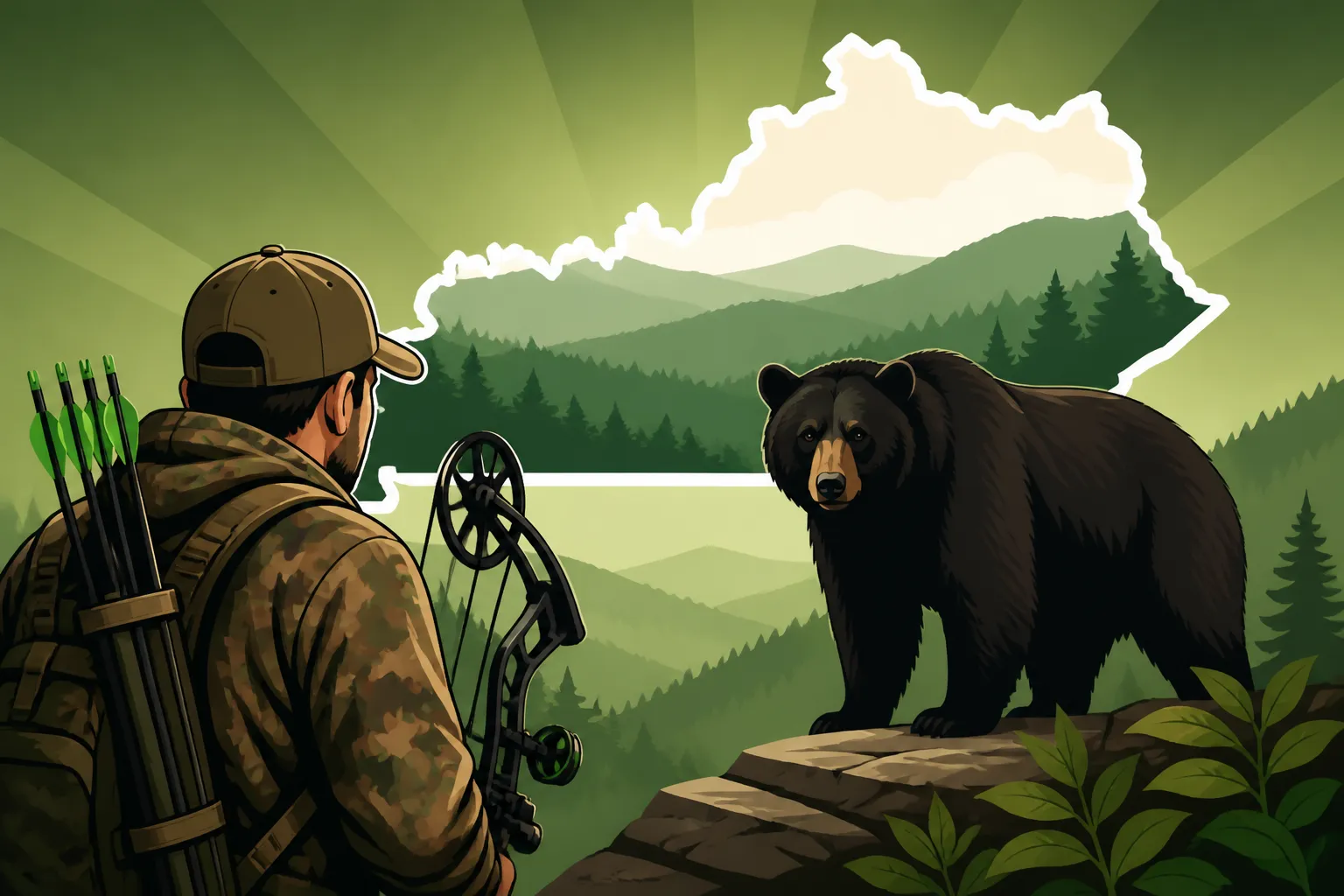
Bear Hunting Southeastern Kentucky
There's a unique thrill, and let's be honest, a fair amount of apprehension, when you think about hunting black bears in Kentucky. For a long time, it was just a dream, a whispered legend of what once was. But now, it's a very real, tangible opportunity in our southeastern mountains, though navigating the specific rules, understanding bear behavior, and knowing where to even begin can feel like an overwhelming task. This comprehensive guide is here to demystify bear hunting in Southeastern Kentucky, walking you through everything from understanding the regulations to tracking bears in rugged terrain.
Understanding Kentucky's Bear Population and Zones
It wasn't that long ago that the idea of hunting black bears in Kentucky seemed like a far-fetched dream. For decades, these magnificent animals were largely absent from the Commonwealth. But thanks to natural expansion from neighboring states and dedicated conservation efforts, Kentucky's black bear population has not only rebounded but is thriving, especially in our rugged southeastern counties. This incredible success story has brought with it the opportunity for a regulated hunting season, a testament to effective wildlife management.
The Return of Black Bears to Kentucky
The return of black bears to Kentucky is truly a conservation triumph. Historically, bears roamed much of our state, but habitat loss and unregulated hunting in the 19th and early 20th centuries led to their extirpation by the mid-1900s. The bears we see today are primarily descendants of populations that expanded from Virginia, West Virginia, and Tennessee into the rich, forested mountains of Eastern Kentucky, particularly areas like the Daniel Boone National Forest. These rugged, remote areas provide the dense cover, diverse mast crops, and plentiful water sources that bears need to thrive. Witnessing their resurgence has been amazing, but it also means hunters need to be prepared for an entirely different kind of challenge than chasing whitetails or turkeys.
It’s crucial to understand that while bear numbers are strong, their distribution is not uniform across the state. They are heavily concentrated in the eastern counties, which is why the hunting regulations are so specific to certain zones. This focus ensures the sustainability of the bear population while providing hunting opportunities. The Kentucky Department of Fish and Wildlife Resources (KDFWR) constantly monitors the population, using data from sightings, harvest numbers, and research projects to inform season structures and quotas. This careful approach is what allows us to enjoy this unique hunting experience today, but it also means hunters have a responsibility to be informed and follow the rules meticulously.
Kentucky's Bear Zone System Explained
To manage the growing bear population effectively and fairly, Kentucky operates under a specific bear zone system. This system dictates where and when you can hunt bears, and it's absolutely critical to understand which zone your intended hunting area falls into. Currently, the primary bear hunting opportunities are concentrated in designated Bear Zones, mainly in the southeastern corner of the state. These zones are established based on bear density, habitat suitability, and overall management goals. You can't just head out anywhere in Kentucky and expect to hunt a bear; you must be within an open zone during the prescribed season.
The KDFWR regularly updates these zones, sometimes expanding them or adjusting boundaries as the bear population continues to grow and expand its range. For instance, the expansion of Bear Zone Three to include counties like Clinton and Wayne was a significant development, opening up new ground for hunters. Before you even think about packing your gear, you must check the current Kentucky hunting guide for the most up-to-date information on the bear zones. Failing to do so could lead to a serious violation. It's not just about knowing which counties are in a zone, but also understanding if there are any public land restrictions within those zones. Remember, the general license and bear permit are only valid within these specific, open areas.
Key Areas in Southeastern Kentucky
When we talk about bear hunting in Southeastern Kentucky, we're primarily looking at the truly rugged, heavily forested landscapes. These are not your gently rolling farm fields; these are steep hollows, dense ridges, and sprawling timber that demand serious physical effort and navigation skills. Key public land areas within the bear zones often include large tracts of the Daniel Boone National Forest, such as the Redbird Ranger District, as well as several Wildlife Management Areas (WMAs). Places like Pine Mountain State Forest Hunting and parts of the Big South Fork Kentucky Side Access are prime bear habitat, offering vast, undeveloped tracts where bears can roam and find ample food sources like acorns, berries, and grubs.
These areas are characterized by challenging terrain, often requiring long hikes away from roads to find less pressured animals. Bears thrive in areas with thick cover and diverse mast-producing trees, so focusing your scouting efforts on oak and hickory ridges, as well as areas with thick rhododendron and mountain laurel thickets, can be highly effective. Remember, these bears are wild and wary, accustomed to navigating dense woods. Understanding the nuances of these specific locales, from local food sources to typical bedding areas, is paramount for success. Many hunters find that utilizing mapping tools like GoHunt, which shows public land boundaries and topography, can be an invaluable asset for identifying potential hunting spots and planning your approach in these vast, wild areas.
Kentucky Bear Season Structure and Regulations
Navigating the regulations for bear hunting in Kentucky can feel a bit like reading a legal document – dense and full of critical details you can't afford to miss. Kentucky's bear season is meticulously managed to ensure a sustainable harvest, which means strict rules on season dates, harvest quotas, and mandatory checking procedures. It’s not just about getting a permit; it’s about understanding the entire framework that protects our growing bear population.
Archery and Firearm Seasons
Kentucky offers distinct seasons for bear hunting, catering to both archery and firearm enthusiasts. The archery season typically opens earlier, often overlapping with the peak of deer archery season. This allows bowhunters a chance to pursue bears in the cooler early fall, often before the deep woods become too difficult to navigate with falling leaves. For those who prefer the rifle, the Kentucky Bear Firearms Season Dates generally occur later in the fall, providing hunters with another opportunity. These seasons are specifically designed to spread out hunting pressure and provide diverse experiences.
It’s important to note that crossbows are typically allowed during the archery season, offering an option for hunters who prefer them. Regardless of your chosen weapon, being intimately familiar with its capabilities and practicing regularly is non-negotiable, especially when hunting an animal as tough as a black bear. Knowing your effective range, understanding shot placement on a Kentucky Black Bear, and practicing quick, accurate shots are paramount. Always verify the exact start and end dates for both archery and firearm seasons in the current KDFWR hunting guide, as these can sometimes shift slightly year to year.
Harvest Quotas and Checking Requirements
One of the most critical aspects of Kentucky bear hunting is the strict harvest quota system. Unlike deer, where bag limits are generous in many zones, bear hunting operates on a statewide quota for both male and female bears. Once these quotas are met, the season for that particular sex, or the entire season, is immediately closed. This means hunters must pay close attention to KDFWR announcements, usually available through their website, social media, and dedicated hotline, which update the remaining quota throughout the season. Imagine driving hours to your spot only to find the season closed before you even step foot in the woods – it happens, and it's heartbreaking.
Upon harvesting a bear, immediate telechecking is mandatory. This is not optional; it’s a legal requirement that helps the KDFWR monitor the harvest in real-time and manage those critical quotas. Beyond the initial telecheck, hunters must also present the bear at a designated KDFWR check station within a specific timeframe for physical inspection. This often involves providing biological samples for research, such as a tooth for aging, and allows wildlife biologists to gather vital data on the population. Understanding these Kentucky Bear Checking Requirements is paramount. Skipping these steps is a serious offense and jeopardizes the future of Kentucky's bear hunting opportunities.
Permits, Licenses, and Hunter Education
Before you even think about setting foot in the bear woods, you need to ensure all your legal ducks are in a row. For Kentucky residents, a valid annual hunting license is the baseline requirement. In addition to that, you must purchase a specific Kentucky Bear Tag Cost. For non-residents, the requirements are similar but involve a nonresident hunting license and the bear permit. It’s crucial to understand that these permits are specific to bears and cannot be substituted with other big game tags.
Furthermore, hunter education is a mandatory requirement for anyone born on or after January 1, 1975, to purchase a Kentucky hunting license. If you haven't completed a hunter education course, you'll need to do so, or hunt under the direct supervision of an authorized, licensed hunter through the apprentice hunter license program. Even if you're exempt from the hunter education requirement, taking a refresher course or an advanced hunting seminar focused on big game can be incredibly beneficial. It reinforces safety protocols, ethical considerations, and often provides insights into wildlife behavior and tracking techniques. Remember, these requirements are in place for safety, conservation, and to ensure everyone entering the field is prepared and responsible.
Essential Bear Hunting Gear for Kentucky Terrain
Hunting black bear in Southeastern Kentucky isn't just another walk in the woods; it's an expedition into some of the Commonwealth's most challenging terrain. Your gear needs to be robust, reliable, and tailored to the task at hand. Skimping on essentials here can turn a memorable hunt into a miserable, or even dangerous, ordeal. Think about what you'd need for a serious backcountry excursion, and then add the specifics for hunting a powerful animal.
Rifles and Ammunition Considerations
When it comes to selecting a rifle for bear hunting in Kentucky, power, accuracy, and bullet construction are your top priorities. Black bears are incredibly tough animals, and a clean, ethical kill is paramount. While Kentucky's regulations for legal firearms for deer hunting are somewhat broad, for bears, you want to be sure you have adequate stopping power. Many seasoned bear hunters opt for calibers like the .30-06 Springfield, .300 Winchester Magnum, .308 Winchester, or the 6.5 Creedmoor, all with a heavy, quality bullet designed for deep penetration and controlled expansion. Avoid light, frangible bullets intended for varmints, as these simply won't get the job done on a bear.
Zeroing your rifle effectively is also critical. Given the typically dense cover and often short-range shots in the mountains, a 100-yard zero is common, providing a relatively flat trajectory out to typical engagement distances. However, be prepared for longer shots if you find yourself on a clear-cut or powerline right-of-way. Beyond caliber, focus on a rifle you can shoot accurately under pressure. A lightweight, durable rifle with a good quality scope that performs well in low light conditions will serve you far better in the deep hollows and shadowed ridges than an overly heavy, high-magnification setup. Remember, a well-placed shot from a slightly smaller caliber is always better than a poorly placed shot from a magnum.
Archery and Crossbow Setups
For the archery hunter, pursuing a black bear with a vertical bow or crossbow adds an extra layer of challenge and intimacy to the hunt. The same principles of power and penetration apply here. For traditional bows, a draw weight of at least 50-60 pounds is generally recommended to ensure adequate arrow speed and kinetic energy. Compound bows and crossbows should also be set up for maximum penetration, using heavy arrows or bolts with durable, fixed-blade broadheads. While mechanical broadheads have their place, many bear hunters prefer fixed blades for their reliability and superior penetration on tough hide and bone.
Accuracy is, of course, paramount. Practice regularly at various distances, focusing on quiet draw cycles and steady aiming. Treestand setups in Daniel Boone National Forest often involve close-range shots, so be comfortable with those critical 20-40 yard distances. Crossbow Versus Vertical Bow in Kentucky is a common debate, and both are effective tools for bear hunting, provided the hunter is proficient. Always ensure your equipment is in top condition, strings and cables are sound, and broadheads are razor-sharp. Bear hides are thick, and their bone structure is robust, so everything needs to be working perfectly for a clean pass-through.
Optics, Navigation, and Safety Equipment
Beyond your weapon, a range of other gear is essential for a safe and successful bear hunt in Kentucky's rugged southeastern mountains. High-quality optics are crucial. While bear hunting often involves close quarters, good binoculars (8×42 or 10×42) are invaluable for spotting bear sign, identifying natural food sources, and cautiously glassing thickets for a glimpse of movement. A rangefinder is also vital for confirming distances before a shot, especially in varied terrain where judging yardage can be deceiving.
Navigation is arguably one of the most important aspects. The Daniel Boone National Forest and other public lands can be disorienting, with countless ridges and hollows that all look similar. A reliable GPS unit or a robust hunting app like GoHunt on your smartphone (with downloaded offline maps!) is non-negotiable. Learn how to use it proficiently before you ever step foot in the woods. Additionally, carry a physical map and compass as a backup. For safety, a good first aid kit for remote Daniel Boone Forest ground is essential. Consider carrying bear spray, especially if still-hunting in thick cover where close encounters could occur. Other crucial items include a sharp knife, paracord, headlamp, fire-starting materials, extra layers of clothing for fluctuating mountain weather, and plenty of water. Packs for a Daniel Boone Forest day hunt should be chosen for comfort and capacity to carry all these essentials, plus anything you might need for field dressing a bear.
Effective Scouting and Pre-Season Preparation
Success in bear hunting, perhaps more than any other big game, hinges on thorough pre-season preparation and diligent scouting. You can't just wander into the woods and expect a bear to present itself. These animals are smart, secretive, and masters of their environment. Understanding their habits, identifying key habitat features, and being in peak physical condition will dramatically increase your odds.
Identifying Bear Sign and Habitat
Bears leave a wealth of sign, but you have to know what to look for. During late summer and early fall, bears are hyperphagic, meaning they are constantly eating to put on weight for winter hibernation. This makes food sources paramount. Look for areas with abundant mast crops like acorns (especially white oak and chestnut oak), hickory nuts, and beechnuts. Evidence of their feeding includes ripped-apart logs and stumps where they've dug for grubs, overturned rocks, and scat containing berries or nut fragments. Scat can vary widely in appearance depending on their diet, from loose and berry-filled to firm and full of nut casings.
Beyond feeding sign, look for tracks in soft soil near water sources, creek bottoms, or muddy logging roads. Unlike deer, bear tracks show distinct toe pads and a much broader, flatter print. Bears also mark trees by rubbing, biting, or clawing them, often as communication or to scent-mark their territory. These "bear trees" can be excellent indicators of travel corridors. Pay attention to thick, secluded areas of dense cover, such as rhododendron thickets or steep, north-facing slopes, as these are common bedding areas where bears feel secure. Finding sign in big Daniel Boone timber requires patience and a keen eye, often meaning you need to cover a lot of ground.
Utilizing Technology for E-Scouting GoHunt
In today's hunting world, digital tools have revolutionized pre-season scouting, and for bear hunting in Kentucky's rugged terrain, they are an absolute game-changer. Platforms like GoHunt allow you to "e-scout" from the comfort of your home, saving you countless miles of walking and helping you pinpoint high-potential areas before you even set foot on the mountain. With GoHunt, you can analyze satellite imagery, topographical maps, and public land boundaries. This allows you to identify key terrain features that bears favor.
Look for remote hollows, dense timber stands adjacent to clear-cuts or mast-producing ridges, and access points that might be less frequented by other hunters. You can mark potential bedding areas, travel corridors (like saddles between ridges or along creek bottoms), and likely feeding zones. Overlaying property lines is crucial to ensure you're always on public land. Even planning your entry routes through standing beans or thickets to minimize disturbance can be done digitally. While e-scouting can't replace boots-on-the-ground, it makes your physical scouting efforts far more efficient and targeted, allowing you to focus on verifying actual bear sign in promising areas rather than blindly hiking.
Physical Fitness and Terrain Familiarization
Let's be blunt: bear hunting in Southeastern Kentucky is not for the faint of heart or the out of shape. The terrain is brutal. We're talking steep, relentless climbs, thick laurel and rhododendron hells, and often walking across rough, uneven ground for miles. If you're planning a trip, start a serious physical conditioning program months in advance. Focus on cardio, leg strength, and endurance. Being able to hike quietly and efficiently for hours over demanding terrain is not just about comfort; it's about success and safety.
Beyond general fitness, familiarizing yourself with the specific terrain you plan to hunt is vital. Use those digital maps to understand elevation changes, locate water sources, and identify potential escape routes for bears. Even small details, like knowing the wind and thermals on a Kentucky ridge, can make or break your hunt. Plan your approach, potential stand locations, and extraction routes ahead of time. The more intimately you know the land, the more confident and effective you'll be. Don’t underestimate the physical demands of dragging a deer out of a steep hollow, let alone a mature black bear. Being prepared mentally and physically for the challenge is just as important as having the right gear.
Hunting Methods and Strategies in Southeastern Kentucky
Hunting black bears requires a thoughtful approach, combining knowledge of bear behavior with effective tactics tailored to the rugged Southeastern Kentucky landscape. There’s no single "best" way to hunt bears; rather, successful hunters adapt their strategies to the specific conditions, terrain, and behavior of the bears they pursue.
Still-Hunting and Spot-and-Stalk Tactics
Still-hunting is a classic, often solitary, method particularly well-suited for the dense, rugged terrain of Southeastern Kentucky. It involves moving slowly and deliberately through the woods, stopping frequently to scan, listen, and glass for any sign of a bear. The key here is patience and stealth. You're not just walking; you're stalking. This method works well when hunting bears over natural mast in the mountains, especially during the peak fall feeding periods. Focus on oak ridges, creek bottoms, and benches where bears might be foraging. The challenge lies in moving quietly enough to surprise a bear before it detects you in the thick undergrowth.
Spot-and-stalk tactics for Pine Mountain bears and similar open areas can also be highly effective. This involves finding a high vantage point to glass large areas, such as clear-cuts, powerline rights-of-way, or open mountain meadows, during prime feeding times (early morning and late evening). Once a bear is spotted, the real work begins: planning a careful, downwind approach to get within shooting range without being detected. This requires an intimate understanding of wind direction, thermals, and the terrain, using every fold and dip of the land for cover. This method is incredibly demanding but can be incredibly rewarding, offering a chance to witness the bear's natural behavior before the shot.
Hunting with Hounds
For many, hunting bears with hounds represents a deep-rooted tradition and an incredibly exciting, physically demanding pursuit. Kentucky offers specific seasons for Running Hounds for Pine Mountain Bears and other designated zones. This method involves using trained dogs to track and tree or bay a bear, allowing hunters to approach for a shot. It's a team effort, often involving multiple hunters, each with specific roles, traversing extremely difficult terrain to keep up with the dogs.
Hound hunting is not for the faint of heart. It requires excellent physical conditioning, specialized gear, and a deep understanding of dog behavior and bear tracking. Hunters typically follow the dogs, often using GPS collars to monitor their location, through steep, rugged country. It’s a fast-paced, high-adrenaline hunt that tests endurance and grit. The regulations around hound hunting are often quite specific, covering everything from dog training periods to the legal number of dogs that can be used. It's crucial to be fully aware of all these rules and to practice good dogmanship and safety when hunting with hounds.
Treestands and Ground Blinds for Bear
While still-hunting and hound hunting are popular, setting up a treestand or ground blind can also be an effective strategy, particularly near consistent food sources or travel corridors. Treestand Setups in Daniel Boone National Forest, for example, can be highly productive if placed carefully along well-used bear trails connecting bedding areas to feeding grounds. Bears, like deer, tend to use predictable routes, especially when moving between secure cover and a preferred food source. Identifying a scrape line along a logging road or a frequently used game trail can be an ideal spot for a stand.
When using a ground blind on Kentucky public land, especially in thicker cover, camouflage and scent control are paramount. Bears have an incredible sense of smell, and any unnatural odor will quickly send them packing. Brushing in a blind on a field edge or along a natural funnel between two hollows can offer excellent concealment. The advantage of a stand or blind is that it allows the hunter to remain still and concealed for long periods, increasing the chances of encountering a bear that is unaware of their presence. However, it requires a good understanding of bear patterns and choosing a location with high probability of bear activity. Make sure your stand or blind complies with all public land regulations regarding placement and removal.
After the Shot: Recovery, Field Dressing, and Meat Care
The moments immediately following the shot are critical in bear hunting. Unlike deer, a wounded bear can be dangerous, and losing an animal is a terrible outcome for any hunter. Proper recovery, field dressing, and meat care are not just about respect for the animal; they're about ensuring safety and preserving your harvest.
Tracking and Recovery Techniques
A black bear is an incredibly tough animal, and even a well-placed shot may not result in an immediate drop. The first rule after the shot is always patience. Give the bear time. If you suspect a good hit, wait at least 30-60 minutes before beginning to track, or even longer if the hit was marginal. This allows the bear to lay down and expire, rather than being pushed further into dense cover. Before you start tracking a deer through Kentucky leaf litter, consider the added challenge and potential danger when dealing with a bear.
When you do begin tracking, move slowly and methodically. Look for blood, broken branches, disturbed leaves, and tracks. Bear blood can be difficult to find in the dense undergrowth, so pay close attention to every small detail. If tracking after dark in Kentucky, use a powerful headlamp or spotlight. If you lose the trail, back out, mark the last confirmed sign, and return with additional help or at first light. Never track a wounded bear alone, especially into thick cover; always have a partner, and make sure you both have a firearm ready. Be prepared for a potentially difficult recovery from a steep hollow, as bears often seek the densest cover when injured.
Field Dressing a Black Bear in the Backcountry
Once you've recovered your bear, the work of field dressing begins immediately. Bears have thick hides and a significant fat layer, which can make field dressing more challenging than with a deer. The first priority is to cool the carcass as quickly as possible to prevent spoilage. This means removing the entrails promptly. Be mindful of the mandatory Kentucky Bear Checking Requirements; often you need to leave evidence of sex attached to the carcass, so check the regulations.
For large bears in remote areas, the gutless method (boning out the meat and skinning the animal without gutting) can be an excellent option, allowing you to pack out the meat and hide in sections. Otherwise, traditional gutting involves opening the body cavity from sternum to pelvis and carefully removing all internal organs. Ensure you have sharp knives, gloves, and perhaps a small bone saw. Handling a bear after the shot requires physical strength and careful attention to hygiene. Remember to cool the meat rapidly, especially if hunting in warmer early fall conditions.
Carcass Care and Telechecking
After field dressing, proper carcass care is paramount, especially if you have a long trek out of the backcountry. Bears can spoil quickly, particularly if there's a lot of fat. Skin the bear as soon as possible, if practical, and get the hide cooled. The meat should be quartered and placed in game bags to keep it clean and allow for airflow. If temperatures are warm, consider packing ice around the meat in a cooler once you're back at your vehicle.
Immediately after the harvest, you are required to telecheck your bear via phone or online. This notifies the KDFWR of your harvest and is a crucial part of the quota management system. Following the telecheck, you must present the bear carcass, or at least the head and hide with proof of sex attached, at a designated KDFWR bear check station. This allows biologists to collect important biological data like a tooth for aging and other measurements. Always follow these steps diligently. Proper care and adherence to regulations ensure your bear meat is excellent and contributes positively to Kentucky’s wildlife management efforts. Butchering a deer at camp or preparing venison is similar, but bears require extra attention due to their size and fat content.
Respecting the Resource and Ethical Hunting Practices
Hunting black bears in Kentucky is a privilege, one that comes with significant responsibility. As hunters, we are not just pursuing game; we are stewards of the land and its wildlife. Upholding ethical hunting practices and minimizing our impact on the environment and other users of public land is crucial for ensuring the continued success and acceptance of bear hunting.
Minimizing Human-Bear Conflict
As bear populations grow and expand, so does the potential for human-bear conflict. As hunters, we play a vital role in educating ourselves and others on how to coexist with bears. This means being meticulously careful with food waste and scent control in the backcountry. Bears have an incredible sense of smell, and leaving food scraps or improperly stored food at campsites can habituate them to human food sources, leading to problems. Bear Encounters Around Eastern Kentucky Cabins are becoming more common as the population expands, so awareness is key.
If you encounter a bear while hunting, observe it from a distance. If it doesn't move off, make noise, make yourself look large, and slowly back away. Never approach a bear, especially a sow with cubs. By being responsible in the field and advocating for smart practices (like using bear-resistant containers when camping), hunters contribute directly to minimizing negative interactions and fostering a positive public perception of bears and bear hunting. Remember, a fed bear is a dead bear, and we, as hunters, have a role in preventing that.
Public Land Etiquette and Responsibility
A significant portion of Kentucky's bear hunting takes place on public lands, such as the Daniel Boone National Forest and various WMAs. Sharing these resources means adhering to a strict code of etiquette and responsibility. This includes packing out everything you pack in (and maybe a little extra trash you find), respecting all signage, and being aware of other users, including hikers, campers, and other hunters. Hunting pressure on Kentucky public land can be high in some areas, so do your part to minimize your footprint.
Always know the specific rules for the public land you are hunting, as regulations can vary. This might include restrictions on camping, vehicle access, or specific hunting methods. For instance, some areas may have rules about leaving treestands overnight. Use onX layers for Kentucky land status to ensure you are on legal hunting ground. By acting as responsible ambassadors for hunting, we help maintain access to these invaluable public resources for future generations. Your behavior reflects on all hunters, so make it count.
Understanding Bear Behavior and Conservation
The more you learn about black bear behavior, the more successful and ethical your hunts will be. Understanding their seasonal movements, denning behavior, and preferred food sources helps you predict where they might be. Recognizing the difference between a sow and a boar, especially when hunting in areas where sow harvest is limited, is critical. Conservation isn't just about adherence to rules; it's about a deeper understanding and respect for the animal and its ecosystem.
The KDFWR and other conservation organizations work tirelessly to monitor and manage Kentucky's black bear population. By purchasing your licenses and permits, you are directly contributing to these efforts. Beyond that, participating in hunter surveys, reporting unusual sightings, or simply being a vigilant observer in the woods all contribute to a broader knowledge base that benefits conservation. Hunting black bears is a profound experience, connecting us to a wild Kentucky that many thought was lost forever. Embrace that connection with respect, knowledge, and an unwavering commitment to ethical practice.
Disclaimer
The information provided in this guide is for informational purposes only and is not a substitute for official regulations. Hunting laws and regulations in Kentucky are subject to change. Always consult the current Kentucky Department of Fish and Wildlife Resources (KDFWR) hunting guide and any applicable federal regulations before engaging in any hunting activities. It is the hunter's responsibility to know and obey all applicable laws.