Asking a Kentucky Farmer for Permission
Finding good hunting ground can feel like a never-ending quest in Kentucky, especially if public land is feeling a bit crowded or just isn't holding the deer you're after. For many of us, the dream of a quiet stand on private property, maybe even a spot that hasn't been pressured, is what keeps us going. The good news is, a lot of excellent hunting opportunities lie on private farm ground, but cracking that code means learning how to respectfully and effectively ask a Kentucky farmer for permission. This guide will walk you through the process, from understanding their viewpoint to making a successful pitch and building a lasting relationship.
Understanding the Farmer's Perspective
Before you even think about knocking on a door, put yourself in the farmer's boots. These folks often work tirelessly, pouring their lives into their land, livestock, and crops. Their property isn't just a place; it's their livelihood, their home, and a source of deep personal pride. They've likely dealt with issues before, from disrespectful hunters leaving gates open, littering, or driving off-road, to accidental damage or perceived safety risks. These past experiences, good or bad, heavily influence whether they'll even consider giving a stranger permission.
Their primary concerns are usually straightforward: safety for their family and livestock, protection of their crops and equipment, and simply not wanting to be bothered by someone who will cause more problems than they're worth. Many farmers have livestock like cattle, horses, or even sheep, and a loose dog or a hunter wandering too close could spook animals, cause fences to break, or worse. The last thing they want is a liability issue on their hands or the stress of having to chase after their herd because someone wasn't careful. They might also have specific areas where they don't want hunting due to proximity to their home, a specific pasture, or a field planted with a sensitive crop.
Beyond the practical, there's a strong element of trust. Farmers tend to be community-minded people, but they're also rightly cautious about who they allow onto their private property. They're looking for someone who respects their rules, their land, and their way of life. They might be wondering if you'll hunt responsibly, harvest ethically, and follow through on any promises you make. Approaching them with genuine respect for their property and an understanding of their concerns is the first, and arguably most important, step in even getting a foot in the door.
The Art of the Ask: Approaching a Landowner
When you're ready to make the ask, timing and presentation are everything. Avoid showing up during busy planting or harvest seasons, or when they're obviously preoccupied with chores. A relaxed Sunday afternoon or an evening when they're likely done with the day's main work can be ideal. Dress respectfully, not in your full camo hunting gear, but clean and presentable – like you're going to meet someone important. Your vehicle should also be clean; a truck covered in mud might send the wrong message.
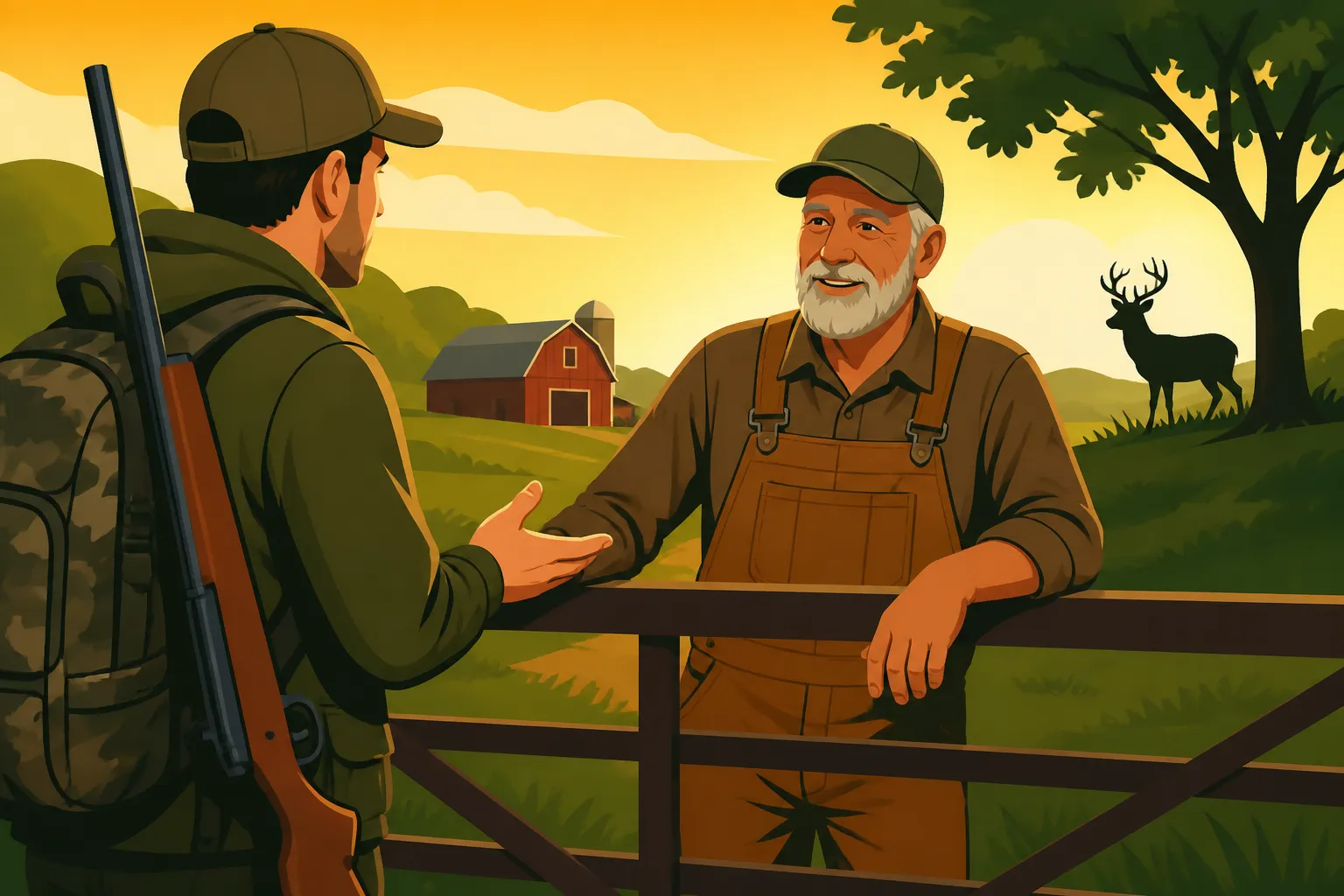
When you approach, be friendly, introduce yourself clearly, and state your purpose upfront. Don't beat around the bush. Something like, "Good afternoon, my name is [Your Name], and I was wondering if you might ever allow someone to hunt deer on your property?" is a good start. Be prepared to answer questions about your experience, how many people would be hunting, what weapon you'd use (bow, muzzleloader, shotgun, rifle), and your understanding of local regulations. It's often helpful to mention you've done some scouting, perhaps using tools like onX Hunt or GoHunt to look at the property boundaries and terrain, which shows initiative and seriousness. Being able to pull up an aerial map and point to an area you're interested in can be very impressive.
Critically, don't just ask for permission to hunt. Offer something in return, even if it's just your help. Many hunters find success by offering to help with chores like mending fences, clearing brush, or even just keeping an eye on things. This demonstrates that you're not just taking, but willing to contribute to the well-being of their land. Even if they don't take you up on it, the offer itself builds goodwill. Remember that a "no" isn't a "never," and a polite "no" might become a "yes" next season if you've left a good impression. Sometimes, they might not have any land available but could point you to a neighbor who does. You might also want to review Knocking on Doors in Western Kentucky Farm Country for more specific regional tips.
Building and Maintaining the Relationship
Let's say you've got the green light – congratulations! The hard work isn't over; in fact, it's just beginning. Maintaining that permission, and potentially expanding it for future seasons, hinges entirely on your behavior. First and foremost, stick to every single rule the landowner sets, no matter how minor. If they say no driving in a certain field, don't do it. If they ask you to only hunt a specific woodlot, don't wander into another. Your word is your bond, and trust is easily broken.
Communication is key. Let them know when you plan to hunt, and when you're leaving. If you harvest an animal, inform them. If you see something out of place—a downed fence, unusual tracks, or anything suspicious—report it to them. You become an extra set of eyes on their property. After the season, a thank-you note or a small gift (a gift certificate, a homemade treat, or some of the venison you harvested if they enjoy wild game) goes a long way. This isn't bribery; it's genuine appreciation for a privilege they've extended. Many successful hunters even offer to help with chores even when it's not hunting season, truly becoming an asset rather than just a guest. Think about how much effort goes into Food Plots on Kentucky Private Land and how you might assist with similar upkeep tasks.
Always respect their property as if it were your own, or even more so. Leave no trash, close all gates, avoid damaging crops or fences, and never harass livestock. If you bring a dog for small game hunting, ensure it's well-behaved and under strict control at all times. Remember, you're not just representing yourself, but all hunters. A positive experience with you might open the door for others, while a negative one can shut it for good. The relationship you build can truly be a friendship, rooted in mutual respect and a shared love for the land.
Important Considerations Before and After the Hunt
Getting permission is fantastic, but there are a few other critical details you absolutely need to nail down. First, understand the legal aspects of Kentucky Trespass and Permission Law. While verbal permission is often sufficient, many hunters find it beneficial to get written permission, especially if the arrangement is long-term or involves multiple hunters. This clarity protects both you and the landowner. You can find simple templates online, or just jot down the key agreements, including dates, areas, and permitted activities.
Secondly, clarify the specific rules of the property. Is there a designated parking area? Are there any restricted zones you absolutely cannot enter? Can you use an ATV to retrieve game, or is it strictly walking only? What about trail cameras? Some landowners might have strong opinions on these details. It’s also wise to discuss how to handle situations like Retrieving Game From Private Land in Kentucky if an animal runs onto neighboring property. You'll need to know who to contact, or if the landowner is willing to help facilitate that. Understanding Kentucky Posted Land Rules is also vital, as different signs can imply different levels of permission or restriction.
Finally, always be mindful of safety. Carry a first-aid kit, let someone know where you'll be and when you expect to return, and follow all firearm safety rules. Hunting on private land can sometimes feel more relaxed than public land, but the same safety precautions apply, especially if the landowner or their family might also be on the property. Being a responsible, safe, and respectful hunter ensures that you not only get to enjoy your time in the field but also secure future hunting opportunities and foster good relationships within the community.
Key Do's and Don'ts for Seeking Permission
Navigating the nuances of asking for hunting permission can be tricky. Here's a quick reference table to help guide your approach and ensure you leave a positive impression, setting yourself up for success and building lasting relationships.
| Do's | Don'ts |
|---|---|
| Do scout the property from a distance first (use apps like onX Hunt or GoHunt). | Don't show up unannounced in full camo, looking like you're about to hunt right then. |
| Do approach during non-busy times, like late afternoon or a weekend. | Don't visit during planting or harvest season, or when they're actively working. |
| Do dress respectfully and keep your vehicle clean. | Don't bring uninvited friends or family for the initial ask. |
| Do introduce yourself clearly and state your purpose directly. | Don't get defensive if they say no, or try to argue with them. |
| Do offer to help with chores or provide a service. | Don't promise things you can't deliver or exaggerate your hunting prowess. |
| Do have references ready if they ask. | Don't ask about their specific hunting rules until permission is granted. |
| Do ask about specific property boundaries and any restricted areas. | Don't assume permission for one season means permission for life. |
| Do get written permission if possible, for clarity for both parties. | Don't leave trash, litter, or drive off designated paths. |
| Do communicate your hunting schedule and harvest successes. | Don't harass livestock or leave gates open. |
| Do follow through on any promises or offers of help you made. | Don't overstay your welcome or become a nuisance. |
| Do express gratitude with a thank-you note or small gift. | Don't bring additional hunters without explicit landowner approval. |
Disclaimer
This article is for general informational purposes only and does not constitute professional advice. Laws, prices and regulations vary by location and change over time. Consult a qualified professional for guidance on your specific situation.