Red Wolf History in Kentucky
It’s a strange thing to contemplate a wild Kentucky that once held a top predator we no longer see. Many of us are out in the woods chasing deer, turkeys, or even elk, and we’re keenly aware of the coyotes, bobcats, and even black bears that call our forests home today. But a much larger, more elusive shadow once roamed these hills and valleys: the red wolf. This guide delves into the forgotten history of the red wolf in Kentucky, exploring where they roamed, why they vanished, and what their absence means for the wild places we cherish and hunt today.
The Ghost of Kentucky's Forests: Understanding the Red Wolf
For many hunters, the idea of a wolf in Kentucky might sound like something out of a history book or a distant wilderness. Yet, these incredible animals were once a vital part of our state's rich ecosystem. They weren’t the massive gray wolves of the far north or west, but a unique species adapted to the deep woods and swamps of the American Southeast. Understanding who they were helps us grasp the profound loss of their extirpation.
What Was the Red Wolf?
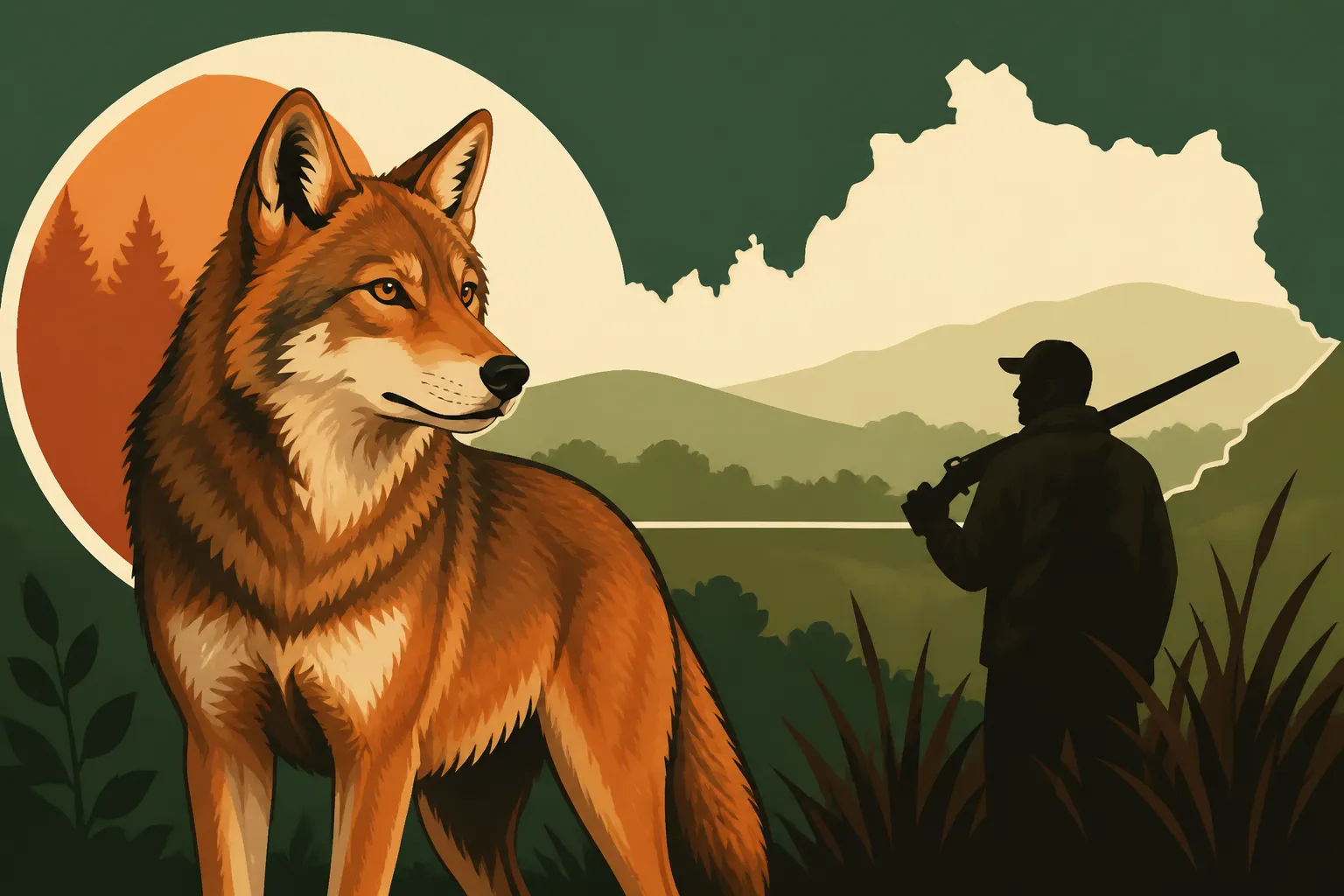
The red wolf ( Canis rufus) is often described as an intermediate species, falling somewhere between a coyote and a gray wolf in size and appearance. They typically had a reddish-tawny coat, especially around their ears, neck, and legs, giving them their distinctive name. They were leaner and lankier than their northern gray wolf cousins, with longer legs and a more refined skull structure. An adult red wolf might weigh anywhere from 45 to 80 pounds, standing about 26 inches tall at the shoulder.
Their behavior also set them apart. Red wolves were primarily pack hunters, though their packs were generally smaller than those of gray wolves, often consisting of a breeding pair and their offspring. They were incredibly intelligent and adaptable predators, primarily preying on medium-sized ungulates like deer, as well as smaller mammals such as rabbits, raccoons, and even wild turkeys. Their presence helped keep prey populations healthy by culling the weak and sick, preventing overpopulation, and maintaining the ecological balance of the forest. The sophisticated hunting strategies of a red wolf pack would have been a truly remarkable sight to behold in the Kentucky wilderness.
Historical Range and Presence in Kentucky
The historical range of the red wolf stretched across the southeastern United States, from Pennsylvania down to Florida and westward into Texas. Kentucky, with its vast tracts of hardwood forests, winding rivers, and diverse game populations, would have provided ideal habitat. While definitive archeological evidence can be challenging to pinpoint specifically to red wolves versus other canids, historical accounts from early settlers, naturalists, and even indigenous peoples strongly suggest their widespread presence throughout the state.
Imagine the wilderness that greeted the first European settlers in Kentucky. Towering old-growth forests, teeming with white-tailed deer, buffalo, and elk, would have been prime hunting grounds for the red wolf. Their territories likely spanned across the entire state, from the rugged hills of what would become Daniel Boone National Forest Hunting to the rich bottomlands of Western Kentucky. Early records often mention "wolves" without distinguishing species, but given Kentucky's geographical location within the known historical range, it's widely accepted that red wolves were the predominant, if not sole, wolf species here. These predators would have played a critical role in shaping the game species that hunters now pursue across Kentucky.
The Decline and Extirpation: Why Kentucky Lost Its Red Wolves
The story of the red wolf's disappearance from Kentucky is a somber one, mirroring the fate of many native predators across the continent. It wasn't a single event but a combination of relentless pressures that ultimately pushed them out of existence in the wild here. Understanding these historical forces offers valuable insights into the fragility of ecosystems and the long-term consequences of human actions.
Habitat Loss and Human Encroachment
As pioneer settlements blossomed into towns and cities, Kentucky's landscape underwent a dramatic transformation. Forests were cleared for agriculture, timber, and fuel. Swamps were drained, and rivers were dammed or altered. This rapid habitat destruction was arguably the most significant blow to the red wolf. These animals needed large, interconnected tracts of wilderness to thrive, to hunt, and to avoid human conflict. As their traditional hunting grounds fragmented, their ability to find food, establish territories, and reproduce successfully diminished.
Imagine the dense, unbroken timber that once covered much of the state; it's a stark contrast to the patchwork of fields and woodlots we see today. This profound loss of expansive, undisturbed habitat directly impacted the red wolf's ability to survive. Their preferred cover and denning sites simply disappeared, pushing them into smaller, more isolated pockets where survival became increasingly precarious. This environmental shift fundamentally altered the conditions for all wildlife, profoundly influencing the Kentucky deer herd size and other game populations.
Predator Eradication Programs
Fear and economic concerns drove intense campaigns to eradicate predators across Kentucky and the rest of the nation. Red wolves, like other predators such as mountain lions and bears, were perceived as a direct threat to livestock, especially cattle, sheep, and hogs, which were vital to the subsistence economy of early settlers. They were also blamed for declines in deer and other game animals, despite their role in maintaining healthy prey populations.
Government-sponsored bounty programs incentivized their killing. Hunters and trappers were paid for wolf pelts and scalps, leading to relentless pressure on the species. This systematic extermination, often employing cruel methods, was incredibly effective. There was little understanding or appreciation for the ecological role these animals played; they were simply seen as pests to be eliminated. This era of predator control effectively sealed the red wolf's fate in Kentucky, driving them towards local extinction long before modern conservation ethics began to take hold. It's a stark reminder of how public perception can drastically impact wildlife populations.
Hybridization with Coyotes
Perhaps the final, insidious blow to the red wolf was the increasing encroachment of coyotes. As red wolf populations dwindled and their habitat fragmented, they struggled to find purebred mates. Simultaneously, coyotes, an adaptable species expanding eastward, moved into the red wolf's former territories. With fewer red wolves, and increasing coyote populations, interbreeding became more common. This phenomenon, known as genetic swamping, diluted the red wolf gene pool.
Over time, this meant that what might have once been considered a "red wolf" was actually a red wolf-coyote hybrid, or a subsequent generation with even less red wolf genetic material. By the mid-20th century, the last remaining "wild" red wolves were often genetically compromised. This made distinguishing pure red wolves incredibly difficult and further complicated any potential conservation efforts. It's a complex and sad chapter in the history of North American canids, highlighting how even the best intentions can be undermined by fundamental biological pressures once a species is pushed to the brink.
Echoes in the Ecosystem: The Impact of Their Absence
The absence of a top predator like the red wolf creates a ripple effect throughout an ecosystem, a phenomenon known as a trophic cascade. While their extirpation happened long ago, the lasting impacts are still relevant to the wild places and game species we interact with today. Understanding these shifts helps us appreciate the intricate web of life.
Changes in Deer and Other Prey Populations
One of the most significant consequences of losing the red wolf was the removal of a major natural control on deer populations. While deer numbers fluctuate due to many factors – habitat, hunting pressure, disease – the sustained presence of predators like wolves keeps herds vigilant, dispersed, and healthy by targeting the old, sick, or weak. Without this pressure, deer behavior can change, and in some areas, populations can grow unchecked.
While Kentucky now boasts a thriving deer population, much of that management falls to human hunters. The landscape we hunt today, with its abundant white-tailed deer, is one largely shaped by the absence of its historical primary predator. The patterns of deer movement, their bedding areas, and their overall population dynamics are different than they would have been with red wolves patrolling the forests. It’s a compelling thought for anyone out Still-Hunting Eastern Kentucky Ridges or considering the wider impact of predators.
Shifting Predator Dynamics
The vacancy left by the red wolf didn't stay empty for long. As red wolves disappeared, coyotes expanded their range dramatically across Kentucky, essentially filling the ecological niche of a medium-sized predator. Coyotes are incredibly adaptable and can thrive in diverse habitats, from deep wilderness to suburban fringes. However, they typically don't exert the same level of top-down pressure on large ungulates as larger wolf species once did.
While coyotes certainly prey on deer, particularly fawns, and compete with other predators, the shift represents a change in the overall predator dynamic. We now have a landscape where coyotes are the most widespread medium-to-large predator, a reality discussed further in articles about Coyotes and Predators in Kentucky. This has implications for other mesopredators like the Kentucky's Recovering Bobcat Population, creating new competitive pressures and affecting the health of various small game populations. The ecosystem adjusted, but not necessarily in a way that fully replicated the balance provided by the red wolf.
Lessons for Modern Wildlife Management
The story of the red wolf in Kentucky offers powerful lessons for contemporary wildlife management. It underscores the critical importance of understanding ecological roles, appreciating the interconnectedness of species, and the long-term consequences of human-wildlife conflict. Conservation efforts today often focus on preserving habitat and managing populations with a holistic view, informed by past mistakes.
For instance, the lessons learned from the red wolf's decline inform how we manage other apex predators like Kentucky's Black Bear Population, ensuring their habitats are protected and their populations are healthy. We understand now that predators are not just "competition" for hunters but integral components of a robust ecosystem. Modern wildlife agencies, like the Kentucky Department of Fish and Wildlife Resources, work to balance human interests with ecological health, a far cry from the eradication policies of the past. The meticulous approach to understanding current game populations, which tools like GoHunt help modern hunters visualize, stands in stark contrast to the historical lack of data that accompanied the red wolf's demise.
Distinguishing Red Wolves from Coyotes and the Eastern Wolf Debate
The physical and genetic distinctions between various canid species in North America have become a hot topic among biologists and conservationists. When we talk about the historical presence of red wolves in Kentucky, it’s important to acknowledge the complexities, particularly concerning coyotes and the ongoing debate surrounding the "Eastern wolf." These discussions are critical for both historical accuracy and future conservation strategies.
Physical Differences and Identification Challenges
Visually, distinguishing a pure red wolf from a large coyote or a hybrid can be incredibly difficult, even for trained experts. Red wolves tend to be larger than coyotes, with longer legs, bigger feet, and a more slender build. Their fur, as the name suggests, often has a reddish tint, particularly on the muzzle, ears, and legs, though coloration can vary widely. Coyotes are generally smaller, with a grizzled gray or brownish coat, and a more pointed muzzle. However, with centuries of hybridization, these distinctions have blurred significantly.
Imagine seeing a canid dart through thick cover in a Kentucky hollow. Is it a large coyote? A coyote-red wolf hybrid? Without genetic testing or extensive observation, it's nearly impossible to say for certain. This identification challenge wasn't just a modern problem; early settlers likely lumped all canids together as "wolves," further obscuring the true extent of the red wolf's range and population before its decline. This ambiguity makes historical accounts even more challenging to interpret precisely when trying to understand Red Wolf History in Kentucky.
The Eastern Wolf Controversy
Adding another layer of complexity is the "Eastern wolf" ( Canis lycaon) debate, primarily centered in the Great Lakes region and parts of Canada. Some scientists argue that the Eastern wolf is a distinct species, while others consider it a gray wolf-coyote hybrid, or a subspecies of the gray wolf. What does this have to do with Kentucky? The Eastern wolf's historical range might have overlapped with the northern edges of the red wolf's range, and some theories even suggest that red wolves themselves might have ancient Eastern wolf genetic components.
This scientific discussion highlights the incredibly complex evolutionary history of North American canids. It suggests that what we historically perceived as neat, distinct species might have been much more fluid, with interbreeding and gene flow occurring naturally long before human intervention. For Kentucky, this means that while red wolves were certainly present, the exact genetic lineage of all "wolves" in the state at various points in history remains a subject of academic fascinating. It makes the idea of "pure" anything in the wild a bit more complicated, a valuable insight for any student of ecology or hunting.
The Role of Genetics in Modern Conservation
Today, genetic analysis is an indispensable tool in wildlife conservation. For species like the red wolf, where only a remnant population survived in captivity, genetics allowed scientists to identify the last pure individuals and embark on a captive breeding and reintroduction program. This meticulous genetic work is what helped confirm the red wolf as a distinct species and continues to guide efforts to maintain its genetic integrity.
Without modern genetic tools, it would have been impossible to differentiate pure red wolves from their coyote relatives, making any conservation efforts futile. This cutting-edge science provides hope for species on the brink, allowing us to understand true lineages and manage populations with precision. While the wild red wolf no longer roams Kentucky, the advanced methods used to study its history and potential future are a testament to how far wildlife science has come since the days of simple bounty programs.
Remembering a Lost Icon: Red Wolves and Kentucky's Wild Heritage
The story of the red wolf in Kentucky is more than just a historical footnote; it’s a powerful narrative about our state’s wild heritage, the impact of human development, and the enduring lessons for conservation. Though we cannot hunt them today—they are considered Game You Cannot Hunt in Kentucky—their memory serves as a reminder of what was lost and what we must strive to protect.
The Importance of Native Predators
Native predators like the red wolf are crucial for healthy ecosystems. They play a vital role in natural selection, ensuring that only the fittest prey animals survive and reproduce. This keeps herd numbers in balance with available habitat, prevents overgrazing, and helps control the spread of disease. Their absence can lead to unforeseen consequences, sometimes referred to as "mesopredator release," where smaller predators (like coyotes) can proliferate, potentially impacting smaller game species in different ways than a top predator.
Thinking about the red wolf's ecological role helps us appreciate the complexity of the environments we recreate in and hunt. Every species, from the tiniest insect to the largest predator, has a part to play. When a piece goes missing, the entire system shifts. This deeper understanding enriches our perspective as hunters and conservationists, encouraging us to think beyond individual game species and consider the broader health of the Kentucky landscape.
What We Can Learn from Their Story
The extirpation of the red wolf from Kentucky is a stark reminder of the irreversible consequences of unchecked habitat destruction and species persecution. It teaches us the importance of foresight in land use planning and the need for science-based wildlife management rather than fear-driven eradication. While we can’t bring back the wild red wolves to Kentucky's forests, we can apply these lessons to contemporary challenges.
For current hunters, understanding this history can deepen your connection to the land. When you're Scouting Kentucky Public Land Before Season, considering historical wildlife movements and the changes over time adds another layer to your appreciation of the outdoors. It reinforces the value of preserving existing wild spaces and habitats for all species, whether they are game animals or not. It reminds us that our responsibilities as stewards of the land extend to all creatures, seen and unseen, and to the health of the entire ecosystem. While securing a Kentucky Hunting Licenses and What They Cost allows us to participate in the tradition, understanding this rich history helps us appreciate the long journey of conservation.
Disclaimer
This article is for general informational purposes only and does not constitute professional advice. Laws, prices and regulations vary by location and change over time. Consult a qualified professional for guidance on your specific situation.