National Forest Camping Near Your Stand
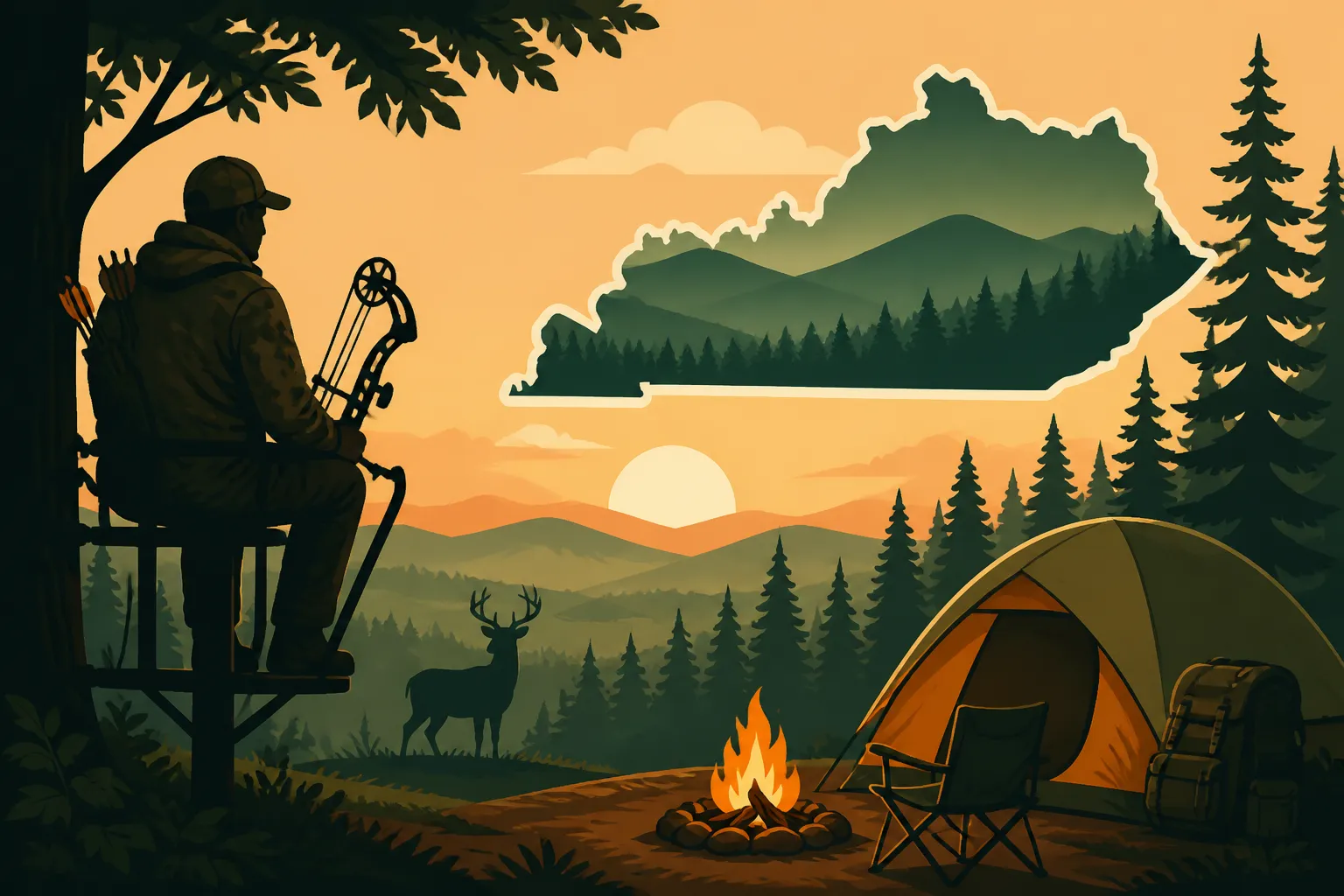
We’ve all been there: waking up hours before first light, chugging coffee, and then embarking on what feels like an Olympic-level hike just to reach your treestand or ground blind before legal shooting hours. By the time you settle in, you’re often winded, sweating, and wondering if you spooked every deer within a half-mile radius. What if you could roll out of your sleeping bag a mere stone's throw from your setup, minimizing disturbance and maximizing your quiet time in the woods? This guide will dive deep into the world of camping near your hunting stand in Kentucky's national forests, making those pre-dawn treks a thing of the past.
The Undeniable Advantage of Camping Near Your Stand
Let's be real, hunting can be exhausting, and those long walks in the dark are often the worst part, especially when you're loaded down with gear. When you're able to set up a small, minimalist camp close to your hunting stand, you're not just saving time and energy; you're fundamentally changing your hunting experience for the better. This strategy is particularly powerful in vast public lands like the Daniel Boone National Forest, where prime hunting spots might be a significant trek from established campgrounds or parking areas.
Imagine waking up to the sounds of the forest stirring around you, not the rumble of your truck or the distant hum of traffic. You can be in your stand, settled and scent-free, well before the first hint of daylight paints the eastern sky. This allows you to observe the woods as they truly wake up, catching those subtle movements or faint rustlings that an hour-later arrival might miss. The deer are already moving, often oblivious to your presence because you've been there, quietly blending in, since before they knew it. It’s an immersion that few other hunting methods can offer. Furthermore, if you're like me, prone to a little "analysis paralysis" on location, being able to glass a potential ridge or hollow from your tent the evening before, and then simply walk 50 yards to your stand, can eliminate a lot of guesswork and last-minute adjustments. This method also significantly reduces your scent trail and noise signature, as your approach is minimal and purposeful.
Navigating National Forest Camping Regulations in Kentucky
Before you start dreaming of a starry night next to your favorite oak, it’s absolutely crucial to understand the rules and regulations for camping within Kentucky’s national forests. The Daniel Boone National Forest, for example, is managed by the U.S. Forest Service, and while generally welcoming to dispersed camping, there are specific guidelines you must follow. These aren't just suggestions; they're in place to protect the forest, other users, and to keep you safe and legal. Always remember that national forests are multi-use areas, meaning you might encounter hikers, horseback riders, or other hunters. Respecting the rules ensures everyone can enjoy these wild spaces.
Typically, dispersed camping is allowed throughout the national forest unless specifically prohibited by signs or posted orders. However, there are common-sense and regulatory restrictions. You often need to be a certain distance from developed recreation areas, paved roads, and water sources. For instance, staying at least 200 feet from streams, lakes, and trails is a good general rule of thumb to protect water quality and provide solitude for others. Open fires are usually permitted in designated areas or with proper care in dispersed sites, but always check current fire restrictions, especially during dry periods. You don't want to be the reason a hunting season gets cut short due to a wildfire. Pack out everything you pack in – leaving no trace is paramount. This includes all trash, food scraps, and even human waste should be properly buried away from water sources. Failing to follow these rules can result in fines and, more importantly, damage the very resource we all enjoy. For detailed information, always consult the official Daniel Boone National Forest website or contact a local ranger district office before heading out. They can provide specific maps and any temporary restrictions you might not be aware of. You might also want to consult Camping Rules on Daniel Boone Forest Land for more details.
Selecting Your Stealthy Campsite
Choosing the right spot for your close-to-stand camp is a strategic decision that blends hunting acumen with Leave No Trace principles. It's not just about finding flat ground; it's about minimizing your impact, staying hidden, and ensuring safety.
First, consider your hunting spot. Is it a ridge-top saddle where deer funnel through? A creek bottom with heavy sign? Or a field edge bordering thick cover? Your campsite needs to be close enough to be convenient, but far enough away not to spook game or compromise your stand's effectiveness. A general guideline is to be at least 100-200 yards from your primary stand location, downwind if possible, and out of sight from any likely game trails. You want to be able to hear movement in the morning but not have deer stumble upon your tent. Using tools like onX Hunt is an absolute game-changer here. Before you even set foot in the woods, you can use satellite imagery to identify potential flat spots, areas with dense cover for concealment, and verify property boundaries. You can drop pins for your stand, potential camp spots, and even mark likely game trails or water sources. This pre-scouting with technology saves invaluable time and effort once you're on the ground. For more on this, check out Reading Aerial Photos for Eastern Kentucky Deer.
Secondly, think about natural concealment and human impact. Look for natural depressions, thickets of evergreens, or areas where fallen timber can provide a natural screen. You want to be invisible to both wildlife and other hunters. Avoid setting up in a high-traffic area or right on a well-used trail. Pay attention to the ground cover – you want a spot that won't make a lot of noise when you move around at night or in the early morning. Dry leaves or crunchy debris are your enemy. When scouting, consider your entry and exit routes to the camp and then to your stand. These paths should be as quiet and concealed as possible. Consider the wind and thermals. Just like with your stand placement, understanding Wind and Thermals on a Kentucky Ridge is crucial for your camp. You don't want your scent blowing directly into your hunting area, even when you're sleeping. You also want a safe spot that is not prone to falling limbs or flash floods, especially if you're camping near creek beds in heavy rains.
Finally, safety and comfort cannot be overlooked. Even when minimalist, a safe camp is a successful camp. Ensure your tent is pitched on level ground to avoid rolling downhill in the night and away from dead trees or "widowmakers." Clear any flammable debris from around your tent, especially if you plan to have a small, legal cooking fire. Carry a basic first aid kit – you’re often in remote areas. First Aid Kits for Remote Daniel Boone Forest Ground can cover the basics.
Essential Gear for a Stand-Side Camp
Going minimalist doesn't mean sacrificing preparedness, especially when you're combining camping and hunting. The goal is to be light, quiet, and effective. Every item in your pack should serve a purpose, often multiple purposes.
For shelter, think small and functional. A lightweight, one-person tent or bivy sack is ideal. Hammock setups, especially with an integrated bug net and rain fly, can also be excellent if you have suitable trees and prefer to sleep off the ground. These options are much smaller and lighter than traditional camping tents, making it easier to pack them in silently. Good insulation is key; even in early fall, Kentucky nights can get surprisingly chilly, and a proper sleeping bag rated for the expected low temperatures is non-negotiable. A lightweight sleeping pad will not only add comfort but also crucial insulation from the cold ground.
| Gear Category | Recommended Item | Why It's Essential |
|---|---|---|
| Shelter | Lightweight 1-person tent/bivy/hammock | Minimal bulk, quick setup, good concealment |
| Sleeping System | Sleeping bag (appropriate temp) | Warmth, critical for comfort and safety |
| Insulated sleeping pad | Prevents heat loss to the ground, adds comfort | |
| Cooking/Hydration | Small backpacking stove & fuel | Quiet, efficient for hot drinks/meals |
| Lightweight pot/cup | Versatile for cooking and drinking | |
| Water filter/purifier | Access to safe drinking water from natural sources | |
| Navigation/Safety | GPS device or phone with onX Hunt | Crucial for finding stand/camp, avoiding trespass |
| Headlamp with red light | Hands-free illumination, preserves night vision | |
| First aid kit | Essential for emergencies in remote areas | |
| Whistle/signaling device | Attract attention if lost or in distress | |
| Hunting Specifics | Game bags | Keeps meat clean and cool if you harvest |
| Field dressing knife | Essential tool for processing game | |
| Small hand saw (optional) | Useful for clearing shooting lanes or larger game |
For cooking, a small backpacking stove is a must. It’s quiet, efficient, and allows you to enjoy a hot meal or a cup of coffee without the smoke and glow of a campfire, which could give away your position. Don't forget a lightweight pot or cup and a reliable way to filter or purify water from natural sources – carrying all your water can be prohibitive. Safety gear, beyond the first aid kit, includes a quality headlamp with a red light setting to preserve your night vision and minimize disturbance. Your phone with a reliable mapping app like onX Hunt (download maps for offline use!) or a dedicated GPS unit is also critical for navigation, especially walking to your stand in the dark. Always carry a compass and know how to use it, too, as a backup. For more on what to carry on your back, read Packs for a Daniel Boone Forest Day Hunt. And don't forget your Blaze Orange Requirements if you're in a season where it's mandatory, even if you're just walking to your stand.
This approach of camping near your stand requires a bit more planning and a willingness to embrace a truly minimalist setup, but the rewards are immeasurable. The quiet, undisturbed mornings, the immediate access to your prime hunting spot, and the deep immersion in the Kentucky wilderness make it an experience every hunter should try.
Disclaimer
This article is for general informational purposes only and does not constitute professional advice. Laws, prices and regulations vary by location and change over time. Consult a qualified professional for guidance on your specific situation.