Kentucky Buck Age Structure
Kentucky buck age structure explains deer population distributions, helping hunters understand herd health, deer movements, and mature buck encounters.
Know what you’re after.
Big game, small game, upland birds, and waterfowl — identification, behavior, rut and migration timing, and how each species moves through the season.
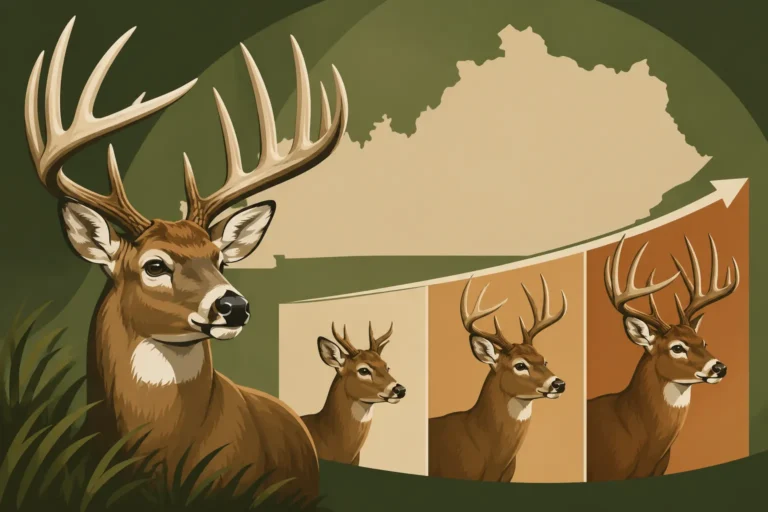
Kentucky buck age structure explains deer population distributions, helping hunters understand herd health, deer movements, and mature buck encounters.

The Kentucky deer rut timing, its phases from late October to December, and strategies for hunting active bucks during daylight.

Kentucky deer record keeping standards, scoring systems, and minimum requirements for Boone and Crockett and Pope and Young.
Kentucky Boone and Crockett whitetails require minimum net scores of 170 for typical racks and 195 for non-typical racks.
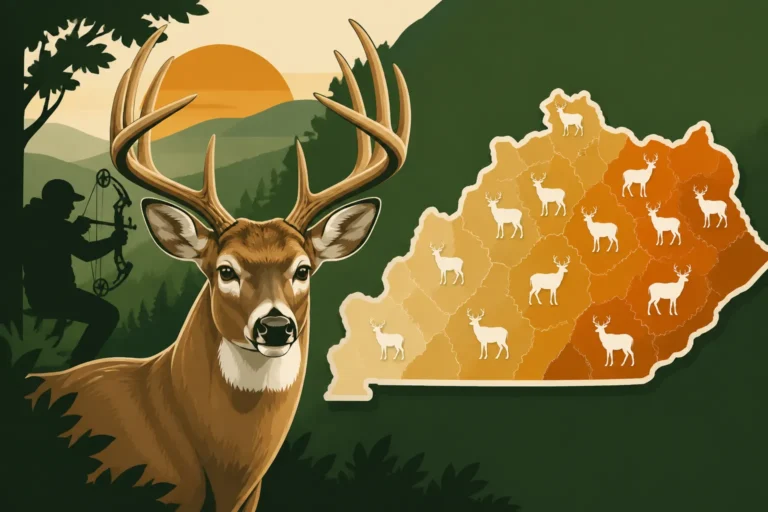
Eastern Kentucky deer density and local habitat factors explain how population numbers impact regional mountain hunting success.

Kentucky Bluegrass limestone soils and diverse crops provide calcium, phosphorus, and magnesium for whitetail deer antler growth.
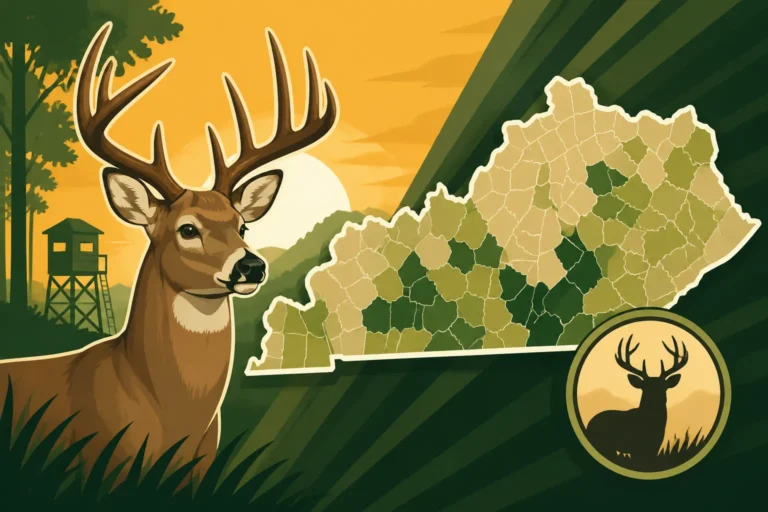
Kentucky big buck counties and the genetics, nutrition, and age factors needed for mature trophy whitetails aged four to six.
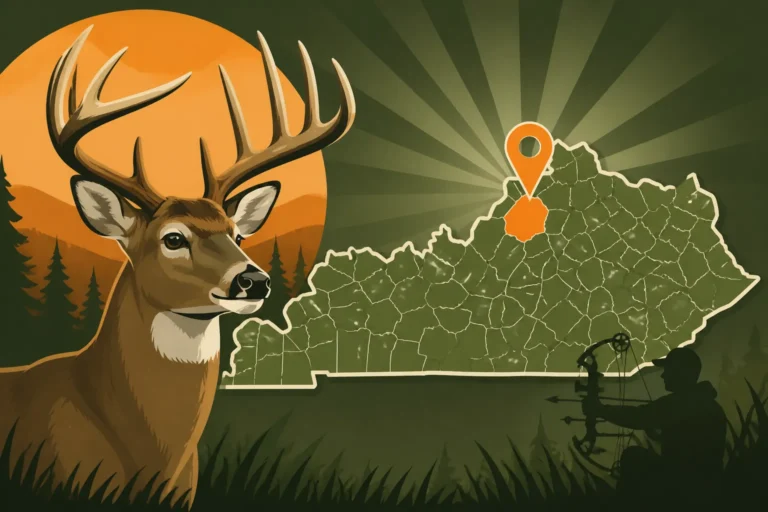
Kentucky deer harvest data reveals which counties lead total kills and explains how hunter access shapes harvest numbers.
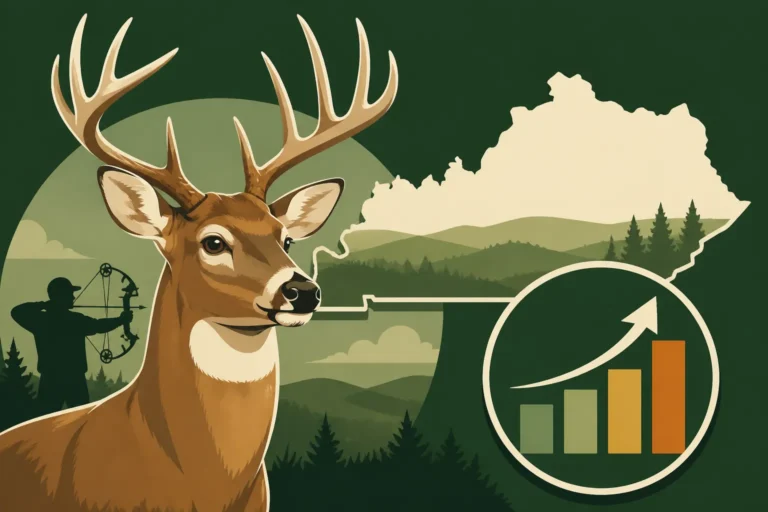
Kentucky annual deer harvest data provides hunters insights into herd health, population trends, and management strategies.

Kentucky deer population estimates rely on harvest data, landowner surveys, fawn survival rates, and mortality statistics tracked by the department.