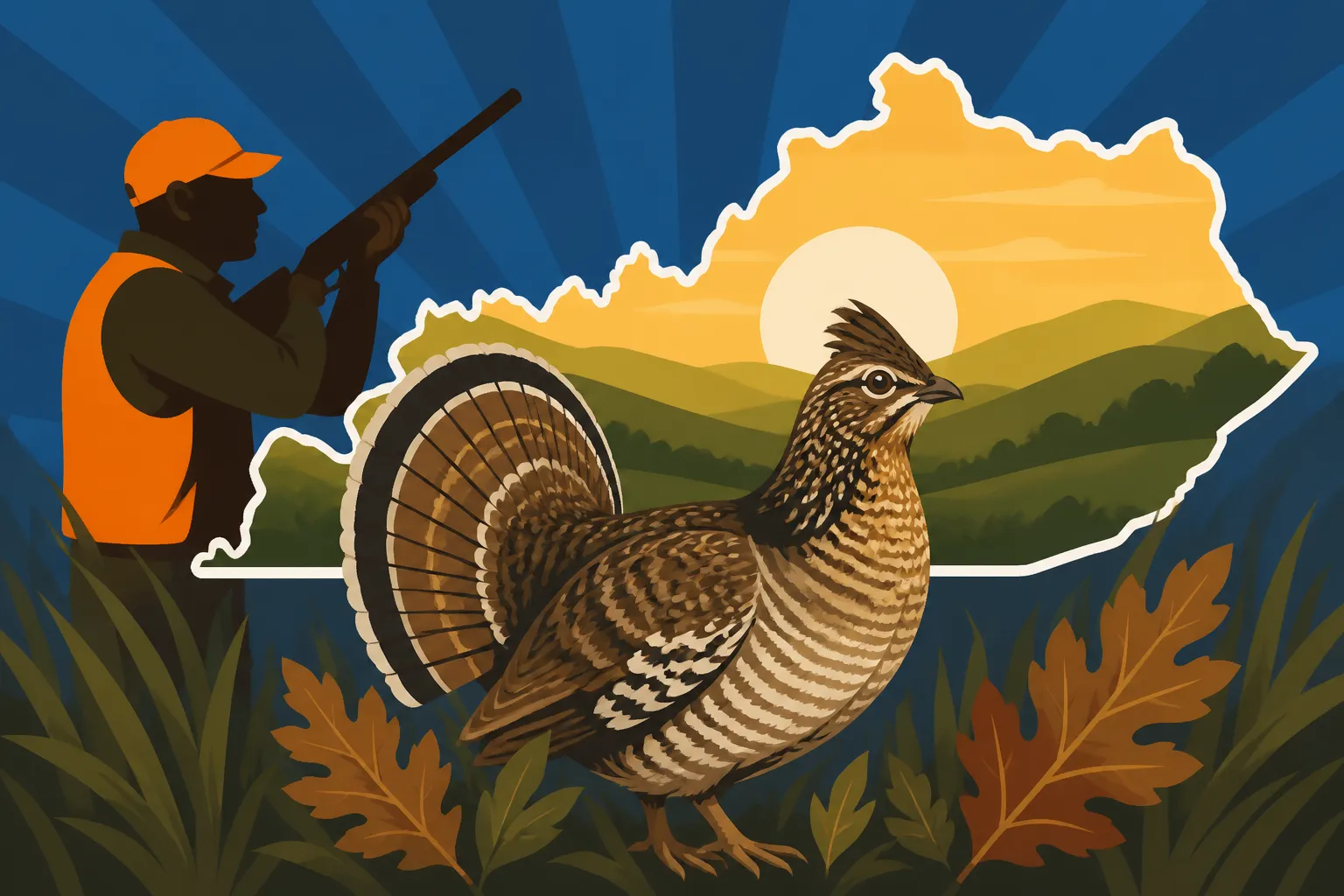
Kentucky Grouse Season Status
For many seasoned upland hunters in Kentucky, the mention of ruffed grouse brings a bittersweet sigh. Once a staple of the fall woods, these elusive birds have seen their populations plummet, leaving hunters understandably frustrated and unsure about what, if any, opportunities remain. This comprehensive guide will unpack the current status of the Kentucky grouse season, exploring the ecological shifts behind their decline and what hunters can realistically expect today.
The Shifting Landscape of Kentucky Grouse Hunting
It's no secret that the ruffed grouse, Bonasa umbellus, has become a ghost in much of its former range, and Kentucky is unfortunately no exception. For generations, the crisp autumn air and drumming of a distant grouse were synonymous with hunting the Commonwealth's rugged eastern mountains. However, those days have become increasingly rare, a stark reality for anyone who has walked the Appalachian foothills recently with a bird dog or a trusty shotgun. The once-thriving populations that supported a vibrant hunting culture have dwindled to the point where, for many, the question isn't just "Where can I find grouse?" but "Are there any left at all?" This decline isn't just anecdotal; it's a deeply concerning ecological trend that affects not only hunters but the entire forest ecosystem.
A Troubling Trend for Upland Hunters
The story of the ruffed grouse in Kentucky is a classic example of habitat loss and change. Historically, grouse thrived in areas with a mosaic of forest ages – particularly young, regenerating forests interspersed with mature timber. These "early successional" habitats, characterized by dense thickets of saplings, briars, and low-growing shrubs, provided crucial cover from predators and abundant food sources like buds, catkins, and berries. Think of the kind of cover that makes walking nearly impossible, but perfect for a bird trying to hide from a hawk or fox.
Generations ago, natural disturbances like wildfires (before intensive fire suppression), severe storms, and small-scale logging created these conditions across eastern Kentucky. The timber industry, while sometimes seen as a detriment, often inadvertently created excellent grouse habitat through clear-cutting that then regenerated into dense young stands. However, as the logging practices changed, and forests matured without significant disturbance, the specific type of habitat grouse need began to disappear. This ecological shift is perhaps the single biggest factor in the grouse's decline. The decline of the ruffed grouse isn't unique to Kentucky; it's a trend seen across much of its southern range, often attributed to the aging of forests and a lack of consistent early successional habitat creation. If you're keen to understand the deeper biological reasons, delve into a resource like "Kentucky Ruffed Grouse Decline" to get the full picture.
Current Season Status and Regulations
For those holding onto hope, Kentucky still technically has a ruffed grouse season. However, the practical reality is that opportunities are exceedingly limited. The Kentucky Department of Fish and Wildlife Resources (KDFWR) has maintained a season, but the hunting pressure on the few remaining pockets of birds is often high, and success rates are notoriously low. The season typically runs from the first Saturday in November through the last day of February, aligning with many other small game seasons. The daily bag limit is usually two birds, with a possession limit of four.
It's crucial to always check the most current Hunting and Trapping Guide published by the KDFWR, as regulations can change. While the season is open, hunters should not expect to find grouse in high densities anywhere in the state. Instead, success is often measured in flushes, not necessarily birds in the bag. Many dedicated grouse hunters now consider a single flush a victory, given the rarity of these birds. Accessing detailed WMA maps or using a service like GoHunt can help identify potential areas, but even with the best tools, finding grouse is a monumental challenge. The focus has shifted from harvest numbers to simply experiencing the woods and perhaps, just perhaps, hearing that explosive flush. For general information on seasons for other small game, you might want to review "Kentucky Small Game Season Rules."
Here's a quick look at the typical season structure for ruffed grouse in Kentucky:
| Season Phase | Start Date | End Date | Daily Bag Limit | Possession Limit |
|---|---|---|---|---|
| General Grouse Season | First Saturday in November | Last Day of February | 2 | 4 |
| Special Restrictions | Check KDFWR regulations annually for specific WMA closures or changes. |
(Note: Always consult the current KDFWR Hunting and Trapping Guide for exact dates and regulations, as these are subject to change.)
Habitat Challenges Driving the Decline
The primary culprit behind the decline of Kentucky's ruffed grouse population is undeniably habitat degradation and loss. It's a complex ecological issue, not a simple case of overhunting. These birds are specialists, requiring very specific types of forest structure that are increasingly scarce across the landscape. Understanding these habitat needs helps shed light on why finding a grouse flush today feels like winning the lottery.
The Role of Forest Succession
Forest succession is a natural process where a forest changes over time, moving from young, disturbed areas to mature, old-growth stands. For ruffed grouse, the sweet spot is that early to mid-successional stage – typically 5 to 25 years after a significant disturbance like a clear-cut or severe fire. This is when the forest floor is a tangled mess of saplings, briars, and regenerating shrubs, creating a dense overhead canopy that protects from avian predators and thick undergrowth that offers concealment from ground predators. The dense vertical structure is key for grouse to evade predators, and provides vital winter food.
Kentucky's forests, particularly in the eastern mountainous regions where grouse once thrived, have largely matured. Without widespread, repeated disturbances, these areas have transitioned into more open, mature woodlands. While beautiful and vital for other species, these mature forests lack the dense understory and vertical cover that grouse absolutely require. Imagine walking through a mature oak forest: the understory is relatively open, offering little in the way of hiding spots for a small game bird. This lack of suitable habitat means lower survival rates for grouse, fewer successful broods, and ultimately, a shrinking population. It’s an intricate dance between forest dynamics and wildlife, and for grouse, the music has largely stopped playing. Understanding "How Old a Cut Should Be for Grouse" is fundamental to appreciating their habitat requirements.
Other Factors at Play
While forest maturation is the dominant factor, it's not the only piece of the puzzle. Several other environmental challenges also contribute to the grouse's precarious status in Kentucky. These additional pressures compound the problem, making recovery an even steeper climb.
One significant factor is increased predation. With fragmented or suboptimal habitat, grouse become more vulnerable to predators like hawks, owls, coyotes, and bobcats. While predators are a natural part of any ecosystem, when prey populations are already stressed by habitat loss, increased predation can have a disproportionately negative impact on survival rates. If a young grouse doesn't have dense cover to escape into, it's an easy meal.
Another concern is disease. While not as extensively studied for grouse in Kentucky as for deer with CWD, general wildlife diseases can certainly take a toll on stressed populations. Climate change also subtly plays a role, affecting everything from insect populations (a critical food source for grouse chicks) to the timing of leaf-out and berry production. Additionally, the spread of invasive plant species, such as Japanese honeysuckle or multiflora rose, can sometimes create dense thickets but often outcompete native plants that provide better food sources or structured cover. The quality of the cover, not just its density, matters greatly.
Finally, human impacts, beyond just changing forest management, contribute. Increased human presence in formerly remote areas, even just hikers or mountain bikers, can add stress to already struggling populations. It's a cumulative effect where multiple smaller issues, when stacked upon the foundational problem of habitat, create a nearly insurmountable challenge for the ruffed grouse to thrive. If you're still looking for opportunities, even for other species, resources like "Scouting Kentucky Public Land Before Season" can give you an edge in understanding what to look for on the ground.
Where to Find Remaining Opportunities and Future Outlook
Given the grim outlook, many hunters might wonder if there's any point in pursuing grouse in Kentucky anymore. While it's true that the days of easily finding coveys are long gone, there are still extremely limited opportunities for the most dedicated and persistent upland hunters. It requires a significant investment of time, effort, and a realistic understanding of success.
Identifying Potential Pockets
For those determined to chase the thunder of a grouse flush, the best bet remains the rugged, sparsely populated regions of eastern Kentucky. Areas within the Daniel Boone National Forest Hunting and portions of the Pine Mountain State Forest Hunting are often cited as holding the most potential, though even here, populations are sparse. When you're using tools like GoHunt or the KDFWR's online mapping application, look for specific features: recent timber harvests (within the last 5-20 years), areas of dense mountain laurel or rhododendron thickets, and steep, brushy slopes that provide escape cover.
The key to finding these isolated pockets is intensive scouting, often outside of hunting season. Look for areas with diverse terrain, especially where small stream bottoms meet steep, timbered ridges. Grouse will often gravitate towards these transitional zones where different habitat types converge. Areas that have undergone recent, smaller-scale timber management, particularly those focused on creating early successional habitat for other species like deer or elk, might inadvertently benefit grouse. Remember, you’re not looking for a "grouse woods" anymore; you're looking for micro-habitats within a larger, less suitable forest. For specific tactics in such terrain, "Grouse Hunting the Cumberland Mountains" might offer some insights into the general approach needed. Be prepared to put in serious mileage, often walking through areas that appear impenetrable. This isn't a casual hunt; it's an expedition.
Conservation Efforts and the Road Ahead
Despite the challenges, there are ongoing efforts to support and, hopefully, restore ruffed grouse populations in Kentucky. The KDFWR, in collaboration with organizations like the Ruffed Grouse Society (RGS), is working to identify and implement habitat management projects. These efforts often focus on creating new patches of early successional forest through controlled timber harvests, prescribed burns, and other forestry techniques. These are long-term investments, and results will not be immediate.
Many of these projects are concentrated in public land areas, including various Kentucky Wildlife Management Areas and national forests, where state and federal agencies have the ability to implement broad-scale habitat management plans. The hope is that by creating and maintaining these critical habitat patches, grouse populations can slowly begin to stabilize and, perhaps, even expand in localized areas. However, these efforts face significant hurdles, including funding, landowner cooperation on private lands, and the sheer scale of the habitat needed.
For the dedicated upland hunter, participating in conservation efforts, whether through volunteering, donating to organizations like the RGS, or simply advocating for habitat-friendly forestry practices, is perhaps the most impactful way to contribute to the future of grouse hunting in Kentucky. While the immediate outlook for robust grouse hunting remains bleak, these efforts represent a glimmer of hope that future generations might once again hear the thunderous flush of a ruffed grouse more frequently in the Kentucky woods. When preparing for any small game hunt, making sure you have the right gear, like an "Upland Vests With Water Capacity," can make your long walks more comfortable.
Disclaimer
The information provided in this article is for general guidance and informational purposes only. Hunting regulations and seasons in Kentucky are subject to change. Always consult the most current Kentucky Department of Fish and Wildlife Resources (KDFWR) Hunting and Trapping Guide and local regulations before planning any hunting trip. It is the hunter's responsibility to know and obey all applicable laws.