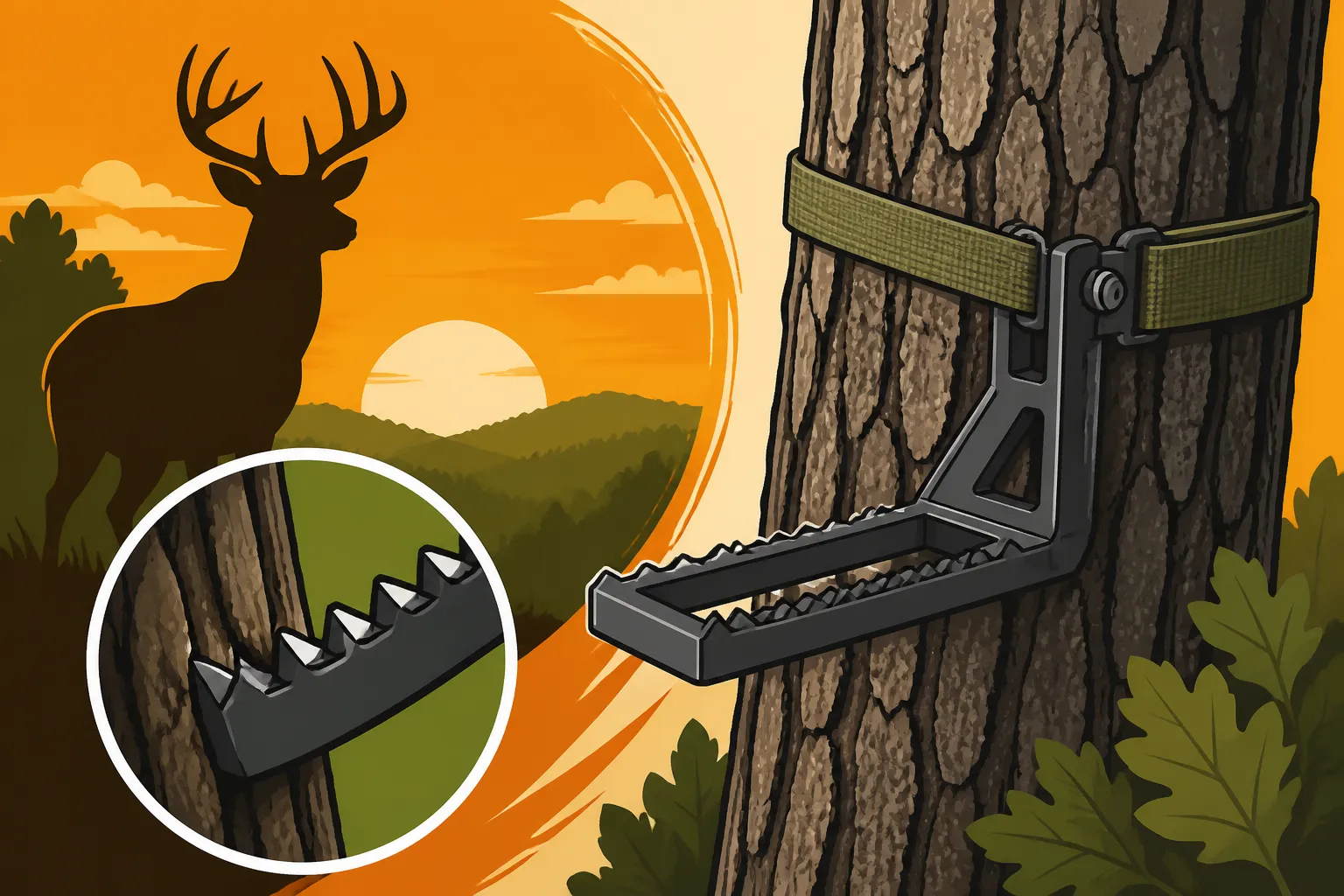
Climbing Sticks for Rough Bark
There’s nothing quite like that moment when you’re out in the Kentucky timber, pre-dawn, rain misting or a crisp chill in the air, and you finally pick out the perfect tree for your treestand. You’ve scouted, you’ve planned, and now it’s go-time. But then, you start trying to attach your climbing sticks, and the bark on that beautiful, old oak or hickory just won't cooperate. It’s rough, it’s gnarly, and your sticks are slipping, spinning, or just not biting in properly. It's frustrating, it's loud, and frankly, it can be downright dangerous. This guide is all about tackling that common headache, helping you choose and use climbing sticks that will stick securely, even to the most stubborn Kentucky bark, so you can climb confidently and quietly every time.
The Challenge of Rough Bark in Kentucky Timber
Kentucky is blessed with incredible hardwood forests, from the rugged mountains of the east to the rolling hills and bottomlands of the west. These diverse landscapes mean an equally diverse array of trees, many of which can present a real challenge when it comes to treestand access. Ignoring the unique characteristics of our local timber can lead to a world of grief, from lost hunting opportunities to, more seriously, compromised safety.
Why Kentucky's Trees Are So Gnarly
When you think about the dominant tree species across Kentucky, especially in areas like Daniel Boone National Forest or even along ancient river bottoms, you're picturing a lot of mature hardwoods. We’re talking about old white oaks, whose bark is deeply furrowed and craggy, offering plenty of nooks and crannies but often a very uneven surface for a stick to seat against. Then there are the shagbark hickories, famous for their peeling, shaggy strips that can make secure attachment feel like a cruel joke. Even some maples and poplars, while smoother in younger growth, can develop significant texture as they age, with deep cracks and ridges.
These aren't perfectly smooth, straight pine trees you might find out West. Many of our Kentucky trees have lived through decades, if not centuries, of weather, insect activity, and natural growth patterns that leave their trunks anything but uniform. This irregular, tough, and often flaky bark is what makes setting climbing sticks a specific skill here. You can't just slap a stick on and expect it to hold; you need gear that's designed to truly grip, and a technique that accounts for these unique challenges. Understanding this fundamental difference is the first step toward successful treestand hunting in our beautiful state.
The Frustration of Slippage and Instability
We've all been there. You're trying to set up well before first light, the air is cold, and your fingers are numb. You push a climbing stick against an old white oak, cinch the strap, and think you're good to go. Then, as you put your weight on it, there’s a subtle groan or, worse, a jarring slip. Maybe it rotates slightly, or the bottom feet just slide down a few inches, making a sickening creak against the bark. This isn't just annoying; it's a huge psychological hurdle and a significant safety concern.
Slipping sticks don't just alert every deer within a hundred yards; they erode your confidence, making you hesitate and potentially rush your setup, which is precisely when accidents happen. If a stick rotates or shifts unexpectedly, you can lose your balance, particularly when you're already reaching for the next stick or trying to hoist your stand. The danger isn't just a catastrophic fall, though that's always the primary concern. It's also the cumulative effect of small slips, wasted energy, and the constant worry about your equipment holding firm. This instability is a common frustration for Kentucky hunters, especially when navigating a particularly crooked or rough-barked tree, and it's why investing in the right gear and technique is absolutely paramount. No one wants to spend their hunt worrying if their feet are going to stay put.
Key Features of Climbing Sticks for Rough Bark
When you're trying to conquer those stubborn Kentucky trees, not all climbing sticks are created equal. You need to look beyond the basic functionality and really focus on the design elements that make a stick excel at gripping rough, uneven bark. It's these subtle but critical differences that can mean the difference between a confident, quiet climb and a frustrating, unsafe struggle.
Aggressive Bark-Gripping Systems
The heart of a good climbing stick for rough bark lies in its ability to bite into the tree. This isn't just about friction; it's about active engagement with the tree's surface. Many quality sticks designed for this challenge feature an aggressive system of teeth, spikes, or specialized camming mechanisms. Imagine small, sharp points, often V-shaped or deeply serrated, positioned on the tree-facing side of the stick. These aren't just decorative bumps; they are engineered to dig into the softer, inner layers of bark, or at least to find purchase in the deep furrows of species like mature oaks. The angle of these teeth is crucial – they need to be sharp enough to penetrate but robust enough not to bend or dull easily.
Beyond the teeth themselves, the way the stick applies pressure to the tree is vital. Some designs incorporate a camming action, where tightening the strap causes the stick to wedge itself more firmly against the trunk. This outward pressure, combined with the aggressive teeth, creates a remarkably stable connection. Furthermore, don't overlook the strap system itself. High-quality cam buckles that don't slip under tension, paired with straps that might have a slightly textured or cleated surface, can prevent any unwanted movement of the stick around the tree. When all these elements work in concert, you get a stick that feels like it's fused to the bark, giving you the confidence you need for a safe ascent.
Stability and Weight Distribution
Beyond just biting into the bark, a climbing stick needs to maintain stability once your weight is on it. This is where features like standoff distance and platform design come into play. The standoff distance refers to how far the platform of the stick extends from the tree trunk. A greater standoff can provide more leverage, allowing the aggressive teeth or camming mechanism to bite more effectively. It also gives you more foot room, which can improve balance and comfort, especially when you're setting up the next stick or your stand.
The design of the foot platform itself also contributes significantly. Sticks with wider, more stable platforms or steps tend to distribute your weight more evenly, reducing concentrated pressure points that might cause a stick to shift on an uneven piece of bark. Some sticks feature a dual-post design, where two points contact the tree, offering inherent stability against rotation. When climbing a crooked tree, or one with a pronounced taper, segmented sticks that allow for some articulation can be advantageous, as they adapt better to the tree's shape. However, this flexibility needs to be well-engineered to avoid introducing weak points. A well-designed stick minimizes wobble and gives you a solid, planted feel, ensuring that your climb is not only safe but also quiet, as you won't be constantly fighting to maintain balance or making unnecessary noise against the bark.
Techniques for Securely Attaching Sticks to Rough Bark
Having the right climbing sticks is only half the battle; knowing how to properly deploy them on rough Kentucky bark is just as important. Even the most aggressive sticks can fail if not used correctly. The goal is always maximum stability and quiet operation, ensuring your safety and minimizing your presence in the woods.
Proper Placement and Angle
Attaching climbing sticks securely to rough bark isn't just about brute force; it's a practiced art. First, always scan your chosen tree for the best attachment points. You want to avoid major knots, deep splits, or areas where bark is visibly loose or flaky. Look for solid, consistent patches of bark, even if they are heavily furrowed. When placing the stick, aim for a slight downward angle, pressing the stick firmly against the trunk. This initial pressure helps the aggressive teeth or camming system to bite into the bark.
Once the stick is in place, before you cinch the strap fully, apply firm, downward pressure on the stick with your hands. You're trying to "seat" those gripping points into the bark. With your weight still on the ground, or secured by your lifeline for higher sticks, pull the strap as tight as you possibly can. A good cam buckle will lock it down, but an extra tug or two can make all the difference. After securing the strap, give the stick a good wiggle and apply pressure to ensure it’s not going to slip or rotate once you step on it. This methodical approach, especially the pre-climb test, is critical. Remember, a quiet and safe ascent starts with a secure foundation. If you're going to be putting up a stand on an Eastern Kentucky ridge, where trees can be very mature and gnarly, this technique becomes even more vital.
Utilizing Strap Tension and Redundancy
Achieving maximum strap tension is arguably the most crucial step when attaching climbing sticks to rough bark. A loosely strapped stick, no matter how aggressive its teeth, is an accident waiting to happen. To truly cinch a strap tight, don't just pull on the loose end. Instead, once the strap is through the cam buckle or mechanism, pull the slack straight down, then, while maintaining that downward tension, push the buckle closed or engage the locking mechanism. Some hunters find it effective to use their body weight or even a foot (carefully!) to help leverage an extra half-inch of tightness.
Once you believe it's tight, pull on the stick itself, trying to move it side to side and up and down. If there's any give, release the buckle and repeat the tensioning process. The goal is for the stick to feel like an immovable part of the tree. While most modern climbing sticks rely solely on their primary strap, some hunters might carry small bungee cords or rope as an additional layer of security – never as a primary attachment. This practice of redundancy, or simply double-checking and triple-checking your work, is a habit that will serve you well, especially when you are many feet off the ground. Getting proficient at this means practicing in the off-season, which can feel silly in your backyard, but it pays dividends when the actual hunting moment arrives.
Adapting to Tree Shape and Size
Kentucky timber isn't always straight and perfectly cylindrical. You'll encounter trees with significant taper, multiple trunks diverging at odd angles, or even those with large burls or branch nubs. Successfully attaching climbing sticks to these irregular shapes requires adaptability. For trees with a pronounced taper, you'll often find that the stick bites better if you place it slightly above a natural bulge or where the trunk diameter is more consistent. This prevents the stick from sliding down as pressure is applied.
When dealing with a slightly crooked trunk, some segmented sticks offer a degree of articulation between sections, allowing them to conform better to the tree's curve. However, with fixed sticks, you might need to find the "flattest" or most consistent side of the trunk for placement. For extremely irregular trees, some hunters have even used small shims or wedges made of hard rubber or wood to fill gaps between the stick and the tree, though this is often a last resort and can add complexity. Ultimately, a good Scouting Kentucky Public Land Before Season session can help you identify ideal trees ahead of time, allowing you to avoid the most challenging ones if possible. But when you can't, knowing how to work with the tree's natural contours rather than against them is a skill that comes with experience and observation.
Choosing the Right Sticks for Your Kentucky Hunts
With so many options on the market, selecting the ideal climbing sticks can feel overwhelming. But when your primary concern is securing them to rough Kentucky bark, you can narrow your focus to a few critical factors: material, design features, and overall durability. Your choice should ultimately balance aggressive grip with practicality for your specific hunting style and local terrain.
Material and Weight Considerations
The material of your climbing sticks plays a significant role in both their bark-gripping capability and their portability. Generally, you'll find sticks made from either aluminum or steel, with a few premium options in carbon fiber. Aluminum sticks are, by far, the most popular for their lightweight nature. This is a huge advantage when you're packing your gear miles deep into Daniel Boone National Forest Hunting or navigating dense Hunting Western Kentucky Bottomland Deer. However, the aggressive teeth on aluminum sticks need to be well-engineered, as aluminum itself is a softer metal than steel and can wear down or bend if not properly designed for biting into hard bark.
Steel sticks, on the other hand, are heavier but often boast incredibly durable and aggressive gripping teeth that can withstand years of abuse on the gnarliest trees. Their added weight can make long treks more arduous, but for hunters who prioritize absolute security and don't mind the extra ounces, steel can be a fantastic choice, especially for permanent stand setups or shorter walks. Carbon fiber is the lightest and often the most expensive option, offering an excellent strength-to-weight ratio, but you'll need to check how its gripping system is integrated to ensure it's up to Kentucky's rough bark challenge. Balancing the need for a biting grip with your willingness to carry extra weight is a personal decision, but for most Kentucky hunters, a well-designed aluminum stick strikes a good balance.
Brand and Model Features
When it comes to climbing sticks, different brands often have their own signature approaches to tackling rough bark. Some focus on intensely sharp, multi-pronged teeth that really dig in, while others might emphasize a sophisticated camming system that actively pulls the stick into the tree as you tighten the strap. It’s worth doing your research and looking at user reviews that specifically mention performance on tough, uneven bark. Hunters in online forums and gear review sites often share their experiences with how various models perform on species like oak and hickory, which is invaluable information.
Many hunters turn to resources like GoHunt to sift through the myriad of climbing stick options. On GoHunt, you can often find in-depth articles and community discussions specifically tailored to what works best in challenging environments. Hunters frequently discuss the pros and cons of different stick designs, comparing how well a particular model's standoff bracket or strap system handles a gnarly tree versus a smoother one. This kind of real-world feedback on platforms like GoHunt can be a game-changer when you're trying to figure out if a certain stick will truly bite into the tough bark you face in Kentucky. You might find discussions praising models with a "V-cut" tree interface for their superior grip or those with a wider base that offers better stability. Some sticks also come with more robust, easy-to-operate cam buckles that make tensioning much simpler, especially with cold hands. For more specific insights, you might even look into reviews and discussions about Climbing Sticks for Kentucky Hardwoods to see what fellow local hunters recommend.
Safety and Longevity
Regardless of the stick you choose, safety must always be your top priority. This begins with the sticks themselves, ensuring they are free from defects and used within their manufacturer-specified weight limits. Always inspect your climbing sticks before each use, checking straps for fraying, buckles for damage, and the stick itself for any cracks, bends, or wear on the gripping points. A damaged stick, especially one with compromised teeth or a faulty strap, should be retired immediately.
Beyond the sticks, always wear a full-body safety harness and use a lineman's belt when ascending and descending. Once you're in your stand, immediately attach your tether to the tree. This discipline is non-negotiable, particularly when dealing with the unpredictable nature of rough bark. For more detailed information on staying safe, revisit topics like Treestand Safety Gear for Steep Ground. Longevity of your sticks also comes down to proper care. Avoid dragging them along the ground, which can dull or damage the gripping points. Store them in a dry place to prevent rust on steel components or corrosion on aluminum. By combining diligent maintenance with unwavering adherence to safety protocols, your climbing sticks will serve you reliably for many seasons to come, providing secure access to your Kentucky hunting spots.
| Feature | Benefit for Rough Bark | Considerations |
|---|---|---|
| Aggressive Teeth/Spikes | Bites deeply into hard, uneven bark for secure grip. | Can cause minor tree damage; inspect regularly for wear. |
| Camming Mechanism | Applies outward pressure, wedging stick firmly against tree. | Requires proper technique for maximum tension. |
| Standoff Distance | Provides leverage, increasing biting pressure on the tree. | Wider standoff can be slightly bulkier for packing. |
| Quality Straps/Buckles | Prevents slippage and maintains tension over time. | Look for robust, easy-to-use cam buckles; avoid cheap clips. |
| Durable Materials | Ensures longevity and structural integrity against repeated stress. | Aluminum is lighter, steel is often stronger but heavier. |
| Segmented Design | Adapts better to slightly crooked or tapering trees. | Check for robust connections between segments. |
Disclaimer
This article is for general informational purposes only and does not constitute professional advice. Laws, prices and regulations vary by location and change over time. Consult a qualified professional for guidance on your specific situation.