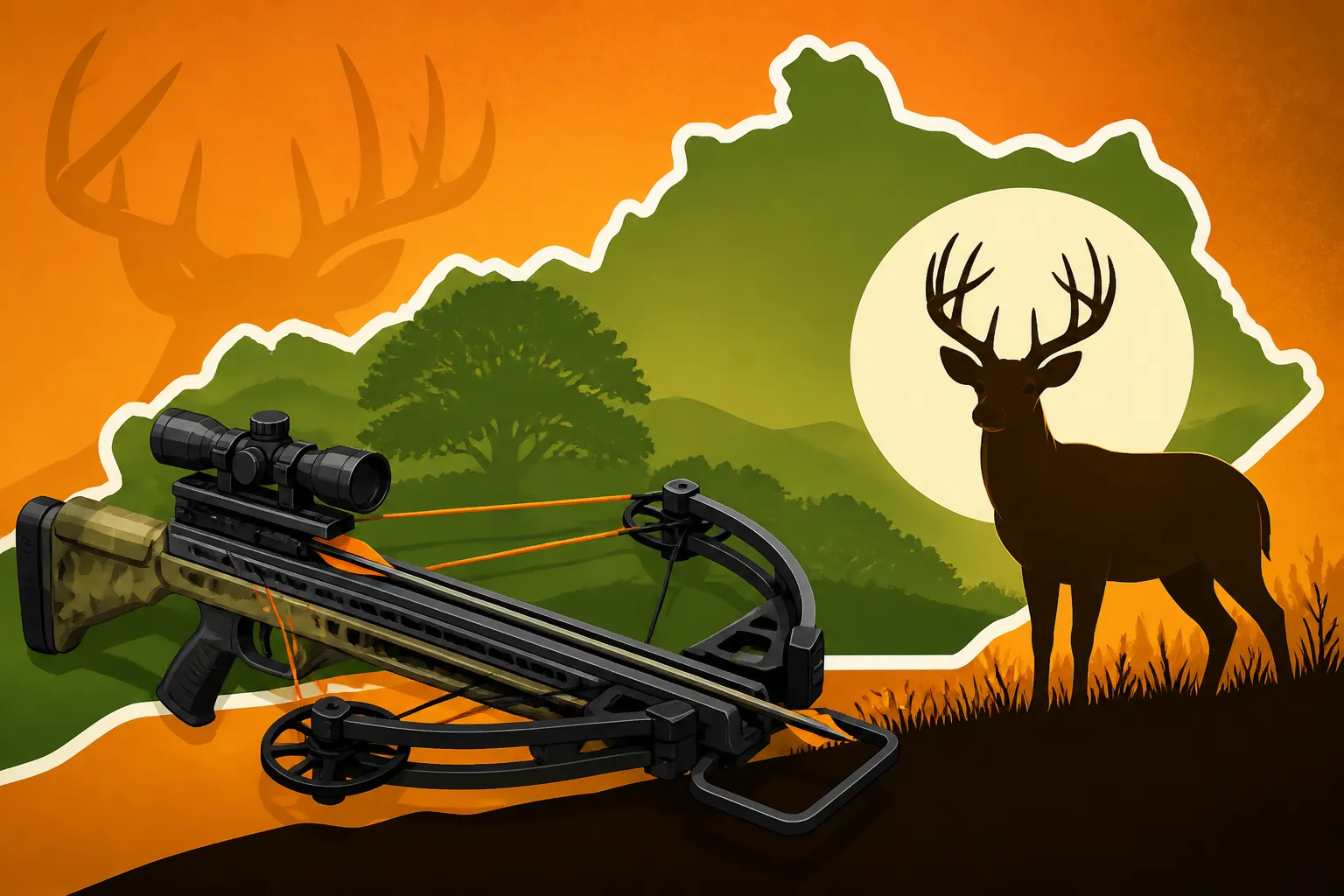
Crossbows Under Kentucky Rules
For many years, hunters in Kentucky faced a maze of specific restrictions and changing rules when it came to using crossbows for deer hunting. It wasn't always clear who could use them, when, or what special conditions applied, leading to a lot of frustration and missed opportunities in the woods. This comprehensive guide is here to untangle those complexities, lay out the current regulations for crossbow use in the Commonwealth, and help you understand how to effectively and ethically integrate a crossbow into your hunting strategy, making sure you're confident and legal every time you step afield.
Understanding Kentucky's Crossbow Regulations
The rules around crossbows in Kentucky have evolved, and for good reason. As these tools have become more popular and effective, the Kentucky Department of Fish and Wildlife Resources (KDFWR) has worked to create regulations that balance opportunity for hunters with sound wildlife management principles. What was once a limited privilege for certain groups has largely expanded, but there are still nuances every hunter needs to know. Understanding these specifics ensures you're always on the right side of the law and can plan your hunts with confidence. It’s not just about pulling a trigger; it’s about knowing the framework within which you operate.
General Use in Archery Season
One of the biggest changes in Kentucky hunting regulations has been the widespread acceptance of crossbows during the general archery season. Gone are the days when you needed a special permit or had to wait for a specific short window. Now, if you're a licensed hunter, you can pick up your crossbow and head into the woods right alongside vertical bowhunters. This shift has opened up opportunities for countless individuals who might find traditional archery challenging due to physical limitations, age, or simply a preference for the different shooting mechanics of a crossbow. It means you can participate in the extended archery season, which often starts earlier and runs later than other weapon types.
This broad allowance means that for the vast majority of deer hunting opportunities, including statewide seasons, a crossbow is a perfectly legal and viable option. When you're checking the annual regulations, you'll find that the dates for crossbow hunting largely mirror those for vertical bows, giving you a substantial amount of time in the field. This consistency helps simplify planning and ensures that whether you prefer a compound, recurve, or a crossbow, you're all part of the same long, exciting archery period. Make sure to consult the official KDFWR guide for Kentucky Crossbow Season Dates to confirm the exact windows each year, as they can shift slightly. You'll also want to be aware of the specific Kentucky Archery Season Dates to know when you can legally be out there.
Exceptions and Special Permits
While crossbows are broadly legal for deer hunting during the archery season, it’s important to remember that there are always specific areas or hunt types that might have their own unique restrictions. These exceptions aren't meant to be confusing but rather to manage particular properties or achieve specific harvest goals. For instance, some managed hunts on certain Wildlife Management Areas (WMAs) or state parks might have weapon restrictions that differ from statewide regulations. Always, and I mean always, check the specific rules for any WMA or managed hunt you plan to attend. Don't assume statewide rules apply universally. A quick call to the area manager or a thorough review of the online regulations can save you a lot of headache.
Beyond specific property rules, there aren't many special permits required for crossbow use in Kentucky anymore, which is a major simplification from past regulations. You no longer need a disability permit just to use a crossbow, for example. However, if you are participating in a special quota hunt, such as an elk hunt or a limited deer hunt, you'll still need the appropriate permit for that hunt, and then a crossbow would be among the legal implements during the designated archery portion of those seasons. The key takeaway here is that the crossbow itself is generally accepted, but the location or type of hunt might still dictate specific weapon rules you need to adhere to, so never skimp on your pre-hunt research.
Specific Weapon Restrictions
Even with the expanded allowance for crossbows, there are still some common-sense restrictions that apply to ensure fair chase and safety. For example, crossbows are subject to minimum draw weight requirements, just like vertical bows, though this is usually far less of a concern for factory-produced crossbows which typically exceed these minimums. It's really more of a safeguard against dangerously underpowered equipment. Furthermore, you can only load a single arrow (or bolt) at a time, preventing rapid-fire scenarios that aren't conducive to ethical hunting. Broadheads must also meet specific standards, generally requiring a minimum cutting diameter and having at least two sharp edges. These requirements are in place to ensure a quick, humane harvest.
It’s also crucial to remember that while crossbows are allowed during archery season, they are distinctly archery equipment. They are not considered firearms, and therefore, they are not legal for use during the modern gun season or muzzleloader seasons, unless explicitly stated in specific regulations for a unique hunt type. This is where the lines are drawn: you're either an archer (vertical bow or crossbow) or a firearms hunter. Blurring those lines can lead to serious legal trouble. So, while you're enjoying the expanded freedom of crossbow use, always be mindful of these fundamental distinctions, and double-check any specific equipment rules for broadheads and arrow minimums. When comparing options, you might find our article Crossbow Versus Vertical Bow in Kentucky helpful in making your decision.
Advantages and Disadvantages of Crossbow Hunting in Kentucky
Choosing your hunting implement is a deeply personal decision, influenced by physical ability, personal preference, and the type of hunting experience you're seeking. Crossbows offer a distinct set of pros and cons that make them an excellent choice for some, while others might still prefer the challenge of a vertical bow or the power of a rifle. It's not about one being inherently "better," but about finding the right tool for your individual hunting journey in the diverse Kentucky landscape.
Benefits for Hunters of All Abilities
One of the most significant benefits of crossbows is their accessibility. They require less physical strength and practice to shoot accurately compared to a traditional or compound bow, which can have high draw weights and demand precise form. This makes crossbows a fantastic option for new hunters, youth hunters, or seasoned hunters who may be dealing with injuries, age-related strength loss, or other physical limitations. The ability to cock a crossbow, often with the aid of a cranking device, and then hold it at full draw indefinitely without muscle fatigue is a game-changer. This allows a hunter to wait for the perfect, ethical shot opportunity, rather than rushing a shot because their arm is getting tired.
Furthermore, crossbows can often achieve rifle-like accuracy out to moderate distances, making it easier for hunters to feel confident in their shot placement. The use of a scope, which is standard on most crossbows, simplifies aiming, especially in low-light conditions prevalent during early morning or late evening hunts in Kentucky's dense timber. This combination of ease of use and inherent accuracy can dramatically increase a hunter's confidence and enjoyment, reducing frustration and fostering a deeper connection to the outdoors. It levels the playing field, ensuring that more people can experience the thrill of the archery season. The ability to use specialized Crossbow Scopes for Kentucky Timber Ranges really enhances accuracy in the thick woods.
Potential Drawbacks and Limitations
While crossbows offer many advantages, they also come with a few notable drawbacks. One of the primary concerns for many traditional archers is the sheer bulk and weight of a crossbow compared to a vertical bow. Navigating thick Kentucky brush, climbing into treestands, or still-hunting through dense undergrowth can be more cumbersome with a wider, heavier crossbow. They don't lend themselves as well to quick, off-hand shots or maneuvering in tight spots, which can sometimes be critical when a deer unexpectedly pops up closer than anticipated. The width can also be a challenge in some treestand setups, requiring more careful positioning to avoid hitting limbs or the stand itself during a shot.
Another limitation is the single-shot nature and slower reload time. Unlike a rifle, you don't get a quick follow-up shot. Once you've fired, reloading a crossbow typically involves lowering it, recocking it (even with a crank, this takes time and movement), and nocking another bolt. This makes ethical second-shot opportunities rare in a hunting scenario. The noise of the shot, while quieter than a firearm, can also be more pronounced than a vertical bow's release, potentially spooking nearby game more readily. Finally, there's the perception among some traditional archery purists that crossbows offer "too much" of an advantage, reducing the skill factor. While this is a subjective argument, it's a sentiment some hunters hold.
| Feature | Vertical Bow | Crossbow |
|---|---|---|
| Physical Effort | High (requires strength to draw and hold) | Low (can be cocked with aid, held indefinitely) |
| Learning Curve | Steep (form, muscle memory, practice crucial) | Moderate (easier to learn accurate shooting) |
| Accuracy | High with practice and good form | High, often out of the box with optics |
| Speed | Quick follow-up shot impossible | Quick follow-up shot virtually impossible |
| Weight/Bulk | Lighter, narrower, more maneuverable | Heavier, wider, less maneuverable in dense cover |
| Noise | Generally quieter shot | Can be louder than vertical bow shot |
| Sighting | Pin sights (often without magnification) | Scopes (often magnified) |
| Range | Effective out to 40-60 yards (hunter skill dependent) | Effective out to 50-80 yards (hunter skill dependent) |
| Draw/Hold | Manual draw, limited hold time | Mechanical cock, indefinite hold |
Choosing the Right Crossbow for Kentucky Terrain
Kentucky's varied terrain, from the rugged mountains of the east to the rolling hills and agricultural fields of the west, demands reliable and adaptable gear. Selecting the right crossbow isn't just about picking the fastest or most powerful model; it's about finding one that fits your hunting style, the landscapes you frequent, and your personal capabilities. Investing in a quality crossbow is an investment in your success and enjoyment afield.
Recurve vs. Compound Crossbows
When you start looking at crossbows, you'll quickly encounter two main types: recurve and compound. Each has its own design philosophy and performance characteristics. Recurve crossbows are simpler in design, often lighter, and known for their rugged reliability. They feature limbs that curve away from the riser at the tips, much like a traditional recurve bow, which stores more energy than a straight limb. They tend to be wider limb-to-limb than compounds, which can be a factor if you hunt in extremely dense cover or from small blinds. However, their simplicity means fewer moving parts to break or maintain, making them a solid, dependable choice for a hunter who values robustness and ease of field repair.
Compound crossbows, on the other hand, utilize a system of cams and cables, similar to compound vertical bows. This design allows for a narrower profile when cocked, which can be a huge advantage in tight spaces, dense underbrush, or when climbing into a treestand. They also typically achieve faster arrow speeds with less draw weight, and they can be more forgiving of slight inconsistencies in form. However, their complexity means more potential points of failure, and they generally require specialized tools for maintenance or repair. Ultimately, the choice between a recurve and a compound often boils down to personal preference for width, maintenance, and the balance of speed versus simplicity. Both are highly effective for Kentucky deer.
Optics and Accessories for Kentucky Hunting
A crossbow is only as good as the shooter and the accessories that complement it. Optics are paramount. Most crossbows come with a basic scope, but upgrading to a higher-quality model with better light transmission and multiple aiming points calibrated for different distances can dramatically improve your accuracy, especially in the notoriously dim light of a Kentucky hardwood forest at dawn or dusk. Look for scopes designed specifically for crossbows, often featuring multiple reticles or "dots" to account for the bolt's trajectory. Beyond the scope, a good rangefinder is indispensable. Knowing the exact distance to your target is crucial for accurate shot placement with a crossbow, just as it is with any archery equipment. Consider one that accounts for angle compensation if you hunt steep, hilly terrain in places like the Daniel Boone National Forest. You can read more about Crossbow Scopes for Kentucky Timber Ranges if you're looking for an upgrade.
Other essential accessories include a reliable cocking device (a rope cocker or integrated cranking system makes cocking much easier and more consistent), a quality case for transport, and a quiver that securely holds your bolts without rattling or snagging. Don't forget practice bolts – you'll want to practice regularly with the same weight and type of bolt you plan to hunt with. Lastly, safety equipment like a de-cocking bolt or a discharge target is critical. Never dry-fire a crossbow, as it can cause catastrophic damage. These accessories might seem like add-ons, but they are integral to safe, accurate, and ethical crossbow hunting in Kentucky. If you're utilizing hunting apps like GoHunt, you can use their mapping features to mark ideal stand locations and practice ranges, helping you visualize and plan your shots, as well as find Where to Hang a Camera on a Logging Road.
Crossbow Safety and Ethical Hunting Practices
Hunting with any weapon carries a significant responsibility. With a crossbow, it’s no different. While often seen as "easier" to shoot, the power and precision of a crossbow demand respect and adherence to strict safety protocols. Ethical hunting extends beyond merely following the law; it means making every effort to ensure a clean, humane harvest and showing respect for the game you pursue and the environment you hunt in.
Safe Handling and Storage
Crossbows are powerful tools, and treating them with anything less than extreme caution is an invitation for an accident. Always follow the fundamental rules of firearm safety: treat every crossbow as if it's loaded, never point it at anything you don't intend to shoot, keep your finger off the trigger until ready to fire, and be sure of your target and what's beyond it. One crucial difference with crossbows is that once cocked, they are under immense tension. Never carry a cocked crossbow with your finger on the trigger, especially when moving through brush or climbing a stand. Many hunters choose to cock their crossbows only once they are settled in their hunting location.
When not actively hunting, crossbows should be stored securely and uncocked. While some crossbows can be left cocked for a period, it puts unnecessary stress on the limbs and strings, potentially reducing their lifespan and accuracy. Always refer to your manufacturer's recommendations for safe storage. When transporting a crossbow, ensure it's uncocked, unloaded, and preferably cased. The goal is to eliminate any chance of an accidental discharge. Just like with Rifle Setups for Kentucky Deer Hunting, careful handling is paramount. Remember, safety isn't just a suggestion; it's a non-negotiable part of being a responsible hunter.
Shot Placement and Recovery in Kentucky Woods
Ethical hunting with a crossbow hinges on making a clean, lethal shot. This requires precise shot placement targeting the vital organs: the heart and lungs. While crossbows can shoot accurately at longer ranges than many traditional bows, it doesn't mean you should take those long shots. In hunting situations, variables like deer movement, wind, and obstacles can quickly degrade accuracy. Limit your shots to distances where you can consistently place your bolt in a six-inch circle in practice, and then shave off 10-20 yards for real-world hunting conditions. For most Kentucky timber hunting, this often means shots within 40-50 yards. Always wait for a broadside or slightly quartering-away shot, ensuring the vitals are exposed and avoiding the shoulder blade.
After the shot, patience is a virtue. Resist the urge to immediately pursue the animal. Give the deer time to bed down and expire. For a good hit, waiting 30-60 minutes is usually sufficient, but for marginal hits, a wait of several hours (or even overnight if temperatures allow) can greatly improve your chances of recovery. Pay close attention to the deer's reaction, the sound of the hit, and any visible blood or hair at the impact site. Mark the location of the shot and begin tracking systematically, looking for blood trails, broken branches, or disturbed leaf litter. Kentucky's diverse woods can make tracking challenging, so take your time and follow every clue. For additional context, consider reviewing Tracking a Deer Through Kentucky Leaf Litter to refine your recovery skills, and don't forget to report your harvest using Kentucky Deer Harvest Reporting Rules.
Integrating Your Crossbow into Your Kentucky Hunting Strategy
Hunting with a crossbow isn't just about weapon choice; it's about tailoring your entire strategy to leverage its strengths and mitigate its weaknesses within the unique environments Kentucky offers. From scouting to stand placement, every decision should consider how your crossbow fits into the broader picture of deer behavior and the landscape.
Scouting and Stand Placement with a Crossbow
Effective crossbow hunting in Kentucky begins long before the season opens, with thorough scouting. Because crossbows excel at precise shots but are less forgiving for quick, close-range movements, your stand placement becomes even more critical. Look for natural funnels, pinch points, and transition areas where deer naturally move. Creek bottoms, saddles on ridges, and field edges where deer move between bedding and feeding areas are prime locations. Pay attention to prevailing wind patterns and thermal currents, especially in hilly eastern Kentucky, to ensure your scent doesn't spook incoming deer. Consider using mapping apps, like those available through GoHunt, to analyze topography, identify potential bedding areas, and plan your entry and exit routes without disturbing game. These digital tools can highlight trails, cover, and water sources that might not be obvious on the ground.
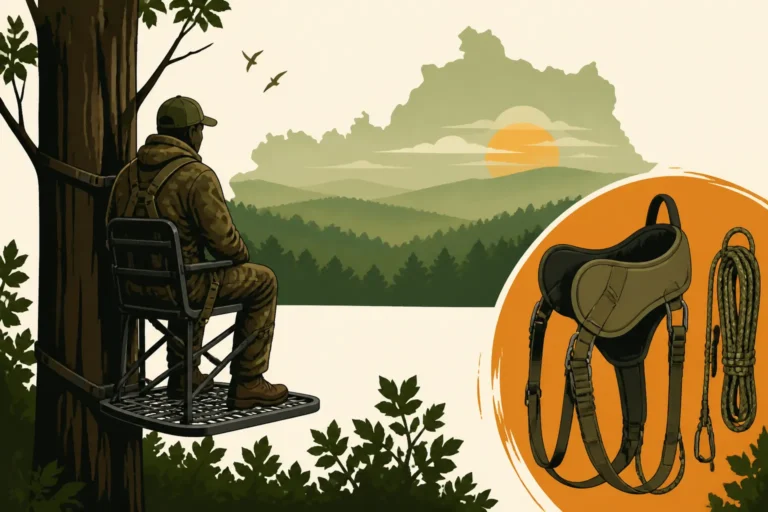
When placing your stand, whether it's a ladder stand, hang-on, or ground blind, ensure you have clear shooting lanes within your comfortable range. With a crossbow, you might need slightly wider lanes than with a vertical bow to accommodate its limbs, especially if shooting from an elevated position. Practice shooting from your stand or blind before the season to identify any obstacles or awkward angles. Consider shooting from a seated position if you anticipate that being your primary posture. Think about the sun's angle during shooting light and how it might affect your visibility or glare on your scope. A well-placed stand, coupled with meticulous pre-season Scouting Kentucky Public Land Before Season, is the cornerstone of crossbow success.
Understanding Deer Behavior During Archery Season
Deer behavior changes throughout Kentucky's long archery season, and understanding these shifts is key to successful crossbow hunting. Early season, When Kentucky's Archery Season Opens, deer are often in summer patterns, focused on lush food sources like alfalfa fields, clover plots, or early-dropping acorns. They tend to move in the cooler hours of dawn and dusk. During this time, targeting travel corridors between bedding cover and these food sources can be highly effective. As the season progresses into October and early November, the pre-rut and then the peak rut kick in. This is when bucks become more active, searching for does. During the rut, you might see deer moving throughout the day, making all-day sits in key travel corridors, especially on ridge-top saddles, incredibly productive. Using tactics like Rattling and Grunting in Kentucky can be particularly effective during this phase, pulling bucks into crossbow range.
Late season, after the modern gun season, presents its own challenges and opportunities. Deer are often pressured and highly focused on calorie-rich food sources. Look for standing corn, unpicked soybeans, or areas with late-dropping acorns. They will be seeking thermal cover and moving efficiently to conserve energy. This is a great time to focus on natural food sources in sheltered areas or on private land where late-season food plots might be available. Understanding these seasonal shifts in behavior, coupled with careful scouting and strategic stand placement, will allow you to adapt your crossbow hunting tactics and maximize your chances throughout Kentucky's generous archery season. Whether you're hunting the thick timber of the Cumberland Plateau or the agricultural fields of western Kentucky, your crossbow can be a versatile tool if used wisely.
Disclaimer
This article is for general informational purposes only and does not constitute professional advice. Laws, prices and regulations vary by location and change over time. Consult a qualified professional for guidance on your specific situation.