Rangefinders in Thick Eastern Kentucky Cover
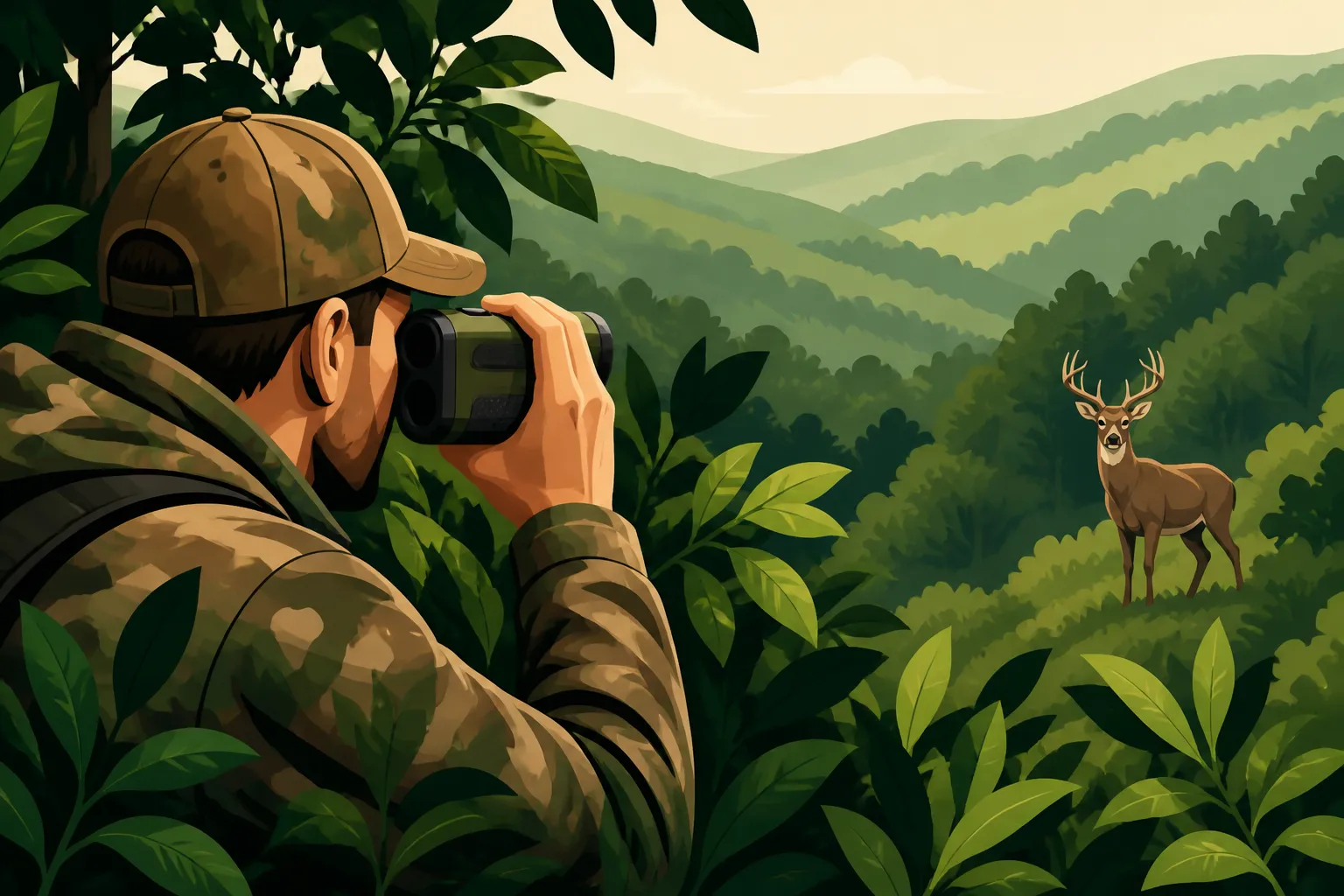
Hunting in the dense, undulating terrain of Eastern Kentucky presents a unique set of challenges, and one of the most frustrating can be getting an accurate range on a deer or elk when every shot lane feels like a tunnel through a briar patch. Trying to acquire a precise distance often means battling through thick foliage, steep slopes, and ever-present timber, leading to missed opportunities or, worse, poorly placed shots. This guide is dedicated to helping you understand how rangefinders perform in these conditions, what features truly matter, and how to master your ranging technique so you can make confident shots, even in the most unforgiving cover.
Why Thick Eastern Kentucky Cover Challenges Rangefinders
Eastern Kentucky is a beautiful, rugged landscape, but it’s far from an open prairie. The dense forests, steep hollows, and thick undergrowth that define regions like the Daniel Boone National Forest or the expansive coalfield counties make it notoriously difficult for rangefinders to get a clean read. It’s not just about the trees; it’s about the sheer volume of vegetation, the way light interacts with it, and the topography itself that conspires against a quick, accurate range.
Dense Undergrowth and Ridgelines
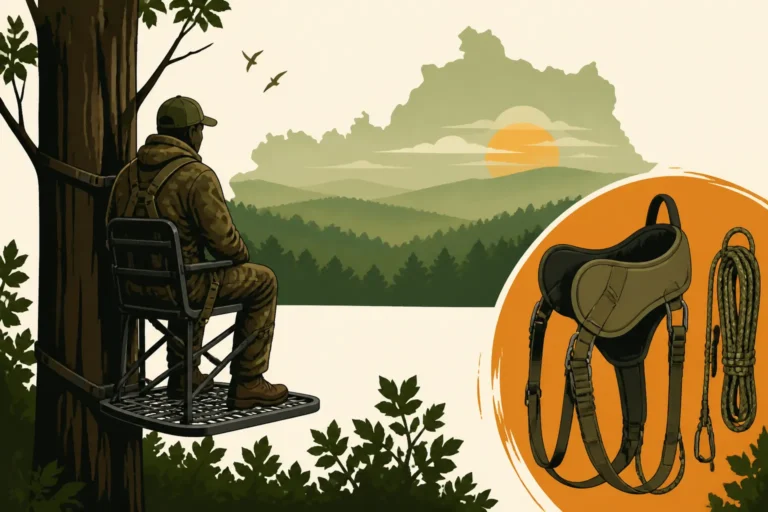
When you're still-hunting a ridge or perched in a treestand overlooking a steep hollow, the world around you can seem to swallow your laser signal whole. Imagine trying to range a buck that's threading its way through a thick stand of rhododendron or a patch of greenbrier. The laser beam from your rangefinder, while incredibly precise, is still just light, and it can be scattered, absorbed, or simply reflected by the nearest twig or leaf. Often, you're not aiming at a clean, open target but rather a small window in a wall of green or brown. This becomes even more pronounced on the region's characteristic steep ridgelines and creek bottoms, where every elevation change adds another layer of complexity.
Moreover, the varied terrain means your line of sight is rarely flat. A deer standing 40 yards away across a steep ravine might be 40 yards line of sight, but the actual horizontal distance, which is what gravity acts upon for bullet drop, is significantly less. Without proper compensation, you risk shooting over your target. This is a common pitfall when hunting game in areas like the Cumberland Mountains, where you might be shooting downhill at a deer or uphill at an elk. Understanding these nuances is crucial, as is having the right tools to address them. The sheer density of brush means that even if you can spot a deer, getting a laser through the labyrinth of branches and leaves can be a monumental task, often resulting in "false reads" from closer vegetation.
Light Absorption and Signal Interference
Beyond physical obstructions, the very nature of light and its interaction with the environment plays a huge role. Think about the deep, shaded hollows in Eastern Kentucky, especially on a cloudy day or at dawn and dusk. These are prime times for deer movement, but they're also when light conditions are at their lowest. Darker objects and denser vegetation absorb more light rather than reflecting it back to your rangefinder. This reduced reflectivity means your rangefinder has to work harder to get a strong enough return signal, reducing its effective range and reliability.
Furthermore, fog, mist, or even heavy rain, which are common occurrences in the Kentucky mountains, can introduce airborne particles that scatter the laser beam. It's like trying to see through a cloud – your rangefinder experiences a similar difficulty. The laser signal gets diffused, leading to inconsistent readings or, more often, no reading at all. This interference can be incredibly frustrating when you've finally got eyes on that mature buck you've been chasing all season. It's why seasoned hunters in these parts often prefer rangefinders with robust optics and advanced processing capabilities that can cut through some of this environmental noise. You might find yourself needing to range multiple times, adjusting your aiming point slightly each time, just to get a reliable number.
Key Features to Look for in a Rangefinder for Heavy Cover
Choosing the right rangefinder for Eastern Kentucky's thick cover isn't just about the biggest number on the box. It's about selecting a tool with specific features designed to combat the challenges we just discussed. A high-quality rangefinder here needs to be more than just a distance-measuring device; it needs to be smart, robust, and optically superior.
Angle Compensation and First/Last Target Priority
Perhaps the single most critical feature for hunting in the undulating terrain of Eastern Kentucky is angle compensation. As mentioned, shooting up or downhill significantly alters the effective distance your projectile travels. A standard rangefinder will give you the line-of-sight distance, which is great for understanding how far your arrow or bullet flies, but it doesn't tell you the horizontal equivalent distance that gravity acts on. High-quality rangefinders, often marketed with terms like "Angle Range Compensation (ARC)" or "True Ballistic Range (TBR)," will calculate and display this adjusted distance, allowing you to hold for the correct drop. This is non-negotiable for confident shooting on steep slopes. You can have a deer at what your rangefinder says is 60 yards line-of-sight, but if you're shooting steeply downhill, the true horizontal distance might be closer to 50 yards, a difference that can result in a clean miss if you hold for 60.
Equally important is a "first target priority" or "brush mode" feature. This is what truly separates a good rangefinder from a great one in thick cover. When you're trying to range a deer standing behind a few saplings or a screen of leaves, a standard rangefinder might pick up the closer vegetation, giving you a false, shorter reading. A first target priority mode tells the device to disregard weaker, closer returns and instead focus on the strongest, farthest return within its beam's path. Conversely, "last target priority" is useful in situations where you want to range past close obstacles to a target further out, or perhaps to the far edge of a field. Many modern rangefinders now offer both modes, often switching automatically or allowing user selection. This functionality is your best friend when trying to get a precise read on an animal partially obscured by brush or timber, ensuring you're ranging the animal, not the twig in front of its chest.
Optical Clarity and Magnification
You might think of optics as secondary for a rangefinder, but in Eastern Kentucky's low light and thick timber, they are paramount. A clear, bright image helps you acquire your target faster, especially when that target is partially hidden or moving through shadows. Look for rangefinders with high-quality glass, multi-coated lenses, and a good exit pupil. A crisp, bright display means you can actually see the reticle and the ranged distance even when the woods are dark. There's nothing worse than getting a read but being unable to see the numbers because of poor contrast or dim lighting.
Magnification is also key, typically ranging from 6x to 10x. While 10x provides more detail and helps you pick out a specific branch or animal through dense cover, it can also make holding steady a bit more challenging, especially after a long hike up a mountain. For most Eastern Kentucky deer and elk hunting scenarios, a 6x or 8x magnification offers a good balance of field of view, brightness, and stability. Combine this with a wide field of view, and you have a rangefinder that helps you quickly spot and range your target without excessive searching. When you're trying to thread a laser through a small gap in the canopy to reach a deer at 80 yards, that extra clarity and steady magnification can make all the difference. Optics for Eastern Kentucky Ridges delves deeper into choosing the right glass for this environment.
Durability and Ergonomics
Let's be realistic: hunting in Eastern Kentucky means dealing with rough terrain, unpredictable weather, and the occasional tumble. Your gear needs to withstand it. Durability isn't a luxury; it's a necessity. Look for rangefinders with a robust, rubber-armored housing that can handle drops, bumps, and scrapes. Waterproofing and fogproofing are also essential. You'll be out in rain, snow, and humid conditions, and the last thing you need is a lens fogging up internally or the electronics failing due to moisture. IPX ratings (e.g., IPX7) indicate how well a device can resist water and dust intrusion.
Ergonomics refer to how the rangefinder feels and operates in your hand. Is it comfortable to hold for extended periods? Can you operate the buttons easily with gloves on? Is the focus wheel smooth and accessible? A compact, lightweight design is always a plus, especially when you're packing a lot of gear for an all-day hunt in Daniel Boone National Forest Hunting. A good neck strap or holster also ensures quick access and prevents drops. Some rangefinders even come with built-in tether points, which can be a lifesaver on a steep ascent or descent. Don't underestimate the importance of these practical considerations; a durable, user-friendly rangefinder will be the one you actually use consistently, not just carry.
Understanding Different Rangefinder Technologies
While the core function of a rangefinder remains consistent – measuring distance – the underlying technology and additional features can vary significantly. In the demanding environment of Eastern Kentucky, understanding these differences helps you pick a tool that truly performs. It’s not just about getting a number, but getting the right number, consistently.
Laser Rangefinders: Pros and Cons
The vast majority of hunting rangefinders utilize pulsed laser technology. These devices emit a laser beam, which travels to the target and reflects back to the unit. The rangefinder then calculates the distance based on the time it took for the laser to make the round trip.
Pros:
- Accuracy: Laser rangefinders are incredibly precise, often giving readings down to a yard or even a tenth of a yard. This is critical for making ethical shots, especially at longer distances where even a small error in range estimation can lead to a miss or a wounded animal.
- Speed: Modern laser rangefinders provide instant readings, typically within a fraction of a second. This quick acquisition time is invaluable when a target appears suddenly or is moving.
- No Subscription: Unlike some GPS-based systems, a standard laser rangefinder requires no ongoing subscriptions or data plans, making it a one-time purchase.
Cons:
- Line-of-Sight Dependency: This is the primary challenge in thick cover. The laser must have an unobstructed path to the target. In Eastern Kentucky's dense timber and undergrowth, this can be incredibly difficult, often resulting in false readings from closer foliage or no reading at all if the beam is completely blocked.
- Environmental Interference: As discussed, fog, heavy rain, snow, or even dense mist can scatter the laser beam, reducing effective range and reliability. Early morning mist in a deep hollow can completely render a less powerful unit useless.
- Battery Life: While generally good, laser rangefinders rely on batteries. In extreme cold, battery performance can drop, and a dead battery means no ranging. Always carry spares, especially for Hunting the Late-Season January Lull.
Despite the cons, laser rangefinders are the gold standard for precision ranging in hunting. The key is to choose one with features like angle compensation and first target priority to mitigate the line-of-sight issues inherent in the Kentucky landscape.
GPS-Enabled Devices and Hybrid Options
Beyond traditional laser rangefinders, the market has seen an increase in devices that integrate GPS technology or offer hybrid solutions. While these aren't typically "rangefinders" in the traditional sense of using a laser to measure real-time distance to a specific object, they offer invaluable mapping and situational awareness that can indirectly aid in distance estimation in thick cover.
GPS-Enabled Mapping Tools (like GoHunt): Platforms like GoHunt, and other similar mapping apps and dedicated handheld GPS units, allow hunters to pre-scout and mark waypoints, food sources, bedding areas, and potential shot lanes. You can measure distances between two points on a map, giving you a general idea of distances within your chosen area. For example, if you know a particular logging road is 200 yards from your treestand location, and a creek bottom is 75 yards past that, you have reference points. This is incredibly useful for strategic planning and understanding the terrain, especially when Scouting Kentucky Public Land Before Season. When a deer steps out, you can quickly glance at your mapped reference points if your laser rangefinder is struggling. These tools really shine in helping you establish a mental map of distances, which is crucial when your laser is bouncing off every branch.
Hybrid Solutions: Some newer devices are attempting to bridge the gap, combining elements of laser ranging with mapping capabilities. While these are still evolving, the idea is to give hunters a more complete picture of their environment. Imagine being able to range a target and then instantly see that distance overlaid on a detailed topographical map of your location, complete with your pre-marked waypoints. This integration could be a game-changer for navigating and targeting in complex terrain. While a purely GPS-based device won't give you a precise, real-time range to a moving animal, using a detailed mapping app like GoHunt in conjunction with a quality laser rangefinder provides a powerful combination. You can mark your treestand, range key landmarks before a hunt, and have a backup for general distance awareness when visibility is limited.
| Feature / Technology | Laser Rangefinder (Advanced) | GPS-Enabled Mapping (e.g., GoHunt) |
|---|---|---|
| Primary Function | Real-time distance to specific target | Mapping, navigation, distance between points |
| Accuracy | Highly precise (±1 yard) | Good for general layout (map scale limited) |
| Angle Compensation | Yes, crucial for slopes | Not directly, but map can show elevation changes |
| Thick Cover Performance | Reliant on "First Target Priority" | Provides reference points and overall terrain context |
| Target Acquisition Speed | Instantaneous | Requires manual measurement on map |
| Battery Dependency | Yes | Yes, often more power-intensive for screen/GPS |
| Cost | One-time purchase | One-time purchase for device, subscription for map layers (often) |
| Best Use Case | Pinpoint accuracy for shooting | Situational awareness, pre-scouting, navigation |
Practical Techniques for Using a Rangefinder in the Timber
Owning a great rangefinder is one thing; effectively using it in the chaotic environment of Eastern Kentucky's thick timber is another. It takes practice, patience, and a few clever techniques to ensure you get that critical distance when it matters most.
Ranging Through Small Gaps and Branches
The reality of hunting in dense woods is that you'll rarely have a perfectly clear shot lane, let alone a clear ranging path. One of the most common frustrations is trying to range a deer that's mostly obscured, with only small windows of visibility. The key here is precision and understanding your rangefinder's beam divergence. Most rangefinders have a beam that spreads slightly over distance. At 100 yards, the beam might be a few feet wide, meaning it could pick up multiple objects. However, at closer bowhunting ranges, say 20-40 yards, it's quite narrow.
Your best bet is to actively look for those tiny gaps in the foliage. Don't just point and shoot the laser. Instead, scan slowly, looking for the smallest opening that aligns with your target. Sometimes, aiming just under a branch or just to the side of a thick trunk will allow the laser to pass cleanly to your target. If your rangefinder has a "first target priority" mode, make sure it's engaged. This feature is designed to ignore those close-in leaves and twigs and give you the reading to the actual animal. When ranging, try to stabilize your rangefinder as much as possible – brace your elbows on your knees, lean against a tree, or even use a shooting stick. A steady hand increases your chances of threading that laser through the brush to hit the animal, not the obstacle. Sometimes, if the animal is quartering away or quartering toward you, focusing on the shoulder or hip can provide a larger, less obstructed target than trying to hit the vitals directly through a maze of branches.
Using Reference Points and Estimating Distance
Sometimes, despite your best efforts, a direct range to the animal is simply not possible. This is where pre-ranging and identifying reference points become invaluable. Before the action starts, take the time to range several prominent objects around your stand or position. Pick out trees, rocks, stumps, or bends in the trail at various distances – 20, 30, 40, 50 yards, and so on. Note these distances in your mind, or even better, on a small piece of flagging tape tied to your stand or an arm's length away.
When a deer steps out and you can't get a clean read, you can quickly estimate its distance relative to your pre-ranged reference points. "Okay, that buck is just beyond that big oak, which I know is 40 yards, so he's probably 45." This is particularly effective in areas like those described in Treestand Setups in Daniel Boone National Forest. This technique is also crucial for bowhunters, where a difference of even 5 yards can mean a missed shot due to arrow drop. For rifle hunters, especially when shooting through a narrow lane, knowing the exact distance to key landmarks can inform your holdover even if you can't range the animal directly. Practice this estimation often, even when not hunting, to sharpen your visual judgment of distance.
The Importance of Practice and Pre-Season Scouting
Like any skill, ranging in tough terrain improves with practice. Don't just pull out your rangefinder on opening morning. Take it with you on scouting trips. Walk through the woods and practice ranging trees, stumps, and imaginary animals through various types of cover. See how your rangefinder performs in different light conditions, through varying densities of brush, and up and down steep slopes. This helps you understand its limitations and capabilities before you have a trophy animal in your sights.
Pre-season scouting is also the perfect time to identify those critical ranging lanes and potential shot opportunities. Using tools like the Kentucky Hunt Fish App or a sophisticated mapping platform like GoHunt can help you visualize the topography and vegetation density before you even step foot in the woods. Identify where deer are likely to travel and where you anticipate potential shots. Mark these spots on your map and, if possible, visit them in person with your rangefinder to practice ranging. This familiarization with your hunting ground and your gear will pay huge dividends when it's time to make a shot. Understanding Wind and Thermals on a Kentucky Ridge and how deer use them can also guide where you expect shots to occur, allowing for proactive ranging.
Integrating Your Rangefinder with Your Hunting Strategy
A rangefinder isn't just a gadget; it's a vital component of a comprehensive hunting strategy, especially when pursuing game in the challenging landscapes of Eastern Kentucky. Properly integrating it into your approach can significantly increase your success rate and ensure ethical shots.
Pairing with a Ballistic Calculator
For rifle hunters, particularly those targeting bigger game like deer or elk in Kentucky's more open, reclaimed mine land areas or across longer clearings, pairing your rangefinder with a ballistic calculator is a must. Modern ballistic calculators, often found as apps on smartphones or integrated into more advanced optics, take factors like your rifle's caliber, bullet weight, muzzle velocity, temperature, humidity, and atmospheric pressure into account. When you get a precise range from your rangefinder, you input that distance into the calculator, and it provides an exact holdover or turret adjustment for your scope.
Even with the relatively shorter shot distances common in Eastern Kentucky timber, understanding your bullet's trajectory is crucial. For instance, a 100-yard zero might mean a few inches of drop at 150 yards for a common deer cartridge. If your rangefinder tells you a deer is 175 yards away across a saddle, knowing the precise holdover – or rather, hold under for many typical hunting zeros – means the difference between a clean kill and a frustrating miss. Many rangefinders now come with integrated ballistic solutions that provide these holdovers directly, simplifying the process and reducing the chances of error under pressure. For those who hunt Kentucky's Record Elk Herd, precise ranging and ballistic data are absolutely critical for navigating the varied terrain and potential longer shots. Rifle Setups for Kentucky Deer Hunting explores this in more detail.
Enhancing Treestand and Stalking Approaches
Whether you're locked into a treestand for hours or meticulously still-hunting through thick timber, your rangefinder can enhance both approaches.
For Treestand Hunting: Before legal light, or as soon as you're settled, range all the key areas around your stand. This includes natural shooting lanes, game trails, potential scrape lines, and rub areas. Note the distances to prominent trees, stumps, or changes in terrain. This pre-ranging process creates a mental "distance map" around your position. If a deer appears and you can't get a quick, clean range, you can use your pre-ranged landmarks to accurately estimate its distance. This is especially useful for early morning or late evening hunts when light conditions are poor and quick ranging is difficult. When you're in a stand overlooking a steep hollow, remember to utilize your rangefinder's angle compensation feature to get the true horizontal distance, as discussed in Hanging a Stand on an Eastern Kentucky Ridge.
For Still-Hunting and Stalking: When you're slowly moving through the woods, stopping frequently to scan, having your rangefinder readily accessible is paramount. As you approach potential cover or clearings, range ahead to get a sense of distances. This helps you plan your approach, understand your effective range in that specific section of woods, and mentally prepare for a shot. If you spot a deer and need to make a move, quickly ranging key obstacles or your target's position before committing can prevent you from misjudging distance when the moment of truth arrives. The ability to quickly and quietly range small gaps or reference points on the move can be the difference between busting a deer and getting a shot. Even if you're not planning a shot, ranging landmarks as you move helps you understand the topography and Reading a Ridge for Cumberland Deer better.
Ultimately, your rangefinder is a tool for confidence. It removes the guesswork, allowing you to focus on shot placement rather than struggling with distance estimation. In the challenging, yet rewarding, hunting grounds of Eastern Kentucky, that confidence is priceless.
Disclaimer
This article is for general informational purposes only and does not constitute professional advice. Laws, prices and regulations vary by location and change over time. Consult a qualified professional for guidance on your specific situation.