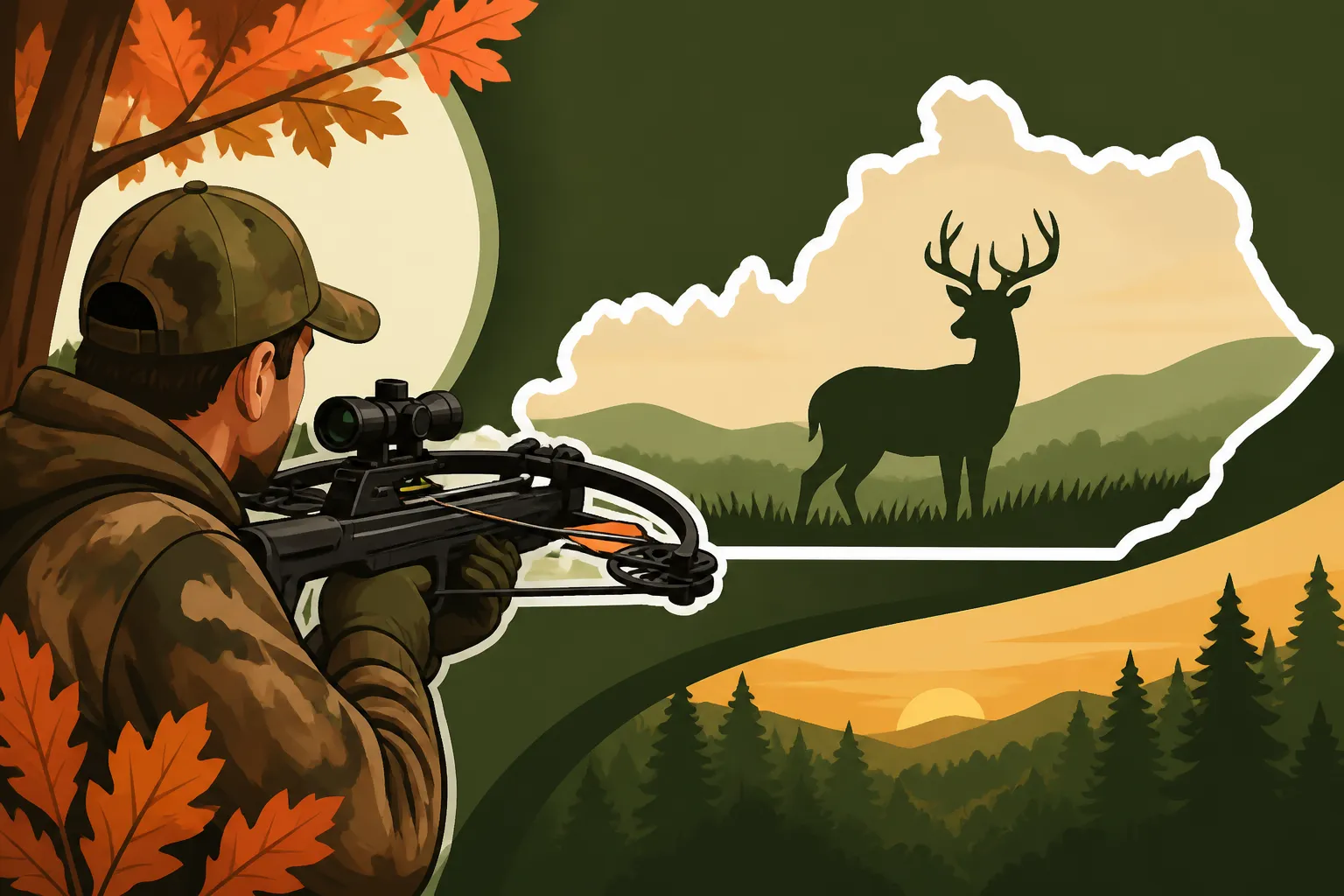
Kentucky Crossbow Rules During Archery Season
Navigating Kentucky's deer hunting regulations can sometimes feel like trying to untangle a stubborn knot, especially when it comes to understanding exactly when and where certain equipment is allowed. Many hunters, both seasoned and new, often wonder if crossbows are truly fair game during the regular archery season or if there are hidden restrictions they need to be aware of. This comprehensive guide is here to clear up all that confusion, giving you the definitive scoop on Kentucky's crossbow rules so you can hit the woods with confidence.
Understanding Kentucky's Archery Season Framework
Kentucky has always been a state that values its hunting heritage, and a big part of that is the expansive archery season. It’s a time when the woods are quieter, the leaves are changing, and deer activity can be highly predictable, especially as the rut approaches. But for some, the idea of a crossbow being used alongside a traditional vertical bow during this period can be a point of confusion, stemming from rules in other states or even older regulations here in Kentucky.
The Traditional Archery Season Structure
Kentucky's archery season is impressively long, often kicking off in early September and stretching all the way into January, creating ample opportunity for deer hunters. This extended period allows for a wide range of hunting conditions, from the hot, early days where mosquitoes are still a nuisance, to the crisp, cold late season when deer are focused solely on food. Historically, "archery season" conjured images of compound bows, recurves, and longbows, demanding a specific set of skills and physical capabilities. The essence of archery hunting has always been about getting close, about patience, and about a more primal connection to the hunt.
When Kentucky's Archery Season Opens, many hunters are eager to get out there, often using the early part of the season to scout and pattern deer before the intense pressure of gun season. The season continues well into the colder months, with opportunities for hunting the Late-Season January Lull, which presents its own unique challenges and rewards. This long season is a testament to Kentucky's commitment to providing diverse hunting experiences and managing its robust deer population.
Where Crossbows Fit into the Archery Picture
Here’s the straightforward truth that often surprises hunters from out of state or those unfamiliar with Kentucky’s specific regulations: crossbows are fully legal for hunting deer during Kentucky’s statewide archery season. There are no special permits required, no age restrictions, and no disability certifications needed. If the archery season is open, and you possess a valid hunting license and deer permit, you can hunt with a crossbow.
This might be a departure from what some hunters expect, as many states have specific "crossbow seasons" or require special allowances for their use. But Kentucky made the move to integrate crossbows directly into the general archery season, recognizing them as another form of archery equipment. This decision has broadened participation, allowing more individuals to experience the thrill of the archery season who might not be able to draw a vertical bow due to physical limitations, or who simply prefer the stability and accuracy a crossbow can offer. It's about accessibility and opportunity, ensuring that more people can enjoy the outdoors and participate in responsible deer management.
Specific Crossbow Regulations for Kentucky Deer
Understanding that you can use a crossbow is one thing, but knowing how to use it legally and ethically is just as important. Kentucky, like all states, has specific regulations governing the equipment itself and who can use it to ensure fair chase and hunter safety. These aren't overly complicated, but they are crucial for every hunter to know.
Legal Definition and Equipment Requirements
When it comes to the nitty-gritty of what makes a crossbow legal in Kentucky for deer season, the rules are fairly straightforward. A legal crossbow must have a working safety mechanism and be capable of propelling a broadhead-tipped bolt. The Kentucky Department of Fish and Wildlife Resources (KDFWR) doesn't typically specify minimum draw weights for crossbows in the same way they might for vertical bows (e.g., a 40-pound minimum for deer with vertical bows). However, common sense and ethical hunting dictate that you use a crossbow with sufficient power to deliver a humane kill. Most modern hunting crossbows range from 150 to 400+ pounds of draw weight, easily meeting the ethical power requirements for deer.
For bolts and broadheads, the rules are consistent with vertical archery equipment. Your bolt must be fitted with a broadhead that has at least two sharpened edges and a minimum cutting diameter of 7/8 inch. Expanding (mechanical) broadheads are legal as long as they meet this minimum cutting diameter when expanded. Fixed-blade broadheads are always a solid choice. Lighted nocks are also perfectly legal and can be incredibly helpful for tracking your shot, especially if you're hunting in low-light conditions or trying to recover a deer from a Steep Hollow. Scopes on crossbows are not only legal but expected, and they are a major reason many hunters choose crossbows for improved accuracy. You'll want to practice with your specific setup to know its limitations, especially concerning Crossbow Scopes for Kentucky Timber Ranges.
Who Can Use a Crossbow During Archery Season
This is where Kentucky truly stands out from some other states, simplifying the hunting landscape for many. In Kentucky, anyone who holds the proper hunting license and deer permit can use a crossbow during the open archery season. There are no additional hoops to jump through, no special permits for disabilities, and no age restrictions beyond the standard licensing requirements. This means if you're a seasoned hunter looking for a new challenge, a newer hunter finding vertical bows difficult, or someone with a physical limitation, the crossbow offers a viable and fully legal option.
This broad accessibility is fantastic for youth hunters as well, as it provides an easier entry point into archery season before potentially graduating to a vertical bow or firearms. For those just starting out, understanding the Kentucky Hunter Education Requirements is the first step, and the apprentice hunter license can be a great way to learn under a mentor. Whether you’re utilizing a Crossbow Versus Vertical Bow in Kentucky, the same licensing and permit requirements apply. You'll need a statewide hunting license and a statewide deer permit, both of which can be conveniently purchased via the Kentucky's Online Portal or through various vendors across the state. Using a tool like GoHunt can also assist in staying organized with your license and permit information, making sure you're always compliant.
Strategic Considerations for Crossbow Hunters
Choosing a crossbow for your Kentucky deer hunt opens up a world of strategic possibilities, but it also comes with its own set of considerations. It's not just about pointing and shooting; understanding the nuances of your equipment and how it impacts your hunting approach can make all the difference in the field.
Advantages and Disadvantages of Crossbows
Let’s be real, every piece of hunting gear has its trade-offs. Crossbows are no different, offering some significant perks while also presenting a few challenges that vertical bow hunters might not face.
Advantages:
- Easier Learning Curve: For many, the transition to a crossbow is much quicker than mastering a vertical bow. The ability to shoulder the weapon, use a scope, and maintain a consistent draw weight simplifies the shooting process. This can be a huge benefit for new hunters or those with limited time for practice.
- Higher Accuracy Potential: Modern crossbows are incredibly accurate, often rivaling rifles at closer ranges. This precision can boost confidence and lead to more humane shots, especially when Hunting a Funnel Between Two Hollows or navigating dense cover where shot windows are tight.
- Reduced Physical Demand: Holding a vertical bow at full draw for an extended period can be taxing, especially in cold weather or when waiting for the perfect shot opportunity. Crossbows remove this physical strain, allowing hunters to stay focused and steady. This is a game-changer for older hunters or those with shoulder or back issues.
- Effective in Cold Weather: Drawing a vertical bow can be cumbersome with bulky cold-weather clothing. A crossbow, being already cocked, eliminates this movement, making it ideal for those cold-weather sits often experienced when Hunting the Late Muzzleloader Week in December or during the tail end of the archery season when Kentucky's Archery Season Runs Into January.
Disadvantages:
- Bulkier and Heavier: Crossbows are generally wider and heavier than vertical bows, making them less maneuverable in thick brush or when climbing into a Treestand Setups in Daniel Boone National Forest. They can also be more cumbersome to carry on long walks into remote public land.
- Louder Shot: The sound of a crossbow firing is significantly louder than a vertical bow. While not as loud as a firearm, it can be enough to spook nearby deer, especially if you miss or if other deer are within hearing range.
- Slower Follow-Up Shots: Unlike a vertical bow, which can often be re-nocked quickly for a second shot (though rarely advisable), re-cocking a crossbow is a more involved and time-consuming process. This essentially makes it a single-shot weapon in a hunting scenario.
- Different Handling in Tight Cover: The wide limbs of a crossbow can be a hindrance when still-hunting through dense undergrowth or trying to maneuver for a shot in a ground blind. You need to be acutely aware of your surroundings to avoid snagging a limb.
Ethical Considerations and Shot Placement
Regardless of your weapon choice, ethical hunting is paramount. A crossbow's inherent accuracy doesn't excuse a lack of practice or poor judgment. It's still critical to know your effective range and stick to it. Just because a crossbow can shoot 60 yards accurately on a target range doesn't mean it's an ethical shot on a living animal at that distance in a real-world scenario, especially considering factors like deer movement, wind, and unseen obstacles.
Practice diligently from your actual hunting setup – whether it's from a treestand, a ground blind, or kneeling behind a log. Use the same broadheads you intend to hunt with to ensure your aim is true. When choosing broadheads for Timber Shots, consider options that provide deep penetration and reliable cutting. Fixed blades are often favored for their simplicity and durability, especially when you might encounter bone.
Shot placement is key to a quick, humane harvest. Aim for the vitals (heart/lungs) to ensure a clean kill and minimize suffering. After the shot, be patient. Give the deer time to expire before you begin tracking. Even a perfectly hit deer might run a short distance. Rushing in too soon can push a marginally hit animal further, making recovery much more difficult. When Tracking a Deer Through Kentucky Leaf Litter, look for blood, broken branches, and displaced leaves. If daylight fades, don't hesitate to wait until morning if conditions allow; Blood Trailing After Dark in Kentucky can be challenging and dangerous, and it's always better to make a calm, calculated recovery.
Navigating Permits, Reporting, and Public Land with a Crossbow
So, you've got your crossbow dialed in, you've practiced your shots, and you understand the ethical considerations. Now, let's make sure you're squared away with all the necessary paperwork and know the lay of the land, especially if you're planning to hunt Kentucky's vast public areas.
Licenses, Permits, and Telecheck
The good news for crossbow hunters in Kentucky is that the licensing and permit process is exactly the same as for vertical bow hunters, and indeed, for most deer hunting methods. You’ll need a valid Kentucky hunting license for the current season, which will set you back a reasonable Kentucky Resident Hunting License Cost if you're from the Commonwealth, or a Kentucky Nonresident Hunting License Cost if you're visiting. In addition to your hunting license, you'll need a statewide deer permit. This permit covers your deer harvest, regardless of whether you’re using a bow, crossbow, or even a modern firearm during their respective seasons. You can find detailed information on the Kentucky Deer Permit Cost on the KDFWR website.
Many savvy hunters opt for The Kentucky Sportsman's License Bundle, which often includes a hunting license, fishing license, and various permits, simplifying the whole process and often saving a bit of money. Once you've harvested a deer, the crucial step is reporting it through Kentucky Telecheck. This is mandatory and must be done by midnight on the day the deer is recovered. You can usually call it in or report it online. Keeping track of these dates and requirements can sometimes feel overwhelming, but utilizing resources like the official KDFWR website or even hunting apps like GoHunt can help you manage your permits and stay compliant. GoHunt often has features that can help you understand specific regulations based on your location.
Crossbow Hunting on Kentucky Public Lands
Kentucky is blessed with a significant amount of public land, including the vast Daniel Boone National Forest Hunting opportunities and numerous Kentucky Wildlife Management Areas (WMAs). The great news for crossbow hunters is that, generally speaking, the rules for crossbow usage on these public lands are identical to those for vertical bows. This means you won't typically encounter any additional restrictions just because you're toting a crossbow.
However, hunting on public land always comes with its own unique set of considerations. You'll need to be aware of specific WMA rules, which can vary. For example, some WMAs might have restrictions on vehicle access, camping, or even the type of treestand you can use. Always check the KDFWR hunting guide or specific WMA regulations before you head out. When Scouting Kentucky Public Land Before Season, pay attention to signs and designated boundaries. You can often use digital mapping tools, like those offered by GoHunt, to identify property lines, find access points, and locate potential deer sign, helping you pinpoint areas with less pressure.
Remember that Treestand Rules on Kentucky Public Land often require that portable stands be removed after a certain period or have specific identification tags. Ground Blind Rules on Kentucky WMAs also exist, usually requiring them to be unanchored or removed after a hunt to prevent damage or litter. Respecting these rules not only keeps you legal but also helps preserve these precious hunting grounds for everyone. Whether you're hunting in the rugged terrain of Daniel Boone or the more open country of Western Kentucky Bottomland Deer habitat, a crossbow is a perfectly valid and effective tool for pursuing whitetails.
| Feature | Vertical Bow (Compound/Recurve) | Crossbow |
|---|---|---|
| Physical Effort | Requires strength and practice to draw and hold. | Less physical effort; can be cocked and held ready. |
| Accuracy | Excellent with practice; form-dependent. | High, often scope-aided; less prone to human error in aiming. |
| Learning Curve | Steeper, requires more dedicated practice for proficiency. | Generally quicker to learn; familiarity with firearms aids transition. |
| Maneuverability | Generally more compact and lighter; easier in thick brush. | Bulkier, wider limbs; can be challenging in tight spaces. |
| Shot Noise | Relatively quiet; often a "thump." | Noticeably louder "thwack"; can spook nearby deer. |
| Follow-up Shot | Possible (though rare in hunting) if arrow is accessible. | Slower re-cocking process; essentially a single-shot in hunting. |
| Gear Required | Bow, arrows, release, quiver, armguard. | Crossbow, bolts, scope, cocking device, quiver. |
| Legal Status KY | Fully legal during Archery Season. | Fully legal during Archery Season; no special permits needed. |
Disclaimer
The information provided in this guide is intended for general informational purposes only and does not constitute legal advice. While we strive to keep the content up-to-date and accurate, hunting regulations are subject to change. It is the responsibility of every hunter to consult the most current Kentucky Department of Fish and Wildlife Resources (KDFWR) hunting regulations manual and local ordinances before engaging in any hunting activities. Always ensure you possess the correct licenses and permits.