Hunting a Clear-Cut Regrowth Edge
Hunting clear-cut regrowth edges in Kentucky can feel like trying to find a needle in a haystack – or, more accurately, a trophy buck in a briar patch. These dense, often impenetrable areas are notorious for holding deer, but getting a shot, or even a glimpse, is a challenge many hunters grapple with. This guide is dedicated to helping you unravel the mysteries of these productive yet frustrating habitats, offering strategies to effectively scout, locate, and ultimately harvest deer that call these thickets home.
Understanding Clear-Cuts and Why Deer Love Them
Clear-cuts, when managed properly, are whitetail magnets. They might look like a messy, tangled wasteland to the casual observer, but to a deer, they represent an all-you-can-eat buffet combined with impenetrable security. Understanding the various stages of a clear-cut's regrowth is crucial to unlocking its full potential for deer hunting.
The Dynamics of Early Successional Habitat
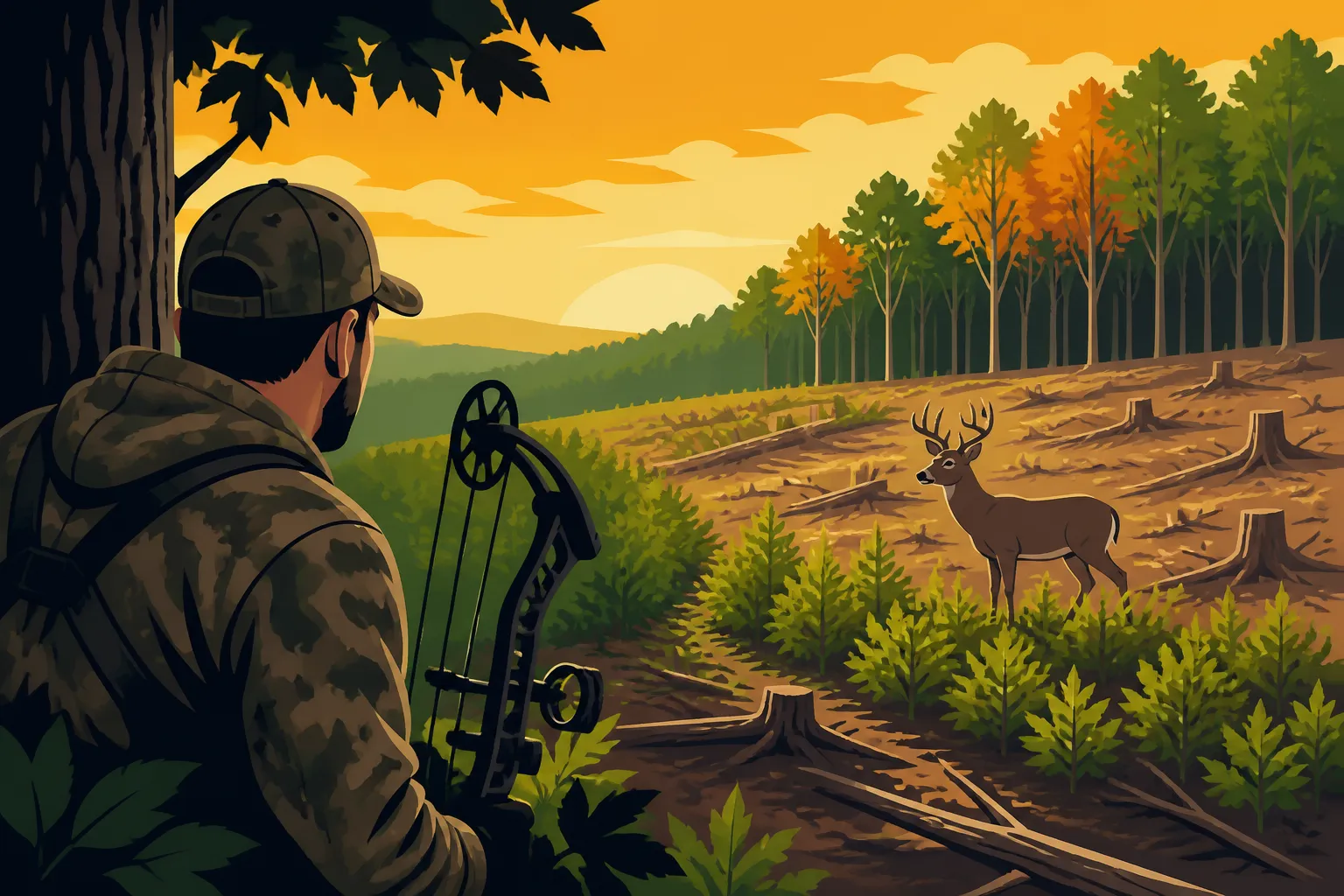
A clear-cut is simply an area where most or all trees have been harvested, leaving an open canopy that allows sunlight to flood the forest floor. This dramatic change in environment kicks off a rapid succession of plant growth, creating what biologists call "early successional habitat." Initially, after the timber is removed, you'll see a flush of grasses and herbaceous plants. Within a year or two, brambles, briars, and various hardwood saplings begin to sprout vigorously. This dense, multi-layered vegetation offers an incredible diversity of food and cover. For deer, especially, this transition period is gold. The frustration for us hunters comes from this very density – deer can vanish into it, making them incredibly difficult to find, let alone get a clean shot at. The key is to recognize that deer are actively using these areas, and your job is to figure out how they're using them.
Food and Cover: A Whitetail Buffet and Bedroom
Imagine a deer's perfect world: endless tender browse to munch on and thick, thorny cover to bed down in, safe from predators and prying eyes. That's precisely what a clear-cut regrowth edge offers. Young saplings like oak, maple, and cherry, along with shrubs like sumac, sassafras, and elderberry, provide a constant supply of palatable twigs and leaves. Then there are the briars and vines – greenbrier, honeysuckle, and blackberry – which are absolute favorites, especially in the late season when other food sources are scarce. These plants are packed with nutrients, making the clear-cut a primary feeding ground.
Beyond food, the sheer density of a clear-cut offers unparalleled security. A mature buck feels incredibly safe nestled within a thicket of thorns and tangled branches. It's warm in winter, shaded in summer, and provides an excellent vantage point for spotting anything approaching while remaining completely hidden. Deer will often bed down just inside the thickest part of the clear-cut, especially along the edges where they can easily slip in and out. This combination of abundant food and secure bedding explains the high deer density often found in these areas. You might be surprised at the sheer numbers when you look at the Kentucky Deer Population Estimate in counties that have active timber management.
Scouting and Locating Deer Activity on the Edge
Finding deer activity along clear-cut edges isn't always easy, but the tell-tale signs are there if you know what to look for. The trick is understanding how deer navigate these transitions from dense cover to more open areas.
Reading the Signs: Trails, Rubs, and Scrapes
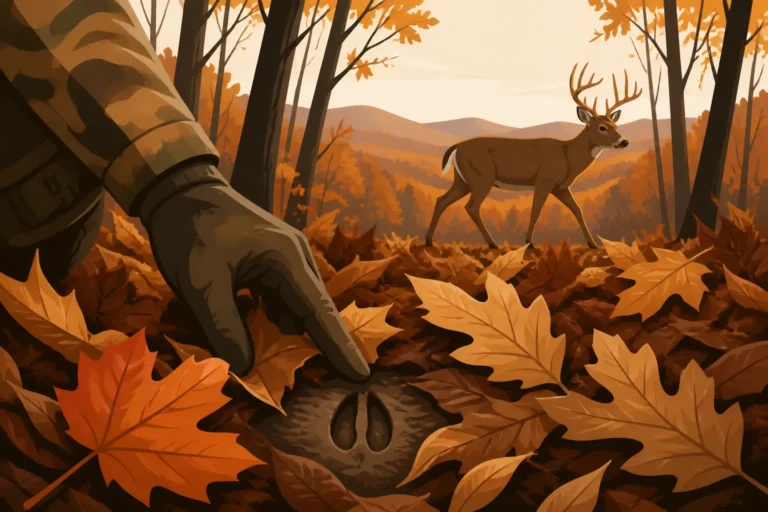
Deer, like us, are creatures of habit. While the inside of a clear-cut might be a chaotic maze, the edges often funnel deer movement. Your focus should be on these transition zones. Look for major trails that lead directly into and out of the thickest parts of the regrowth. These trails will be more defined and worn than those deeper in the timber. Often, deer will skirt the very edge, using the thicker growth for concealment while still being able to see into the more open woods.
As you scout, pay close attention to fresh rubs and scrape lines. Mature bucks, especially during the pre-rut and rut, will heavily scent-mark these transition points. A rub line leading into a clear-cut, or a series of scrapes along its border, is a surefire indicator of consistent buck activity. These are prime locations to set up. I've found that using mapping tools can be a game-changer for identifying these areas. Apps like GoHunt allow you to overlay aerial imagery with property lines, making it simple to pinpoint clear-cuts and plan your approach. Once you've identified potential clear-cuts, you can then move to more detailed Scouting Kentucky Public Land Before Season by walking the edges.
Timing is Everything: Seasonal Deer Movement
Deer utilize clear-cut edges differently throughout the year, and understanding these shifts will dramatically improve your hunting success.
- Early Season (September/October): In early archery season, clear-cuts are a primary food source. Deer will emerge from the thick cover in the evenings to browse on the lush regrowth and can often be found just inside the edges during daylight hours. Mornings might see them feeding longer before slipping back into the security cover. Targeting evenings near major trails leading to feeding areas is often productive.
- The Rut (Late October/November): This is when clear-cut edges truly shine. Bucks will cruise these edges, scent-checking for does coming out to feed or bed. The thick cover offers a safe place for does to hide, and bucks know this. I've seen some of my best rutting activity occur along these transition lines. This is a fantastic time to implement strategies like Rattling and Grunting in Kentucky, as the sounds can carry into the thick cover and entice a curious buck to investigate the edge. Understanding that the peak of the rut often falls in early November is crucial for timing your hunts here.
- Late Season (December/January): As temperatures drop and other food sources dwindle, clear-cuts continue to provide vital thermal cover and often some remaining browse. Deer will bed in the thickest parts to stay warm and protected from harsh winds. They might not move as much, but when they do, they'll often stick to the edges or short jaunts into nearby food plots if available. Morning hunts, allowing the deer to get on their feet and move before bedding down for the day, can be effective.
By combining your knowledge of deer sign with seasonal patterns, you can develop a highly effective strategy. Remember to use tools for Reading Aerial Photos for Eastern Kentucky Deer to help visualize how deer might move between clear-cuts and other habitat features.
Effective Hunting Strategies for Regrowth Edges
Once you've done your scouting and understand how deer are using a particular clear-cut edge, it's time to devise your hunting strategy. The density of these areas demands specific approaches, whether you're sitting patiently or actively pursuing game.
Stand Placement: Maximizing Your Vantage Point
Setting up effectively on a clear-cut edge requires careful consideration of wind, access, and visibility. Your goal is to be in a position to see deer as they emerge or travel along the edge, without alerting them.
- Treestands: A well-placed treestand can be incredibly effective. Look for a large, healthy tree just inside the more open timber, offering a clear view of the clear-cut edge and any established trails. You want enough height to see over some of the shorter regrowth but not so high that you silhouette yourself. Consider the prevailing wind direction; deer will often approach clear-cuts upwind. Your entry and exit routes are critical – you need to be able to get in and out silently, without crossing deer travel paths or alerting bedding deer. A good example of this consideration for access can be found in discussions about Entry Routes Through Standing Beans; the principle of silent, concealed access applies here too. When selecting a stand, remember the importance of a secure setup, similar to those for Treestand Setups in Daniel Boone National Forest.
- Ground Blinds: Ground blinds can also be excellent, especially if you can brush them in effectively. They offer unparalleled concealment and are ideal for areas where suitable treestand trees are scarce or where you want to hunt a specific pocket of dense cover. Place your blind slightly inside the timber line, facing the clear-cut edge, ensuring you have shooting lanes cut before the season starts. Make sure your blind is anchored securely, as discussed in Using a Ground Blind on Kentucky Public Land, and blend it into the natural environment.
Still-Hunting and Drives: Getting Into the Thick Stuff
Sometimes, waiting just isn't enough, especially when deer are locked down deep within the clear-cut during daylight hours. That's when more active strategies come into play.
- Still-Hunting the Edge: Still-hunting involves moving incredibly slowly and deliberately, taking a few steps, then pausing for several minutes to scan for movement. This is particularly effective along clear-cut edges. You're trying to spot a deer before it spots you, often catching them browsing or slipping through the dense cover. Walk into the wind, always, and try to use natural contours or slight rises for better visibility. The key is patience; you'll cover very little ground, but you'll do it thoroughly. Wear quiet clothing that won't snag on thorns and briars, and durable boots that can handle the rough terrain.
- Small Deer Drives: For those particularly stubborn clear-cuts where deer seem to materialize and disappear like ghosts, a small deer drive with a few trusted hunting partners can be highly effective. This usually involves one or two "drivers" slowly pushing through a section of the clear-cut, while "blockers" are strategically positioned on the opposite side or along anticipated escape routes. The goal isn't to run deer, but to gently push them towards the waiting hunters. This method requires careful planning, clear communication, and strict safety protocols. Discussions around Deer Drives With Three or Four Hunters offer excellent insights into how to execute these safely and successfully in Kentucky.
Calling and Decoying on the Edge
During certain times of the season, adding calling and decoying to your strategy can tip the odds in your favor along a clear-cut edge.
- Rattling and Grunting: The clear-cut's dense cover can muffle sounds, but it can also make a buck curious enough to step out. During the rut, aggressive rattling sequences followed by grunts can sound incredibly realistic from a hidden position on the edge. Bucks often stage just inside the cover, listening before committing. The sounds might just be enough to pull a mature buck out into a shooting lane. Remember that Rattling and Grunting in Kentucky can be very effective, especially when paired with the right timing during the rut, which often peaks in November.
- Decoys: While less common directly on a clear-cut edge due to limited visibility, a well-placed decoy can be a powerful draw. A buck decoy set up slightly in the open, facing the clear-cut, can challenge a dominant buck to investigate. A doe decoy can lure in a cruising buck looking for companionship. Placement is crucial: ensure it's visible from within the clear-cut and that your shot is clear if a deer commits. Consider using a compact, lightweight decoy that's easy to pack in and out of rugged terrain.
Gear and Considerations for Tough Terrain
Hunting clear-cut regrowth edges demands a specific mindset and, frankly, some tough gear. The environment is unforgiving, and being unprepared can quickly turn a promising hunt into a miserable one.
Essential Gear for the Clear-Cut Hunter
Your gear needs to stand up to the challenge of briars, dense undergrowth, and often steep, uneven terrain.
- Footwear: Forget your flimsy sneakers. You need sturdy, waterproof boots with excellent ankle support and a stiff sole. Look for models designed for rough terrain and briar resistance. Brands like Irish Setter and Lacrosse offer excellent options. The last thing you want is a thorn through your boot or a twisted ankle miles from the truck. Boots for Kentucky Hollows and Creek Bottoms discussions often highlight the need for such robust footwear.
- Clothing: Durability is key. Choose brush pants or chaps that can withstand constant contact with thorns and dense vegetation. Quiet, rip-resistant fabrics are essential. Layering is always smart in Kentucky, given our variable weather. And, of course, blaze orange is a must during firearms seasons, for both safety and legal compliance. Whether you prefer Blaze Orange Jackets Versus Vests, ensure you meet the minimum requirements, especially when hunting with others or during deer drives.
- Optics: A good pair of binoculars (8×42 or 10×42) is invaluable for spotting subtle movement within the dense clear-cut or for identifying deer stepping out onto the edge. A rangefinder is also crucial. Shot opportunities can be brief, and knowing the exact distance to a potential shooting lane can make all the difference. While the thick cover limits long-range glassing, quality optics help penetrate the brush visually.
- Backpack: A comfortable, durable daypack is a necessity. It needs to hold your water, snacks, extra layers, first-aid kit, and any game processing tools. Look for a pack with external pockets that allow quick access to frequently used items. GoHunt's gear reviews often feature packs suitable for these kinds of rugged hunts.
Overcoming the Challenges: Visibility and Shot Angles
The number one challenge in hunting clear-cuts is visibility. You're often dealing with extremely limited sightlines, and finding a clear shooting lane can feel like hitting the lottery.
- Pre-Season Prep: The best way to combat poor visibility is through pre-season preparation. If you've identified a promising spot, use a saw or pruners to create a few clear shooting lanes from your stand location before the season. Be mindful of rules on public land regarding habitat modification. These lanes don't need to be wide-open highways; just enough to allow an ethical shot at a deer moving along the edge.
- Ethical Shots: Due to the dense cover, you must be extremely disciplined about shot selection. Never take a rushed or questionable shot. Wait for the deer to step into a clear opening and present a broadside or quartering-away angle. A wounded deer that dives back into a clear-cut can be incredibly difficult to recover, even with a strong blood trail. Knowing your personal limits and the capabilities of your equipment is paramount.
- Blood Trailing: Despite your best efforts, sometimes a deer will run back into the thick stuff after the shot. This is where a methodical approach to Blood Trailing After Dark in Kentucky, or even in daylight, becomes critical. Mark the spot of the shot, identify the direction of travel, and look for every speck of blood, broken branches, or disturbed leaves. Bring a good headlamp and possibly even a tracking dog if legal and available. Take your time, and don't push too quickly.
| Strategy Type | Best Time of Year | Description | Pros | Cons |
|---|---|---|---|---|
| Treestand Sit | All seasons | Positioning a stand just outside the clear-cut edge, overlooking trails or pinch points. | Good vantage, scent control from height, quiet. | Limited shooting lanes, can be difficult to access quietly. |
| Ground Blind | All seasons | Setting up a blind within or very close to the clear-cut, brushed in for maximum concealment. | Excellent concealment, comfortable, can use in areas without suitable trees. | Limited visibility, requires pre-season setup of shooting lanes. |
| Still-Hunting | All seasons | Slowly and quietly moving along the clear-cut edge, pausing frequently to glass for movement. | Highly mobile, allows active searching, can surprise bedded deer. | Extremely challenging in thick cover, requires immense patience and keen observation. |
| Small Deer Drive | Rut/Late Season | One or two hunters push a small section of the clear-cut, while others wait on stand or as blockers on exit routes. | Effective for pushing out stubborn deer, can be very productive in specific situations. | Requires multiple hunters, safety is paramount, can spook deer out of the area if not executed properly. |
| Calling/Decoying | Rut | Using grunts, rattles, or a decoy to draw a buck out of the clear-cut's dense cover. | Can pull wary bucks into range, adds an active element to passive hunting. | Limited visibility can hinder decoy effectiveness, calling can also alert deer if overused or poorly timed. |
Ultimately, successfully hunting a clear-cut regrowth edge in Kentucky comes down to diligence in scouting, patience in the stand, and adaptability in your approach. These areas are tough to hunt, but the rewards—a mature Kentucky whitetail—are well worth the effort.
Disclaimer
Please note that hunting regulations and laws can change. Always consult the official Kentucky Department of Fish and Wildlife Resources (KDFWR) regulations before planning any hunting trip. This guide is for informational purposes only and does not supersede state laws or professional advice.