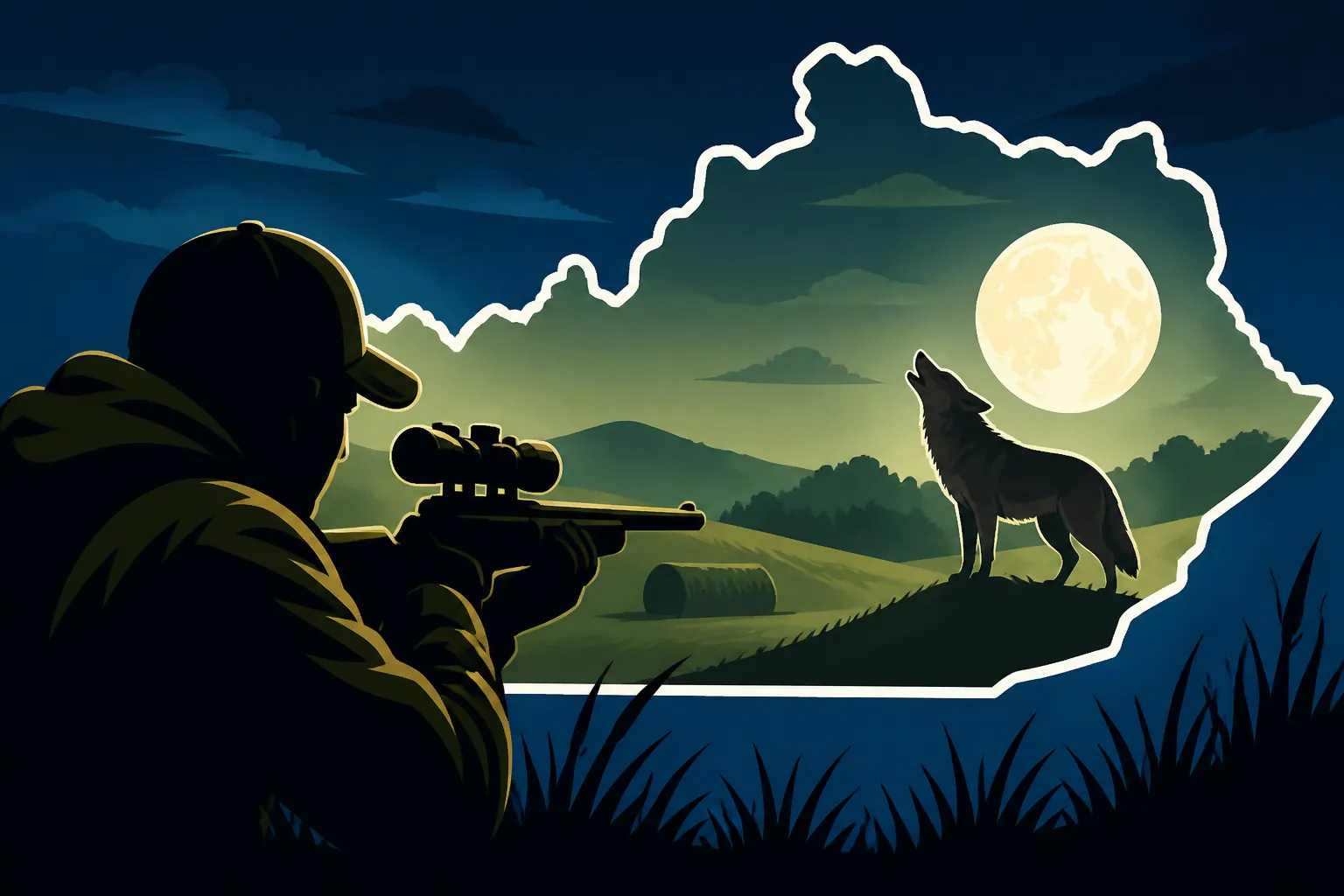
Night Hunting Rules for Kentucky Coyotes
The silence of a Kentucky night can be deceptively peaceful, but for many landowners and deer hunters, it’s a constant reminder of the unseen activity of coyotes. These adaptable predators are a significant concern, preying on fawns, turkey poults, and even small livestock, leading many to seek effective control methods. This comprehensive guide will walk you through the specifics of night hunting coyotes in Kentucky, detailing the legal framework, necessary gear, and best practices to help you manage these opportunistic hunters effectively and within the bounds of the law.
Understanding Why Coyotes Get a Nighttime Invitation
Coyotes are incredibly intelligent and resilient animals that have carved out a substantial niche across Kentucky, from the deepest hollers of Appalachia to the sprawling agricultural fields of the west. Their presence, while a natural part of the ecosystem, often comes with a direct impact on other game species and domestic animals. This is precisely why hunters often turn to night hunting—it's not just a sport, but a critical management tool. The frustration of seeing fewer deer fawns or turkey poults due to coyote predation is a driving force, pushing hunters to learn tactics for these wary, largely nocturnal creatures.
The Nocturnal Nature of Kentucky Coyotes
If you've spent any time in the Kentucky woods, you know that coyotes are masters of stealth, and their peak activity often coincides with the twilight hours and deep night. While they can and do move during the day, especially in areas with less human pressure, they truly thrive under the cover of darkness. This nocturnal preference allows them to evade human activity and capitalize on the vulnerability of other animals that might be less vigilant after sunset. Think about it: a coyote slipping through a field edge under the pale moonlight is far less likely to be detected by a deer or turkey, or by you, for that matter.
Their keen senses, particularly their hearing and smell, are amplified in the quiet of the night, making them incredibly difficult to approach. They'll often use logging roads, creek bottoms, and fencerows as travel corridors, moving silently from one hunting ground to the next. Understanding this behavior is your first step toward success. You can't hunt them effectively if you're not where they are, when they're active. Many hunters find that the late evening and early morning hours offer the best chances, when coyotes are often on the prowl for a meal or returning to a den.
The Impact on Kentucky's Deer and Turkey Populations
The sheer number of coyotes across Kentucky has a noticeable effect on our beloved deer and turkey populations, and it's a constant concern for wildlife managers and hunters alike. Coyotes are opportunistic predators, and while they'll readily scavenge, they are also very capable hunters of live prey. Their diet frequently includes small mammals, birds, and insects, but a significant portion, especially during certain times of the year, consists of deer fawns and turkey poults. Imagine a Kentucky spring, full of new life, only for many of those fawns and poults to fall victim to a hungry coyote pack.
Research and observations consistently show that coyotes can have a measurable impact on fawn survival rates, particularly in areas with higher coyote densities. They're incredibly efficient at locating and ambushing vulnerable young animals. Similarly, ground-nesting birds like turkeys are susceptible to coyote predation on their nests and young. This isn't just an anecdotal concern; it’s a biological reality that contributes to the ups and downs of game populations. For hunters who pour countless hours into scouting, planting food plots, and managing their land for healthy deer and turkey, the presence of a thriving coyote population can feel like a direct threat to their efforts and the future of the hunt. This frustration often motivates hunters to take an active role in predator control.
Deciphering Kentucky's Official Night Hunting Regulations
When it comes to hunting any species after dark, the rules can get a bit more complex than your typical daytime hunt. Kentucky has specific guidelines for night hunting coyotes, and understanding every detail is paramount to staying legal and safe. You don't want to find yourself on the wrong side of a conservation officer because you overlooked a small but important regulation. The great news is that coyotes are classified as an unprotected species in Kentucky, which means they can be hunted year-round, day or night, with no bag limit. However, "unprotected" doesn't mean "unregulated," especially when you add artificial light into the mix.
Legal Hours and Permitted Equipment
This is where the rubber meets the road for night hunting coyotes in Kentucky. While the season is year-round and twenty-four hours a day, the how you hunt at night is strictly defined. For coyotes, the use of artificial lights is explicitly permitted. This is a game-changer for night hunters, as it allows for target identification and shot placement that would be impossible in complete darkness. However, there are nuances.
Here's a breakdown of what's generally allowed:
- Artificial Lights: Yes, you can use spotlights, headlamps, or weapon-mounted lights to locate and shoot coyotes. The key is that the light can be used for "locating and taking coyotes," which means it's legal to spot them and then shoot them using that light. This is a crucial distinction from some states where lights are only allowed for locating, not for taking.
- Night Vision and Thermal Imaging: These advanced optics are legal for hunting coyotes in Kentucky. This is a huge advantage for serious night hunters, as they allow for passive detection without visible light, letting you observe and approach coyotes without spooking them. Many hunters swear by thermal scopes for their ability to pick up heat signatures in thick cover.
- Firearms and Ammunition: Standard legal firearms for hunting in Kentucky, including rifles, shotguns, and handguns, are permitted. There are no specific caliber restrictions for coyotes, as they are not a big game species.
- Electronic Calls: Electronic callers, which are often restricted for other game animals like turkeys, are perfectly legal and highly effective for coyotes, especially at night when visual cues are limited.
What to watch out for:
- Hunting from a Vehicle: While you can use lights from a vehicle to spot coyotes, you generally cannot shoot from a vehicle. The exception is if you have a specific disability permit, but for the average hunter, you need to be off-road and dismounted. This means no "spotlighting and shooting from the truck." You need to exit the vehicle before you fire.
- Proximity to Dwellings: Always be mindful of safety zones around occupied dwellings. You cannot discharge a firearm within 150 yards of an occupied dwelling without the consent of the owner or occupant. This is a general firearm safety rule that applies to all hunting, day or night.
- WMA Specific Rules: As mentioned earlier, while statewide regulations permit night hunting for coyotes, individual Wildlife Management Areas (WMAs) may have their own specific restrictions or closures. Always consult the Kentucky Department of Fish and Wildlife Resources (KDFWR) regulations for the specific WMA you plan to hunt. For example, some WMAs might have different rules regarding hunting hours or methods on their specific tracts.
Let's make this clear with a quick table:
| Equipment/Method | Legality for Night Coyote Hunting in Kentucky | Notes |
|---|---|---|
| Artificial Lights | Permitted | Spotlights, headlamps, weapon-mounted lights are legal for locating and taking coyotes. |
| Night Vision Optics | Permitted | Legal for detection and aiming. |
| Thermal Imaging Optics | Permitted | Legal for detection and aiming. |
| Electronic Calls | Permitted | Highly effective for luring coyotes. |
| Firearms | Permitted | Rifles, shotguns, handguns are legal. No caliber restrictions for coyotes. |
| Hunting from a Vehicle | Generally NOT Permitted | You must dismount from a vehicle to shoot. Lights may be used from a vehicle to spot, but the actual shot must be taken dismounted. Exceptions exist for hunters with mobility impairments and specific permits. |
| Hours | Year-Round, 24 Hours | Coyotes are unprotected, so hunting is permitted anytime, day or night, throughout the year. Always check specific WMA rules. |
Specific Rules for Public Lands and Safety Zones
While the general statewide rules for night hunting coyotes are fairly straightforward, you absolutely must pay close attention to the specific rules for the land you intend to hunt, especially if it's public land. Just because it's legal statewide doesn't mean it's legal everywhere. For instance, the regulations on a remote piece of Daniel Boone National Forest might differ from a small, intensely managed Wildlife Management Area (WMA).
Many WMAs have stricter rules regarding hunting hours, weapon types, and even specific closures. Some public lands might restrict night hunting entirely, or they might limit it to specific periods or areas. It's crucial to consult the KDFWR Hunting & Trapping Guide and any specific addendums for the WMA or public land you're interested in. The Kentucky Hunt Fish App is an invaluable tool for this, often providing up-to-date maps and specific regulations for various tracts of land. Don't rely on general knowledge when it comes to WMAs; always double-check.
Beyond public land rules, always be hyper-aware of your surroundings and safety zones. Kentucky has laws about discharging firearms near residences or buildings. As mentioned, the 150-yard safety zone around an occupied dwelling without permission is critical, and this rule does not take a break when the sun goes down. At night, it can be significantly harder to identify dwellings or other structures, making it even more important to thoroughly scout your hunting location during daylight hours. This will help you identify potential hazards, property lines, and ensure you're setting up in a safe, legal spot. Understanding these boundaries and Kentucky Public Land Hunting Hours is part of being a responsible hunter. Remember, safety always comes first, especially when you're dealing with reduced visibility.
Strategies and Essential Gear for Successful Night Hunts
Alright, you've got the regulations down. Now, let's talk about putting that knowledge into action. Night hunting coyotes isn't just about flipping on a light and shooting; it requires strategy, patience, and the right equipment to be both effective and ethical. It's a different game than daytime hunting, demanding a deeper understanding of the environment and the animal. Many successful night hunters treat it almost like a chess match, anticipating moves and planning every step.
Scouting and Setup for After-Dark Success
Effective night hunting starts long before you ever step foot in the woods after dark. Just like when you're preparing for deer season, thorough daylight scouting is non-negotiable. You need to know the terrain, potential travel corridors, and where coyotes are likely to be. Are there pinch points between thickets? Logging roads they frequent? Creek beds they might follow? Use tools like the Using the Kentucky Hunt Fish App or GoHunt's mapping features to identify key features, property boundaries, and potential setup locations.
When scouting, look for signs of coyote activity: tracks, scat, and especially denning areas if you're hunting during the spring or early summer. Pay attention to prevailing winds and thermals. At night, thermals can be tricky, often sinking into hollows and then rising on ridges, so understanding how air currents move in your specific location is vital to avoid having your scent blow right to an approaching coyote. Planning your entry and exit routes is also crucial; you don't want to stumble through dense undergrowth in the dark. Identify clear paths that allow for quiet movement.
Your setup location should offer a good vantage point, allowing you to scan effectively with your light or optics, but also provide some back cover to break up your silhouette. Often, hunting a field edge, a clearing in the timber, or a natural funnel can be highly productive. Consider bringing a comfortable seat or a ground blind that's easy to set up quietly. Remember, coyotes have excellent hearing, and any unnatural noise can alert them. This preparation helps you avoid crowded areas and gives you a better chance of Finding Ground That Sees Fewer Hunters.
Essential Gear for a Kentucky Night Hunt
Beyond the legal necessities, having the right gear can make or break your night hunt. Since you're operating in low-light conditions, your equipment list will look a bit different from a typical daytime hunt.
- Powerful Spotlight or Weapon-Mounted Light: A good quality spotlight with a red or green filter (coyotes are less sensitive to these colors) is paramount for scanning and target identification. Weapon-mounted lights are excellent for immediate target illumination once you've spotted a coyote. Look for brands known for durable, bright lights like Wicked Lights or CoyoteLight.
- Electronic Caller: This is your primary tool for attracting coyotes. Invest in a high-quality caller with a wide range of realistic sounds, from distress calls (rabbit, fawn, bird) to coyote vocalizations (howls, barks). FOXPRO and Primos are popular choices that offer excellent sound quality and remote-control functionality. Knowing how to effectively use a caller is key to Coyote Calling in Kentucky Farm Country.
- Night Vision or Thermal Optics (Optional, but Recommended): If your budget allows, night vision binoculars or thermal scopes offer a distinct advantage. They allow you to detect coyotes from much further distances without emitting visible light, letting you remain undetected. Thermal is particularly effective for picking up coyotes moving through dense brush or tall grass where a spotlight might not penetrate.
- Rifle and Ammo: A flat-shooting rifle in a caliber like .223 Remington, .204 Ruger, or .243 Winchester is ideal for coyotes. Use accurate, reliable ammunition. Shotguns with buckshot or heavy loads can also be effective in dense cover or at closer ranges.
- Shooting Sticks or Bipod: Stability is key for accurate shots in low light. A good set of shooting sticks or a bipod will help you hold steady.
- Warm, Quiet Clothing: Even on milder nights, temperatures can drop. Dress in layers, using quiet fabrics that won't rustle. Wool or fleece are excellent choices. While not always required for coyote hunting, remember How Much Blaze Orange Kentucky Requires for other species, emphasizing safety in all hunting.
- Headlamp with Red Light: For hands-free illumination when setting up, packing out, or tracking, a small headlamp with a red light option is invaluable. It helps preserve your night vision and is less likely to spook animals.
- First-Aid Kit: Accidents can happen, especially in the dark. Always carry a basic first-aid kit.
- GPS or Mapping App: Even if you know the area, a GPS device or a mapping app like GoHunt on your phone is essential for navigation, especially if you need to track a wounded animal or find your way back to your vehicle in the dark. This is crucial for Scouting Kentucky Public Land Before Season.
Calling Tactics and Ethical Considerations
Once you're set up and ready, the calling begins. Start with relatively subtle distress calls or pup howls, gradually increasing intensity if you don't get a response. Often, coyotes will approach silently, so constant scanning with your light or thermal is critical. Be patient; a setup might require 20-30 minutes of calling before a coyote commits. If nothing shows up, quietly pack up and move to a new location. Remember that coyotes learn quickly, so vary your sounds and locations.
Ethical hunting practices are just as important at night as they are during the day. This means ensuring you have a clean, ethical shot. Never take a shot if you're not certain of your target or what's beyond it. In the dark, this requires extra diligence. Use your optics and lights to clearly identify the animal before you pull the trigger. Always strive for a quick, humane kill. If you wound an animal, make every effort to track and recover it. This might mean following a blood trail with a strong light, even if it takes you into thick cover. Respect for the animal, even a predator, is a cornerstone of responsible hunting. You want to contribute to healthy wildlife management, not just harvest an animal without thought for the consequences.
Night hunting can be an incredibly rewarding experience, offering a unique challenge and a chance to truly immerse yourself in the nocturnal world of Kentucky's wildlife. By understanding and adhering to the regulations, using appropriate gear, and employing ethical hunting practices, you can become a more effective and responsible coyote hunter.
Disclaimer
Please remember that hunting regulations can change. It is always the hunter's responsibility to consult the most current Kentucky Department of Fish and Wildlife Resources (KDFWR) hunting and trapping guide and specific WMA regulations before engaging in any hunting activity. This guide is for informational purposes only and should not be considered legal advice.