Opening Weekend Crowds on Kentucky Public Land
The crisp air of opening weekend in Kentucky is something truly special, filled with anticipation and the promise of a deer hunt. But let's be honest, that magic can quickly turn to frustration when you pull into the parking lot of your favorite public land WMA or forest access point, only to find it overflowing with trucks and trailers. It's a common struggle for many of us who cherish the outdoors: how do you find success and a bit of peace when it feels like half the state had the same idea? This guide will dive deep into understanding these opening weekend crowds and, more importantly, equip you with the strategies and tactics to navigate them successfully, ensuring your Kentucky hunting experience remains rewarding.
Understanding the Opening Weekend Rush
There's a reason why so many hunters flock to the woods the moment the season officially opens. It's an ingrained tradition, a social event for some, and for others, simply the first real chance they've had all year to get out there. But this collective enthusiasm creates unique challenges, especially on public land.
The Allure of Opening Day
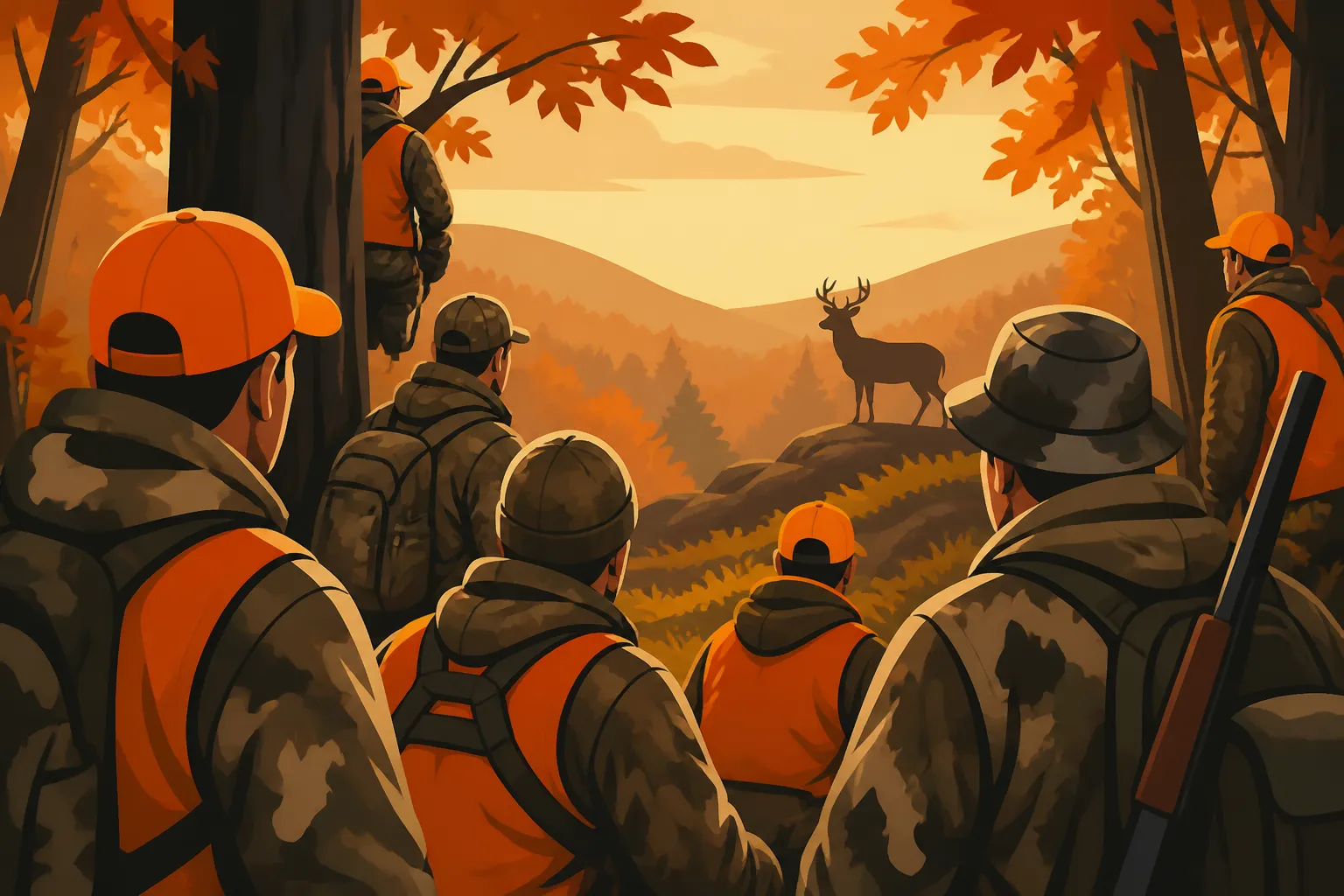
For many Kentucky hunters, the opening day of deer season, especially the modern gun season, is practically a holiday. It's been marked on calendars for months, the gear has been prepped, and the stories from past seasons are fresh in everyone's mind. The excitement is palpable, and for good reason: the deer haven't been heavily pressured yet, and there's always that chance of catching a big buck off guard before they wise up. This allure often leads to a massive influx of hunters, from seasoned veterans to those just starting out, all converging on the same limited public spaces. Think about a place like parts of the Daniel Boone National Forest or popular Wildlife Management Areas (WMAs) such as Big South Fork or Redbird. On opening weekend, these areas can feel less like vast wilderness and more like a busy park, particularly close to easily accessible roads or established trails. It's the shared dream of harvesting that first deer of the season that draws everyone out, creating both camaraderie and competition.
Where Hunters Tend to Congregate
Understanding where hunters gather is half the battle. Most people, naturally, gravitate towards convenience. This means access points, well-maintained forest roads, and established parking lots become immediate hotspots. From there, many hunters won't venture too far, often sticking to ridge tops, creek bottoms, or obvious travel corridors within a quarter to a half-mile of their vehicle. Any feature that makes the hunt easier – a logging road, a gentle slope, or even a visible sign of deer activity from the road – will draw more attention. Public land plots that might have some form of food source, even if it's just a natural persimmon grove or an oak flat with heavy acorn drop, will also see increased traffic. For instance, in some western Kentucky bottomland areas, any slight elevation or mature timber stand near crop fields will be hunted hard. If you're using an app like GoHunt to scout and find these common access points, you'll quickly realize how quickly the pressure can build up.
The Impact on Deer Movement
The sheer volume of human activity on opening weekend doesn't just impact your hunting experience; it fundamentally changes deer behavior. Whitetails are incredibly adaptable, and they learn quickly. What might have been a prime feeding area or a well-used trail during scouting can become a ghost town once the orange army invades. Deer will often go nocturnal, moving primarily under the cover of darkness. They'll abandon open areas and easy-to-traverse terrain in favor of the densest, most difficult-to-access cover they can find – thickets, steep hollows, deep ravines, or impenetrable clear-cuts. This means that your pre-season scouting, while still valuable, might need an immediate adjustment once the hunting pressure sets in. It's a common scenario: you scouted a beautiful ridge with fresh rubs, only to find it completely quiet come opening morning because a dozen other hunters pushed the deer into a seemingly unhuntable thicket just over the next knob. Understanding this behavioral shift is critical for adapting your approach.
Strategies for Avoiding Crowds and Finding Solitude
While it might feel like an impossible task, finding solitude on Kentucky public land during opening weekend is absolutely achievable. It just requires a bit more effort, some strategic thinking, and a willingness to deviate from the beaten path.
Embracing the Backcountry Approach
The simplest, yet often hardest, way to avoid crowds is to walk further than everyone else. Most hunters have a comfort zone, typically within a mile of their vehicle. If you're willing to push past that, you'll start to see a significant drop-off in pressure. This means embracing a "backcountry" mindset, even if it's just a few miles into a large public tract like the Daniel Boone National Forest. You’ll need a solid backpack, plenty of water, navigation tools (like a reliable GPS unit or a mapping app like GoHunt downloaded for offline use, as cell service can be spotty), and a good understanding of the terrain. Consider areas with steep ravines, dense laurel thickets, or rocky outcrops that deter casual hikers. These are the places where deer will seek refuge, and where you're more likely to find yourself hunting truly undisturbed animals. Think about hunting a funnel between two hollows that requires a significant hike, or pushing into a remote section that others overlook. It's physically demanding, no doubt, but the reward of finding unpressured deer and enjoying the quiet wilderness is often worth every strenuous step.
Targeting Less Popular Public Lands
Not all public lands are created equal in terms of hunter density. While big names like Land Between the Lakes or expansive WMAs will always draw a crowd, there are often smaller, lesser-known tracts scattered across the state that receive far less attention. These might be smaller state forest parcels, conservation areas managed by local entities, or even isolated sections of larger WMAs that are harder to access. It takes a bit more research and local knowledge to uncover these gems. You can use resources from the Kentucky Department of Fish and Wildlife Resources (KDFWR) to explore different public land options, looking for areas that might not be right on a main highway or lack extensive trail systems. Sometimes, an obscure WMA that's nestled deep in a county and only has a couple of parking spots can offer a surprisingly peaceful hunt. Don't be afraid to look at counties that aren't traditionally "big buck" hotspots, as they may offer less competition and a more relaxed experience.
Timing Your Hunt Differently
The "opening weekend rush" is exactly that: a rush. If your schedule allows, consider delaying your hunt by a day or two. Many hunters will be out Saturday and Sunday, but come Monday or Tuesday, the woods tend to empty out significantly. Even if you can only get a half-day hunt in on a weekday, you'll likely encounter far fewer people and experience more natural deer movement. Another strategy is to embrace Hunting the Late-Season January Lull when many hunters have packed it in. The pressure has settled, deer patterns have become more predictable, and while the weather might be colder, the peace and quiet can be unbeatable. While this guide focuses on opening weekend, adjusting your timing, even for a few days, can make a huge difference in your public land experience throughout the season.
Tactics for Hunting Pressured Public Land Deer
When hunting public land that's seen a lot of pressure, especially during opening weekend, you can't rely on the same tactics you might use on private, low-pressure ground. You need to be smarter, stealthier, and more patient.
Focusing on Thick Cover and Sanctuaries
When the woods fill with hunters, deer don't just disappear; they relocate to the safest, thickest places they can find. This usually means dense clear-cuts, briar patches, laurel and rhododendron thickets in the eastern part of the state, or incredibly steep, overgrown hollows that most hunters won't bother with. Instead of looking for traditional open timber or well-worn trails, shift your focus to these "sanctuaries." These are often areas where visibility is poor, and movement is difficult, but that's precisely why deer feel secure there. Learn to read aerial photos for Eastern Kentucky deer and identify these dense pockets of cover. Sometimes, the only way to hunt these spots effectively is to still-hunt incredibly slowly, picking apart every bit of cover, or to set up a ground blind right on the edge of such a thicket, waiting for deer to move in or out, especially during midday when other hunters are active. Understanding Where Daniel Boone Forest Bucks Bed can give you a significant advantage in these pressured environments.
Using Subtle Entry and Exit Routes
Every step you take on pressured public land counts. A noisy walk in, crashing through leaves, or silhouetting yourself on a ridge line is a sure way to alert every deer (and potentially every other hunter) in the vicinity. Focus on subtle entry and exit routes. If possible, use creek beds (when dry), field edges before first light, or thick fence rows that mask your movement and sound. Always be mindful of the wind and thermals. On a Kentucky ridge, thermals often rise in the morning and fall in the evening, so plan your approach and stand placement accordingly. You want to move like a ghost, arriving at your stand or hunting location well before daylight, and remaining still and quiet. When using a mapping tool like GoHunt, try to identify routes that keep you hidden from common travel corridors and away from known bedding or feeding areas until you are in your setup. Remember, the less disturbance you create, the more likely deer are to move naturally around you. This is also where knowing how to set up a treestand effectively can be critical, ensuring you have a quiet approach.
Adapting Your Calling and Decoy Strategies
On highly pressured public land, aggressive calling can often backfire. Deer have heard it all before, and they've learned to associate it with danger. Instead of loud grunts and snort-wheezes, consider very subtle calling. A quiet doe bleat or a light tickle on a grunt tube might be enough to pique a buck's curiosity without putting him on high alert. If you're going to use rattling antlers, gauge the volume carefully; sometimes, a soft tickle can be more effective than a full-on knockdown fight simulation. Decoys can also be hit or miss. While a well-placed decoy can work wonders on unpressured deer, on public land, they can often scare off wary bucks or, worse, attract other hunters to your location. If you choose to use one, consider a very subtle, low-profile decoy or a simple tail twitcher, placed to be less visible from long distances. For turkey season, the same principles apply; over-calling a pressured gobbler can quickly lead to him shutting down.
Safety and Ethics When Hunting Near Others
Hunting on crowded public land isn't just about strategy; it's also about responsibility. Ensuring everyone's safety and maintaining a respectful hunting environment is paramount, especially when you're sharing the woods with many others.
Prioritizing Safety and Awareness
First and foremost, safety always comes first. When there are more hunters in the woods, the risk of accidents increases. This is why blaze orange requirements are so important in Kentucky. For rifle season, hunters are required to wear hunter orange on the head, back, and chest, amounting to at least 500 square inches. This isn't just about identifying yourself to other hunters; it's about making sure you are seen and that everyone can operate safely. Always positively identify your target and what's beyond it. Never take a questionable shot. Be acutely aware of your surroundings, scanning not just for game, but for movement or sounds that might indicate another hunter. It's smart practice to announce your presence if you hear another hunter nearby, a simple "Hunter!" can prevent a dangerous situation. This constant vigilance is critical when you're in a shared hunting space.
Respecting Other Hunters' Space
There's an unwritten code of conduct when hunting public land, and respecting others' space is a huge part of it. If you arrive at a parking lot and see several vehicles already there, it's a good indication that the immediate area will be hunted. Rather than crowding in, consider moving to a different access point or being prepared for a longer walk to get away from others. If you stumble upon another hunter's setup, whether it's a treestand, a ground blind, or even just fresh boot tracks heading into a promising area, give them a wide berth. Nobody wants their hunt spoiled by someone walking in on them. A general rule of thumb is to give at least a quarter to a half-mile of space if possible. Noise discipline is also important – keep conversations quiet, use your phone discreetly, and avoid making unnecessary racket that could disturb others' hunts. Good sportsmanship is about creating an enjoyable experience for everyone, even if it means sometimes giving up a spot you had your eye on. Knowing How Many Acres of Public Land Kentucky Has helps you realize there's room for everyone if we're all considerate.
The Importance of Patience and Good Sportsmanship
Opening weekend crowds can test anyone's patience. You might encounter an inexperienced hunter, someone who isn't adhering to unwritten etiquette, or simply feel frustrated by the lack of "peace" you envisioned. However, maintaining a positive attitude and practicing good sportsmanship is essential. We're all out there for similar reasons – to connect with nature, challenge ourselves, and hopefully, put some meat in the freezer. Instead of letting frustration get the best of you, try to see it as an opportunity to be an ambassador for hunting. If you encounter a new hunter who seems lost, offer a friendly word of advice. If someone unintentionally crowds you, consider moving rather than confronting. The more we foster a positive, respectful hunting community, the better the experience will be for everyone in the long run. Public land is a shared resource, and it thrives when we all treat it, and each other, with respect. Ultimately, finding ground that sees fewer hunters might be the best route to maintaining your zen.
Public Land Pressure Points and Strategies Table
To help visualize some of the common challenges and solutions for hunting crowded public land, here's a quick overview:
| Pressure Point Category | Common Examples on Public Land | Strategy to Mitigate Pressure |
|---|---|---|
| Access & Proximity | Parking lots full, hunters close to roads, easy-to-reach timber | Walk further (1+ mile from access), target less popular access points, use mapping tools (GoHunt) to find remote entry. |
| Deer Behavior | Deer go nocturnal, retreat to thick cover, become skittish | Focus scouting on dense bedding areas, hunt midday, set up on fringes of sanctuaries, employ still-hunting. |
| Hunter Density | Many hunters in popular WMAs, Daniel Boone Forest, established trails | Hunt weekdays, seek out smaller/less-known public tracts, use steep terrain to your advantage. |
| Noise & Disturbance | Loud talking, vehicle noise, crashing through brush | Master subtle entry/exit, use natural cover (creeks, fencerows) for approach, minimal calling, avoid aggressive rattling. |
| Visibility & Safety | Risk of mistaken identity, unclear shooting lanes | Wear ample blaze orange, confirm target, know what's beyond, give other hunters wide berth. |
Disclaimer
Always consult the most current Kentucky Department of Fish and Wildlife Resources (KDFWR) regulations before any hunting activity, as rules and seasons are subject to change. This guide is for informational purposes only and does not supersede official KDFWR guidelines.