Rangefinders for Open Elk Meadows
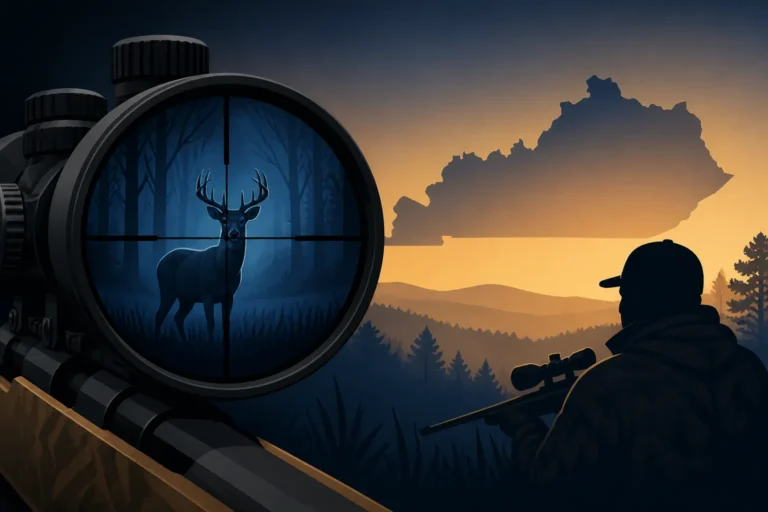
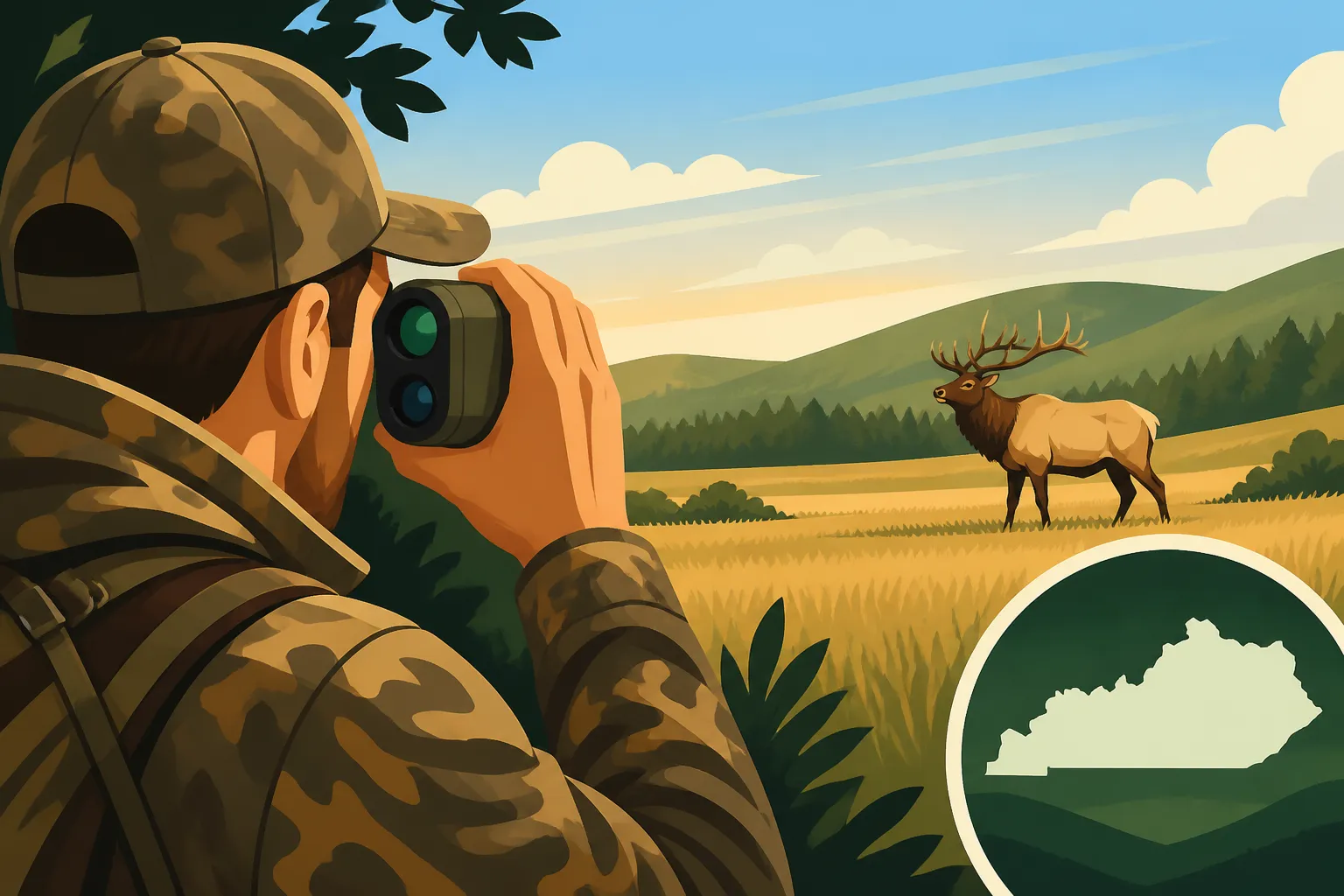
There’s nothing quite like standing on a ridge in Kentucky’s elk restoration zone, glassing a distant meadow where a herd of majestic elk might be feeding. The thrill is undeniable, but so is the challenge of accurately judging those long-distance shots when a bull finally steps out. You don't want to spend precious seconds guessing, or worse, make a poor shot because you miscalculated. This guide will help you understand how to pick and use a rangefinder effectively in the unique, often deceptive, terrain of Kentucky's elk country, ensuring you're always confident in your shot.
The Unique Challenges of Ranging in Kentucky's Elk Meadows
Hunting Kentucky's burgeoning elk herd presents a fascinating blend of Eastern timber hunting and Western open-country ranging. While much of our beautiful elk habitat is rugged, forested terrain, there are also those crucial reclaimed mine lands and expansive clearings—what we affectionately call "elk meadows"—where animals often feed and stage. These open spaces, however, come with their own set of optical illusions and ranging difficulties that can throw off even experienced hunters.
One of the biggest issues is the sheer scale. When you’re used to whitetail hunting in dense Kentucky timber, a 150-yard shot might feel like a long poke. But in a reclaimed meadow, that same distance can look deceptively close, while a 300-yard shot might appear impossible without a rangefinder. The wide-open nature, often without distinct landmarks for reference, makes "eyeballing" distances incredibly unreliable. This optical trickery is compounded by varying light conditions, from the deep shadows of early morning to the bright glare of midday. You might see an elk clearly, but your brain struggles to process the true distance without physical cues. Furthermore, the undulating topography of these reclaimed areas, with their gentle slopes and subtle depressions, can also play tricks. What looks like a flat shot might actually be uphill or downhill, requiring angle compensation, which many standard rangefinders simply don't offer. This is where specialized tools become truly invaluable.
Key Features to Look for in an Elk Hunting Rangefinder
When you’re gearing up for an elk hunt in the mountains of Eastern Kentucky, your rangefinder needs to be more than just a toy. It needs to be a robust, reliable piece of equipment that can handle the specific conditions you’ll encounter. Forget the basic models you might use for backyard archery practice; elk hunting demands more.
Range and Magnification
First and foremost, you need a rangefinder with ample range capabilities. While you might not be taking 1,000-yard shots, being able to accurately range targets out to 800-1,200 yards for deer-sized animals (and often further for reflective objects like trees or rocks) gives you crucial flexibility. This extended range isn't just for extreme shots; it allows you to range distant landmarks, verify lines of sight, and get a better feel for the vastness of the landscape. When an elk appears far off, you can range the tree line behind it, a rise in the ground, or a boulder to get a solid idea of the distance, even if the animal itself is difficult to pin down immediately. Couple this with a good magnification, typically 6x or 8x. This extra zoom helps you steady the unit and pinpoint the exact part of the elk you want to range, especially when dealing with brush or other obstructions. It also acts as a handy supplementary optic for quick glances, especially if you've already got your primary binoculars strapped to your chest. Many hunters often use their rangefinder for a quick spot-check before pulling out their main binos for a longer glassing session.
Angle Compensation and Scan Mode
This is where a rangefinder truly earns its keep in Kentucky’s hilly terrain. Angle compensation, sometimes called "bow mode" or "true horizontal distance," adjusts for uphill and downhill shots. Shooting at an angle, whether steep or shallow, changes the effect of gravity on your bullet or arrow. Without angle compensation, your rangefinder might tell you a straight-line distance of 300 yards, but if you're shooting steeply downhill, the actual "hold" you need for gravity is closer to, say, 270 yards. Ignoring this can lead to a clean miss over the back of an animal. For the varied topography of our elk zone, from the steep hollows around Hunting Eastern Kentucky Coalfield Country to the more rolling reclaimed lands, angle compensation is a non-negotiable feature. Look for models that clearly display both the line-of-sight distance and the compensated distance.
Another critical feature is "scan mode." This allows you to continuously range as you pan across the landscape or track a moving animal. Imagine an elk slowly walking along the edge of a field. With scan mode, you can keep your rangefinder pointed at it, getting continuous updates on its distance as it moves, rather than having to press the button repeatedly and risk missing a crucial moment. This is especially useful when an animal is slightly obscured by sparse cover or when you're trying to pick it out from a group. You can sweep the area, and the rangefinder will often pick up the closest target, giving you the best possible reading. Pairing this with robust optics for glassing reclaimed mine land can save you a lot of guesswork.
Durability and Ergonomics
Kentucky elk hunting often means challenging weather and rough terrain. Your rangefinder needs to withstand rain, snow, bumps, and drops. Look for models that are fully waterproof and fog-proof, ensuring they perform reliably even when the weather turns sour. A rubberized armor coating provides grip and shock absorption, protecting the internal components from accidental impacts as you navigate steep trails or dense undergrowth. Think about the physical demands of applying for a Kentucky elk quota hunt; you'll be putting in the miles, and your gear needs to keep up.
Ergonomics are also paramount. You need a rangefinder that fits comfortably in your hand, allowing for one-handed operation. Easy-to-reach buttons, a clear display, and intuitive controls are essential. Trying to fumble with tiny buttons or a complex menu when a bull is bugling 400 yards away is the last thing you want. Some models offer different reticle options and display colors, which can be useful for varying light conditions. Test out how easy it is to focus and get a quick reading. Remember, in hunting, seconds count, and a poorly designed rangefinder can cost you an opportunity. Investing in quality here pays dividends in reliability and user experience. Check reviews from other hunters who have used them in similar rugged conditions; sometimes platforms like GoHunt forums offer great insights on real-world performance.
Practical Ranging Techniques for Varying Terrain
Having a great rangefinder is one thing; knowing how to use it effectively in the field is another. Kentucky's elk country offers a mix of open meadows, dense timber, and undulating hillsides, each requiring slightly different ranging strategies.
Ranging in Open Meadows and Reclaimed Lands
When you're glassing an open meadow, those wide-open spaces can be deceiving. The first rule is: always range. Never assume. An animal that looks 200 yards might be 300, and 400 can easily look like 250. Before you even think about setting up a shot, or even while you're still calling a Southeastern Kentucky bull elk, get a range on key landmarks. Range the far treeline, a prominent rock, or a change in elevation. This gives you reference points. If an elk steps out between two ranged points, you can quickly estimate its distance or get a fast reading on the animal itself.
Use your scan mode liberally here. As elk move, you can track them, getting continuous updates on their distance. If the animal is standing perfectly still, try to range its chest area. If it's partially obscured by tall grass or small shrubs, range the ground immediately in front of or behind it, and then compensate. If your rangefinder has a "priority mode" that favors the furthest or closest target, understand how it works and use it to your advantage. For example, if there's a bush between you and the elk, a "furthest target priority" might help you get a reading on the animal itself rather than the bush. Conversely, if you're trying to pick an elk out of a group, a "closest target priority" might give you the lead animal's distance. Utilizing tools like the GoHunt mapping layers can also help you identify these open areas and plan your ranging strategy before you even step foot in the field.
Ranging Through Sparse Cover and Timber Edges
Kentucky's elk don't always hang out in the wide-open. Often, they'll skirt the edges of timber, move through sparse clear-cuts, or feed in brushy draws. Ranging in these conditions becomes a game of precision. First, make sure your rangefinder's magnification is high enough (6x or 8x) to help you isolate your target. Sometimes, you'll need to range multiple times to ensure you're getting a reading on the animal and not a branch in front of it or a tree behind it. If you get wildly different readings, it means you're not locked onto the animal.
Try ranging the ground directly under the animal's feet. This often provides a clearer line of sight than trying to hit the elk itself, especially if it's partially obscured. Use angle compensation constantly, as timber edges and draws often involve significant elevation changes. Remember that a bullet will drop less on a steep uphill or downhill shot than on a flat shot of the same true horizontal distance. This is why a feature that provides true ballistic range is so important. When setting up treestand setups in Daniel Boone National Forest, even if you’re deer hunting, you’re practicing a similar skill set that will translate to those more timbered elk areas.
Compensating for Angles and Uneven Terrain
This is where understanding your rangefinder's angle compensation feature truly shines. Let's say your rangefinder gives you a line-of-sight distance of 350 yards, but an angle-compensated distance of 320 yards. Always use the compensated distance for your ballistic calculations. That 320 yards is the "flat ground equivalent" distance your bullet or arrow will behave as if it were traveling.
Table: Rangefinder Modes and Their Uses
| Feature | Description | Best Use Case in Kentucky Elk Country |
|---|---|---|
| Line-of-Sight (LOS) | Straight-line distance to target. | Ranging distant landmarks, non-shooting estimations. |
| Angle Compensation | Adjusts LOS distance for incline/decline, providing "true horizontal" distance. | Critical for all uphill/downhill shots on elk. |
| Scan Mode | Continuous ranging as you sweep the unit. | Tracking moving elk, scanning for multiple targets, identifying closest. |
| Target Priority | Closest: Ranges nearest object. Farthest: Ranges furthest object. | Closest: Hunting in brushy areas. Farthest: Ranging past obstacles. |
| Ballistic Calculator | Integrates with your cartridge/arrow data to suggest holdovers/clicks. | For long-range rifle shots, advanced precision. |
When stalking or still-hunting, continually range your surroundings. Range trees, rocks, and changes in terrain. This constant practice will help you develop a mental map of distances and prepare you for a quick shot opportunity. If you're on a steep ridge, range the bottom of the hollow and the opposing ridge. Knowing these distances cold will give you confidence when an animal finally appears. This diligent approach is also incredibly useful when Scouting Kentucky Public Land Before Season to learn the lay of the land.
Practice Makes Perfect: Sharpening Your Ranging Skills
Like any skill in hunting, ranging takes practice. You can have the most expensive, feature-packed rangefinder on the market, but if you don't know how to use it quickly and efficiently under pressure, it's just dead weight in your pack. Make ranging a routine part of your off-season preparations and every time you're in the field.
Start by practicing in your backyard or a local park. Range everything: trees, fence posts, houses. Get a feel for how your rangefinder operates, how quickly it acquires a target, and how stable you need to be to get a good reading. Then, take it into terrain similar to what you'll find in the elk zone. Visit a state park with some hills or a local public hunting area. Range objects at various distances and angles. Pay close attention to how the angle compensation feature works and what readings it provides. Don't just rely on the displayed numbers; try to visualize the impact of those compensated distances.
Another excellent practice method is to range an object, then walk the distance or use a mapping app like Scouting With the Kentucky Hunt Fish App or one integrated with GoHunt to confirm the actual distance. This will help you train your eye to better judge distances in different environments and under varying light conditions. The more you use your rangefinder in varied settings, the more instinctive it will become to pull it out and get a rapid, accurate reading when that trophy bull steps into an open meadow. Remember, that split-second decision can make all the difference between a successful hunt and a missed opportunity, especially when you've invested so much time and effort into Hunting Kentucky's Record Elk Herd.
Disclaimer
This article is for general informational purposes only and does not constitute professional advice. Laws, prices and regulations vary by location and change over time. Consult a qualified professional for guidance on your specific situation.