Slate and Glass Calls in Wet Weather
There's nothing quite as frustrating as heading out for a spring gobbler hunt, full of anticipation, only to have a sudden downpour or persistent drizzle render your trusty friction calls useless. That beautiful, crisp yelp or cut you perfected in the dry living room turns into a muffled, squeaky mess the moment moisture hits it. It's a common struggle for turkey hunters across Kentucky, especially during our often unpredictable spring weather, but with a few smart strategies and some preparation, you can keep your slate and glass calls singing, even when the skies open up.
Why Wet Weather Wreaks Havoc on Friction Calls
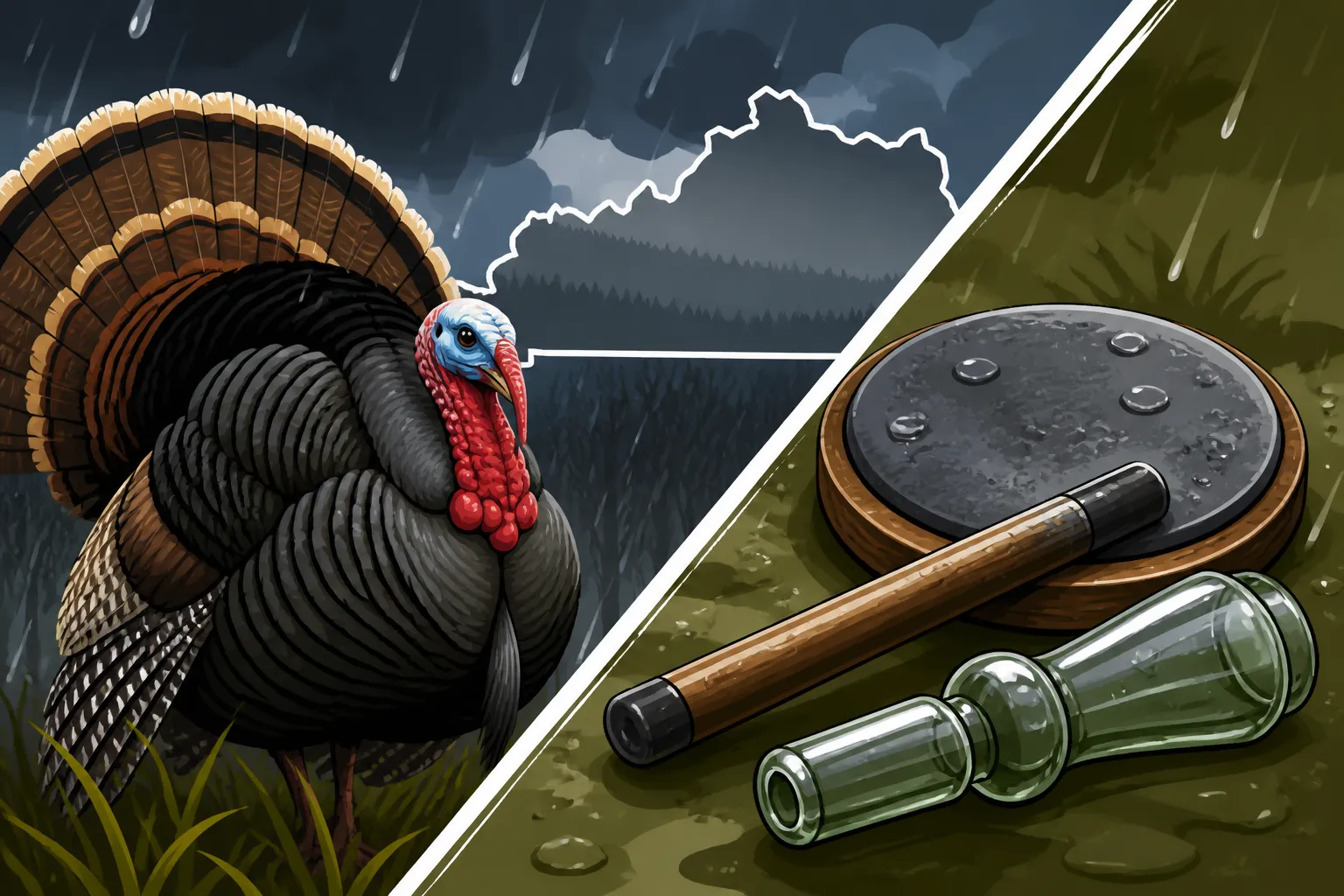
Before we dive into solutions, let's really understand why moisture is such a nemesis for your slate and glass calls. It’s not just an annoyance; it’s a fundamental disruption of the physics that make these calls work so well in the first place. When you drag a striker across the surface of a pot call – be it slate, glass, or even aluminum – you're creating friction and vibration. This vibration is what produces the sound waves that mimic a turkey's vocalizations.
The Role of Friction and Surface Texture
Think about how a bowstring works; the rosin on the bow creates the necessary grip to make the strings vibrate. It's similar with a pot call. The finely conditioned surface of your slate or glass provides just the right amount of microscopic texture for the striker to grab onto. This "grab" allows the striker to vibrate rapidly, producing that distinct turkey sound. When water, even a tiny amount, gets between the striker and the calling surface, it acts as a lubricant. Instead of grabbing and vibrating, the striker slides, creating a dull, muted, or completely silent sound. It’s like trying to walk on ice with smooth shoes – no traction, no effective movement. This is precisely why a sudden shower can instantly silence your most reliable call, leaving you feeling helpless in the woods.
The Impact of Striker Material and Moisture
It’s not just the call surface itself that suffers. Your strikers, whether they're made of wood, carbon, or synthetic materials, are also susceptible to moisture. A wet striker tip can carry water onto your calling surface, exacerbating the problem. Wooden strikers, in particular, can absorb moisture, causing the tip to swell or soften. This changes the way the striker interacts with the pot, further degrading the sound quality. A striker that performs flawlessly when dry might become a sloppy tool when damp, unable to generate the sharp, consistent friction needed for realistic turkey sounds. This can be especially frustrating when you've invested time in finding the perfect striker to match a specific call, only to have its performance compromised by a little rain.
Preparing Your Calls for Inclement Weather
The best offense is a good defense, and that certainly holds true for protecting your calls from wet weather. A little preparation before you even step foot in the Kentucky woods can make all the difference between a productive hunt and a silent, frustrating one.
Waterproofing and Sealing Your Call Pot
While you can't completely waterproof the calling surface itself, you can certainly protect the rest of your call. Many pot calls, especially those with wooden pot bodies, are vulnerable to moisture absorption. A wooden pot that swells or warps from water exposure can actually change the tone of the call, or even crack over time. Consider applying a waterproof sealant or wax to the wooden parts of your call. Products designed for woodworking or even a good quality furniture wax can help repel water and protect the wood from swelling. Just be absolutely sure not to get any of this sealant on the actual calling surface or the rim where the striker makes contact, as that will mute your sound just as effectively as rain. This proactive step can significantly extend the life of your call and ensure consistent performance through many seasons.
Conditioning Surfaces for Moisture Resistance
This is perhaps the most crucial step for slate and glass calls. A properly conditioned surface is your first line of defense against moisture. For slate calls, you'll typically use a piece of sandpaper (often 100-120 grit) or a conditioning stone to roughen the surface. This creates those microscopic peaks and valleys essential for friction. In wet conditions, some hunters find that slightly over-conditioning their slate can give it a bit more bite. Don't go overboard, but a slightly coarser texture can sometimes help the striker grip better even with a tiny bit of moisture present.
For glass calls, the conditioning process is similar but often involves a finer grit sandpaper or a specialized conditioning pad. Glass is less porous than slate, so the key is to ensure the surface is consistently roughened. Some hunters even experiment with a very fine pumice powder rubbed into the surface to create additional friction points without overly scratching the glass. The goal is to create a surface that sheds water somewhat while still providing ample friction. Always re-condition your call if you notice the sound deteriorating, even in dry conditions, as natural oils from your hands or dust can smooth the surface. This continuous care is vital for optimal performance.
Pre-Treating Strikers
Just like your call surface, your strikers need attention too. For wooden strikers, especially those with unfinished tips, consider a light sanding with fine-grit sandpaper (around 220-320 grit) to create a slightly coarser tip that can grip better. Some hunters even lightly score the tip with a razor blade in a crosshatch pattern for extra grip in damp conditions, though this can wear down the striker faster.
Alternatively, carrying multiple strikers is a smart play. Designate one or two as your "wet weather" strikers. These can be carbon fiber or synthetic strikers, which are far less susceptible to moisture absorption than wood. Their consistent density and non-porous nature mean they'll perform much more reliably when damp. Keep your primary wooden strikers protected and dry in a dedicated pouch or sleeve, ready for when conditions improve. This preparation ensures you're not caught off guard when a gobbler answers across a soggy ridge. When hunting Spring Turkey Hunting in Kentucky, having a diverse set of strikers is always a good idea.
Field Tactics for Wet Weather Calling
Even with the best preparation, you’ll inevitably face situations where rain starts falling mid-hunt. This is where smart field tactics come into play, allowing you to adapt and keep calling effectively.
Protecting Calls While Hunting
The most immediate and effective tactic is simply to keep your calls dry. This might sound obvious, but it's often overlooked in the heat of the moment. Many turkey vests have dedicated call pockets, but few are truly waterproof. Consider carrying your pot calls in a small, waterproof dry bag or a heavy-duty Ziploc bag tucked deep within a secure pocket of your vest. Only pull the call out when you’re ready to use it, and immediately put it back after your calling sequence.
Even if you’re tucked under a nice, thick pine for cover, water can still drip onto your calls. Always call with the pot call angled slightly downwards so water runs off, rather than pooling on the surface. If you’re using a box call alongside your friction calls, remember to protect it too, as a wet paddle or lid can create terrible squeaks. Turkey Gear for a Kentucky Spring often includes specific pouches for these items.
On-the-Fly Surface Reconditioning
Sometimes, despite your best efforts, your call surface will get wet or become slick. Don't despair! This is why you always carry your conditioning tools with you. As soon as you notice the sound degrading, take out your sandpaper or conditioning stone. Give the surface a quick, vigorous rub to remove moisture and re-expose the fresh, textured material. For glass calls, a quick wipe with a clean, dry cloth followed by conditioning can often revive the sound.
It's also a good idea to carry a small, very fine piece of steel wool or a Scotch-Brite pad specifically for cleaning striker tips. If your wooden striker tip gets wet and matted, a gentle rub can dry it out and rough up the surface, restoring some of its grip. Remember, this isn’t about making the call perfect; it’s about making it functional enough to get that gobbler to commit. Every little bit of sound quality helps, especially when trying to pinpoint a bird from a distant roost, as discussed in Calling a Kentucky Gobbler Off the Roost.
Utilizing Other Call Types
While this article focuses on slate and glass, it’s vital to recognize that they aren’t your only option. When conditions are truly miserable, and your friction calls just aren't cutting it, pivot to other calls that are less affected by moisture. Mouth calls (diaphragm calls) are your absolute best friend in wet weather. Since they are used internally, moisture doesn't impact their performance at all. They allow you to call hands-free and produce a wide range of realistic sounds, making them ideal when you need to focus on your shotgun or bow.
Here's a quick comparison of call types in wet conditions:
| Call Type | Wet Weather Performance | Notes |
|---|---|---|
| Mouth Call | Excellent | Unaffected by external moisture. Hands-free operation. Requires practice. |
| Box Call | Poor to Moderate | Wooden parts swell and warp. Can become squeaky or silent. Some waterproof versions exist, but not all. |
| Slate Call | Poor to Moderate | Surface becomes slick. Can be reconditioned in the field. Needs striker protection. |
| Glass Call | Poor to Moderate | Surface becomes slick. Can be reconditioned in the field. Needs striker protection. |
| Locator Calls (Owl, Crow) | Excellent to Good | Generally less affected by moisture, especially plastic versions. Still, avoid letting water pool inside air holes. |
Don't be afraid to switch it up. A gobbler that might ignore your wet pot call might respond to a well-executed series of yelps from your mouth call. Carry a few different types, and be ready to adapt to whatever Mother Nature throws your way. This adaptability is key when you're Run-and-Gun Turkey Tactics on Public Land and conditions change quickly.
Strategic Location and Patience
Sometimes, the best wet weather tactic isn't about your calls at all, but about your position. Turkeys, much like hunters, often seek refuge from the rain. They might be less active, less likely to gobble, and potentially huddled in thicker cover or under large canopy trees. Instead of calling aggressively with a compromised call, try to position yourself strategically. Use terrain features, natural cover, and even your GoHunt app to identify potential roosting spots or areas with dense cover where turkeys might be weathering the storm.
Patience becomes even more critical in these conditions. Rather than constantly trying to force a response with a call that isn't performing, set up in a likely travel corridor or feeding area, stay quiet, and listen intently. A silent approach combined with an occasional, short, and sweet calling sequence from a dry mouth call might be all it takes to convince a rain-soaked gobbler to investigate. Remember, the less you disturb a wary bird with off-key calling, the better your chances are when a break in the weather, or your calls, finally cooperate.
Post-Hunt Care for Longevity
The hunt might be over, but your job isn't done. Proper post-hunt care, especially after exposing your calls to moisture, is essential for their longevity and consistent performance next time you're chasing longbeards in Kentucky.
Thorough Drying
As soon as you get home, take all your calls out of your vest and allow them to air dry thoroughly. Don't throw them back into a dark, damp pocket. Remove the strikers from the pots, and if possible, disassemble any multi-piece calls to allow air circulation. Let them sit in a well-ventilated area for at least 24-48 hours. Avoid direct heat sources like radiators or sunlight, as rapid drying can cause wooden parts to crack or warp. A fan blowing gently across them can speed up the process without causing damage.
For calls that got particularly soaked, you might notice some changes in the wood or surfaces. This is normal. Just ensure they are completely dry before moving on to the next step. If you regularly hunt in wet conditions, having a dedicated "drying station" at home can be a simple but effective way to maintain your gear.
Reconditioning and Storage
Once completely dry, inspect your calling surfaces. If they were exposed to moisture, they might need a light reconditioning. Use your sandpaper or conditioning stone to bring back that crisp texture. Clean any residue off your strikers, and re-sand their tips if they appear matted or slick.
When storing your calls, always keep them in a place with stable temperature and humidity. A dedicated call case with individual compartments is ideal, as it prevents calls and strikers from rubbing against each other, which can wear down surfaces. Consider adding a small desiccant packet (like those found in new shoes or electronics) to your call case to absorb any residual moisture. This prevents mildew and ensures your calls are in prime condition for your next outing, whether it's hunting the Kentucky Fall Turkey Season or chasing spring birds again next year. Proper storage is often overlooked, but it's a simple step that significantly prolongs the life and performance of your valuable calling tools.
Disclaimer
This article is for general informational purposes only and does not constitute professional advice. Laws, prices and regulations vary by location and change over time. Consult a qualified professional for guidance on your specific situation.