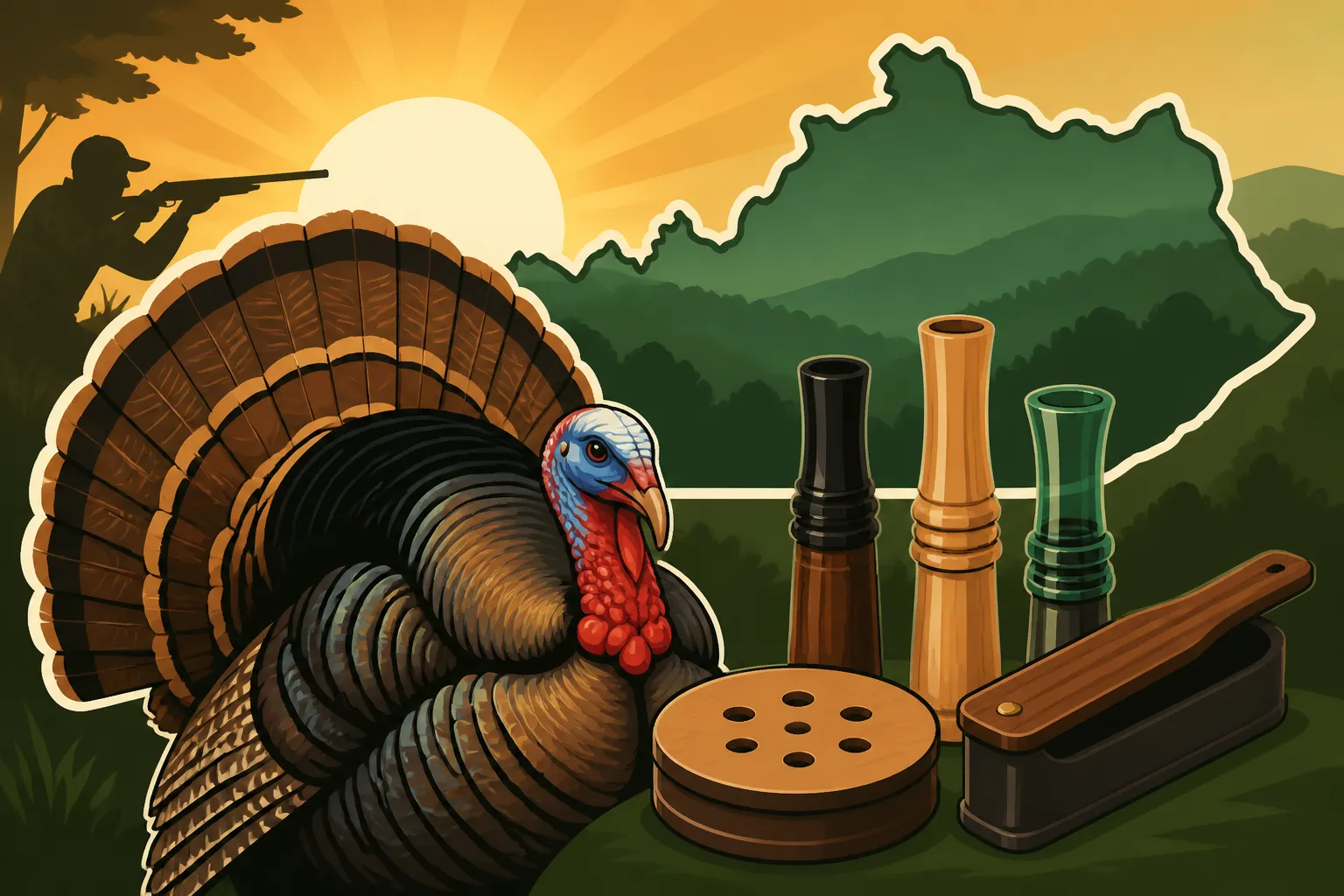
Turkey Calls Worth Carrying in Kentucky
The sound of a lone gobble ripping through the morning air is enough to send shivers down any turkey hunter's spine, but getting that bird to commit can feel like an impossible puzzle. We've all been there: that moment of confusion when a gobbler hangs up just out of range, or simply goes silent, leaving you wondering if your calls sound more like a dying cat than a lovesick hen. This guide is here to unravel the mystery, helping you understand the various turkey calls available and how to effectively use them to coax those wary Kentucky longbeards into range.
Understanding the Different Types of Turkey Calls
When it comes to turkey hunting, your voice is your most potent weapon. However, since most of us aren't born with the ability to perfectly imitate a hen's yelp or a gobbler's strut, we rely on a diverse arsenal of calls. Each type has its own strengths and weaknesses, making it more suitable for certain situations or skill levels. Knowing what each call does best is the first step to building an effective calling strategy that works in Kentucky's varied terrain, from the dense hardwoods of the Daniel Boone National Forest to the open fields of the Bluegrass region.
Friction Calls: Slate, Glass, and Aluminum
Friction calls, often referred to as pot calls, are among the most popular and versatile tools in a turkey hunter's vest. They consist of a circular pot with a surface made of slate, glass, or aluminum, and a striker, which is essentially a small peg made of wood, carbon, or other materials. By dragging or tapping the striker across the surface, you create realistic turkey sounds. The beauty of friction calls lies in their ability to produce a wide range of tones and volumes, from soft clucks and purrs to aggressive yelps and cutts.
Slate calls are known for their soft, subtle, and realistic hen sounds. They're excellent for close-in work, when a gobbler is just a few yards away and you need to whisper those last few reassuring clucks to get him to commit. Picture a tense morning in a quiet bottomland, a gobbler just over the rise, and you need that gentle, pleading hen sound to seal the deal. Slate delivers. Glass calls, on the other hand, offer a sharper, higher-pitched tone that carries further, making them ideal for reaching out to distant birds or cutting through wind on a blustery ridge. Their crisp, clear notes are fantastic for getting a reaction from a tom that’s been hesitant. Finally, aluminum calls are incredibly loud and piercing, perfect for locator calls or when you need to really shock a distant bird into gobbling on a windy day across a large field. Each surface material has its own unique voice, and carrying a couple of different options allows you to adapt to whatever the Kentucky woods throw at you. Remember, the choice of striker also dramatically affects the sound, so experiment with different combinations to find what works best for you.
Mouth Diaphragm Calls
Mouth diaphragm calls, or reed calls, are arguably the most challenging to master but offer unparalleled hands-free operation. These calls consist of one or more latex reeds stretched tightly over a frame, which you place in the roof of your mouth. By forcing air across the reeds and manipulating the call with your tongue and varying air pressure, you can produce every turkey sound imaginable, from the softest tree yelps to the most aggressive gobbler growls. The major advantage here is that your hands remain free to hold your shotgun or bow, adjust your position, or simply stay still as a statue when that wary gobbler is finally in sight.
The learning curve for mouth calls can be steep, often involving a lot of sputtering and squawking before you start producing anything remotely turkey-like. However, the payoff is huge. Being able to call without moving a muscle can be the difference between a successful hunt and a missed opportunity, especially when a sharp-eyed tom is staring your way. They excel in tight quarters, like when you're Setting Up Against a Big Oak and a gobbler is circling your position, trying to pinpoint the source of the sound. You can subtly cluck or purr without any visible movement. They're also indispensable for run-and-gun tactics on public land, allowing you to move through the woods, stopping to make a few quick calls, and then immediately being ready to shoot if a bird responds quickly. The variety of cuts and reed configurations means you can find a call that suits your mouth shape and calling style, allowing for incredible realism.
Box Calls
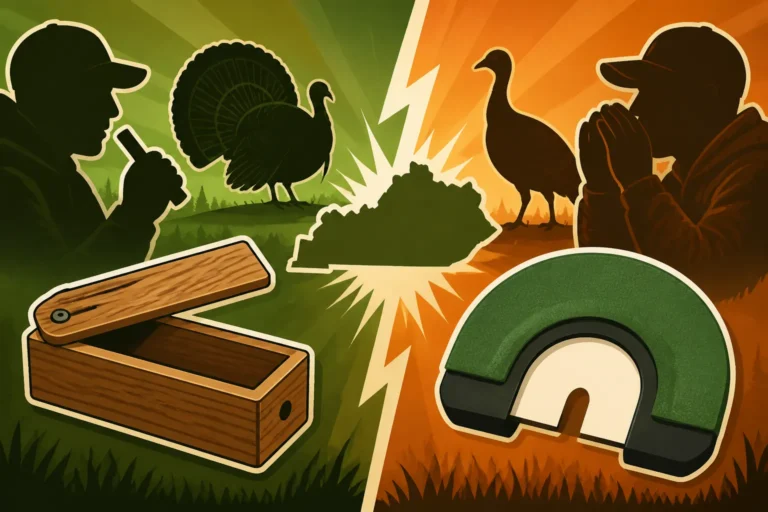
Box calls are a staple for many turkey hunters, celebrated for their ease of use and ability to produce loud, realistic yelps. They consist of a wooden box with a lid that pivots on a screw or nail. By drawing the lid across the lip of the box, you create a friction sound that closely mimics a hen's yelp. Their robust volume and relatively simple operation make them a favorite, especially for beginners or when you need to reach out and touch a gobbler far away across a hollow.
One of the biggest advantages of a box call is its user-friendly nature. Most hunters can pick up a box call and produce a decent yelp within minutes, making it an excellent starting point for new callers. They are particularly effective for getting a shock gobble out of a distant tom or making contact with birds that are roosted a long way off. Their loud, resonant tone cuts through wind and timber, making them excellent for calling across wide-open spaces or deep valleys. However, their primary drawback is that they require two hands to operate, which means you have to put your gun down to call and then pick it up when a bird commits, adding a layer of movement and potential noise. Despite this, a well-tuned box call can be an absolute magnet for gobblers and is a must-have in any Kentucky turkey hunter's vest, especially when covering ground and trying to locate birds.
Locator Calls
Sometimes, the best turkey call isn't a turkey call at all. Locator calls are designed not to imitate a turkey, but rather to provoke a shock gobble from a tom, revealing his location without him thinking a hen is nearby. Common locator calls include owl hoots, crow calls, and coyote howls. The goal is to make a sound that startles the gobbler into giving away his position. This is a crucial step in the early morning, especially when you're trying to figure out where birds are roosted before the sun even thinks about coming up.
An owl hooter, for instance, is perfect for those pre-dawn moments when you're waiting for the woods to wake up. A sharp "hoo-hoo-hoo-hooo-hooo" can often elicit a thunderous gobble from a roosted tom, telling you exactly where to set up for a morning ambush. Crow calls are versatile and can be used throughout the day to pinpoint a gobbler's location, especially after he's flown down. A loud, sharp "caw-caw-caw" will often get a response, even if the bird is tight-lipped about hen sounds. Coyote howlers can be incredibly effective, especially on pressured birds that might be call-shy to traditional turkey sounds. A realistic howl might trick a gobbler into responding, thinking it's a coyote, thereby giving away his position without the pressure of a hen sound. Having a couple of different locator calls in your kit is smart, as some days one might work better than another. It's all about getting that bird to talk, and locator calls are your best bet for breaking the silence.
Mastering the Art of Turkey Calling
Having the right calls is only half the battle; knowing how and when to use them is the true art of turkey hunting. It's a delicate dance of mimicking the wild, reading the bird's mood, and adapting your strategy on the fly. You wouldn't walk into a formal event yelling, and similarly, you shouldn't just randomly blast out a series of yelps in the turkey woods. There's a nuance to it, an understanding of the conversation you're trying to have with that gobbler.
Learning Basic Turkey Sounds
Before you can have a full-blown conversation, you need to learn the basic vocabulary. Turkeys have a surprisingly complex language, but a few core sounds are essential for any hunter. The most fundamental is the yelp, the primary communication call of the hen. It's a series of two to ten clear, two-note calls, typically rising in pitch. Learning to produce a realistic yelp with varying volume and cadence is paramount. This is your "hello" to a gobbler, letting him know a hen is in the area. Practice making a soft, subtle yelp for close-range birds and a louder, more excited yelp for distant toms.
Beyond the yelp, you'll want to master the cluck and purr. A cluck is a single, sharp, short note, often used as a reassuring sound or to get a gobbler's attention when he's close. Purrs are soft, rolling sounds, indicative of a content hen, often used when birds are feeding or just milling about. These are critical for the final stages of calling, when a bird is within sight and you need to whisper those confidence-building sounds to bring him those last few yards. Finally, learning the cutts – sharp, aggressive, irregular yelps – can simulate an excited or bossy hen, often used to provoke a response from a hung-up gobbler or to challenge a dominant tom. These basic sounds form the foundation of your calling repertoire, and once you have them down, you can start to string them together into more complex sequences, much like forming sentences in a conversation.
Practice Makes Perfect
Let's be honest, nobody picks up a turkey call for the first time and sounds like a seasoned pro. It takes practice, and lots of it. Just like learning to play an instrument, consistent effort is key to developing muscle memory, tone control, and realistic cadence. Start by practicing in a low-pressure environment, like your home or backyard. Don't be afraid to record yourself and listen back; you'll be surprised what you hear compared to what you think you're hearing. Listen to recordings of real wild turkeys to get a feel for their natural rhythms and inflections. The Kentucky Department of Fish and Wildlife Resources often has resources or clips of actual turkey sounds, which can be invaluable for comparison.
Vary your practice. Don't just yelp the same way every time. Experiment with soft yelps, loud yelps, excited yelps, and questioning yelps. Try different rhythms and pauses. Practice stringing together yelps, clucks, and purrs into realistic sequences. Work on your volume control, moving from soft, subtle calls to loud, attention-grabbing ones. A great way to gauge your progress is to have a hunting buddy listen and provide honest feedback. The more you practice, the more natural your calling will become, and the less you'll have to think about the mechanics of the call, allowing you to focus on the hunt itself. This dedicated practice is what truly builds confidence, so when you're out in the woods, you know you can make the sounds you need to when it counts.
Reading the Bird's Response
Perhaps the most crucial aspect of turkey calling isn't making the perfect sound, but rather listening to the bird and adjusting your calling accordingly. Turkeys are individuals, and they don't all react the same way. One gobbler might charge in silently, while another might gobble his head off but hang up 100 yards out. Your job is to listen for clues in their responses and modify your calling strategy. If a gobbler is gobbling aggressively and closing the distance, a few soft clucks and purrs might be all it takes to seal the deal. You're trying to sound like a comfortable hen, drawing him in.
However, if he's gobbling less frequently, moving away, or simply hanging up, it's time to change tactics. Maybe he needs to hear a more aggressive hen, so you might switch to some sharp cutts. Or perhaps he's shy, and a little bit of silence is what he really needs to make him curious. Sometimes, a gobbler will approach silently, so constant vigilance is key. Don't assume that because he stopped gobbling, he's gone. He might be sneaking in. Pay attention to how the volume and enthusiasm of his gobble change. A strong, booming gobble suggests he's interested; a softer, more distant one might mean he's losing interest or moving off. Being able to interpret these subtle cues is what separates a good caller from a great one, allowing you to have a dynamic conversation rather than just shouting into the woods. Utilizing tools like the GoHunt app for mapping out terrain and potential travel corridors can also help you anticipate where a gobbler might approach from, making it easier to read his movements and adjust your calling.
Choosing Calls for Different Kentucky Habitats
Kentucky offers a wide array of hunting environments, from expansive agricultural fields to rugged, steep mountains. The type of terrain and cover you're hunting in should heavily influence your choice of turkey calls. What works wonderfully in an open field might be completely ineffective in dense timber, and vice-versa. Understanding the acoustics and visibility of your chosen habitat is key to maximizing your calling effectiveness.
Open Farmland and Field Edges
Hunting turkeys around open farmland and field edges in Kentucky presents a unique set of challenges and opportunities. Birds in these areas often have excellent visibility and are accustomed to vast open spaces. Here, the priority is to project your calls over longer distances and to cut through any ambient noise, like wind rustling through crops. Loud, clear calls are your friends in this scenario.
For reaching out to distant birds in these expansive environments, friction calls with a glass or aluminum surface are fantastic. Their sharp, high-pitched tones can carry for incredible distances, allowing you to make contact with gobblers that are hundreds of yards away. Similarly, a well-tuned box call can produce the volume needed to get a shock gobble from a bird strutting across a distant pasture. You want to use these calls to grab attention and establish contact. Once a bird is headed your way, however, you'll need to scale back the volume. As the gobbler gets closer and approaches the field edge, switch to softer, more subtle mouth calls or a slate call to maintain realism and avoid spooking a bird that can see a long way. The goal is to sound just enticing enough without giving away your exact position with an overly loud call when he's close enough to pinpoint the sound. Remember, turkeys in open areas are often extremely wary due to good visibility, so realism and volume control are paramount. Tools like the GoHunt app can even help you pinpoint subtle terrain features or brush lines along field edges where you might want to focus your calling efforts.
Thick Timber and Mountainous Terrain
Kentucky's thick timber, particularly in the eastern mountains or the rolling hills of the Bluegrass region, demands a different approach to calling. Here, sound can be muffled by dense foliage and rugged topography, and lines of sight are limited. Your calling strategy needs to account for the challenge of projecting sound through heavy cover and the tricky nature of turkeys navigating steep, broken ground.
In these environments, calls that offer good sound penetration without being overwhelmingly loud are often best. Mouth calls shine in thick timber because their hands-free operation allows you to maintain readiness for a shot, which is critical when a bird might pop out unexpectedly at close range. They also allow for subtle, close-quarters calling that doesn't scream "human" through the woods. Slate calls are also excellent for the timber, providing realistic, nuanced sounds that can still carry a reasonable distance without being too harsh. Avoid overly loud calls that might echo or sound unnatural in dense woods, potentially alarming a gobbler. Furthermore, understanding how sound travels up and down ridges is crucial. Wind and Thermals on a Kentucky Ridge play a huge role in how far your call carries and how a gobbler might approach. Sometimes, a soft tree yelp from a mouth call is all it takes to get a roosted bird interested. If you're Still-Hunting Eastern Kentucky Ridges, you'll likely rely more on subtle calling to entice a bird into your limited shooting lanes, rather than trying to blast out loud yelps that might get lost in the topography.
Wet Weather and Creek Bottoms
Hunting in wet weather, a common occurrence during Kentucky's spring turkey season, presents a unique challenge for your calls. Rain, drizzle, and damp conditions can severely affect the performance and sound quality of many traditional turkey calls. Similarly, hunting in damp creek bottoms or flooded timber requires calls that can withstand moisture and still produce clear, consistent sounds.
When the skies open up, or you're wading through soggy bottomlands, mouth calls become your best friend. Since they are used internally, they are largely unaffected by external moisture, allowing you to continue calling effectively even in a downpour. This is a huge advantage when other calls might be compromised. For friction calls, Slate and Glass Calls in Wet Weather react differently. While a slate call can become waterlogged and lose its friction, a glass call often performs better in damp conditions, maintaining a clearer sound. Some hunters even carry a small piece of sandpaper or a conditioning pad to dry and rough up their friction call surfaces. Box calls, being made of wood, are particularly susceptible to moisture, which can warp the wood and change their tone or make them completely useless. If you must use a box call in wet weather, look for models made from synthetic materials or ones specifically designed to be weather-resistant. The key is to protect your calls as much as possible, carrying them in waterproof pouches or pockets, and choosing materials that are inherently more resistant to the elements. Don't let a little rain dampen your spirits or silence your calling efforts!
Maintaining Your Turkey Calls for Longevity
Your turkey calls are tools, and like any good tool, they need proper care and maintenance to perform at their best. Neglecting your calls can lead to poor sound quality, reduced effectiveness, and even premature failure. A well-maintained call not only sounds better but also lasts longer, saving you money and ensuring you're always ready when that opportune moment arises in the spring woods. Just imagine the frustration of a call failing when a gobbler is just out of sight!
Care for Friction Call Surfaces
Friction calls, whether slate, glass, or aluminum, rely on a perfectly conditioned surface to produce crisp, realistic sounds. Over time, oils from your hands, dirt, and moisture can contaminate the surface, causing the striker to slip and produce a weak or scratchy sound. The good news is that maintaining these calls is relatively simple.
For slate and glass calls, you'll need a conditioning pad or a piece of fine-grit sandpaper (around 220-320 grit). After each hunt or if your call starts to sound off, gently scuff the surface in a circular motion to remove any oils or glazing. This creates a fresh, porous surface for the striker to grip. Always keep your conditioning pad handy in your vest; it's a quick fix in the field. For aluminum calls, a Scotch-Brite pad works wonders to keep the surface rough and ready. Always store your friction calls with the striker separate from the pot, or with the striker placed in a dedicated slot or pouch, to prevent accidental scratching or wear on the call surface. Moisture is also a significant enemy; if your call gets wet, dry it thoroughly before storing. Many hunters carry a small piece of chalk to rub on their striker tips to improve grip, especially with slate calls. Proper care ensures that your call always produces that sweet, irresistible turkey music.
Keeping Mouth Calls Clean and Sanitary
Mouth diaphragm calls, while incredibly effective, require a different kind of maintenance focused on hygiene and preventing the reeds from sticking. Since these calls are placed directly in your mouth, they can accumulate saliva, food particles, and bacteria, which is not only unsanitary but can also affect the call's performance.
After each use, especially at the end of a hunting day, remove your mouth call and rinse it thoroughly with clean water. You can even use a mild mouthwash or a dedicated call cleaning solution to kill bacteria and keep it fresh. Just be sure to rinse it well afterward to remove any residue. Once clean, shake out excess water and allow the call to air dry completely. Many hunters store their mouth calls in a small, breathable case or a vented container to prevent mildew and keep the reeds from sticking together. Never store a wet mouth call in an airtight container, as this encourages bacterial growth. If your reeds start to stick, a small piece of wax paper inserted between them during storage can help. Some calls also come with a protective cover for the reeds, which is a good idea to use. By keeping your mouth calls clean, you ensure they're hygienic and ready to produce those critical yelps, clucks, and purrs when you need them most.
Box Call Maintenance and Conditioning
Box calls are robust, but they too benefit from regular maintenance to keep them singing beautifully. The primary components to care for are the paddle and the soundboards. Over time, the paddle can become slick, reducing the friction needed to create good sound.
The most common maintenance for a box call involves conditioning the paddle. Most box calls come with a small block of chalk or a piece of sandpaper. Periodically, you'll want to gently scuff the underside of the paddle where it contacts the soundboards, and sometimes the very top edges of the soundboards themselves. This creates friction and allows the call to produce clear, crisp notes. If your call starts to sound squeaky or dull, a quick re-chalking or light sanding can often restore its voice. Be careful not to over-sand, as this can permanently alter the call's tone. Moisture is a box call's nemesis; prolonged exposure to rain or humidity can warp the wood, rendering the call useless. Always store your box call in a protective pouch or a zippered pocket when not in use, especially in damp conditions. If it does get wet, let it air dry completely before re-conditioning. Some hunters will even use a very light coat of furniture wax on the exterior (avoiding the playing surfaces) to help protect the wood. Proper care ensures your Box Calls Versus Mouth Calls debate in the field always results in a well-performing call.
| Call Type | Pros | Cons | Best Use Cases in Kentucky |
|---|---|---|---|
| Slate Call | Soft, realistic, subtle tones | Affected by moisture, two-handed | Close-in work, quiet mornings, soft purrs and clucks |
| Glass Call | Crisp, loud, good range, clear tones | Can be piercing, two-handed | Reaching distant birds, windy days, excited yelps |
| Aluminum Call | Very loud, piercing, excellent range | Can be less realistic for soft calls | Locator calls, windy conditions, aggressive cutts |
| Mouth Call | Hands-free, versatile, wide range | Steep learning curve, hygiene required | Close-quarters, run-and-gun, final stages of calling |
| Box Call | Easy to learn, loud, good volume | Two-handed, susceptible to moisture, bulky | Locating distant birds, open fields, covering ground |
| Owl Hooter | Excellent locator call, pre-dawn | Not a turkey sound, can spook close birds | Roost locating, early morning scouting |
| Crow Call | Good locator call, day-long use | Can be overused, not a turkey sound | Locating birds throughout the day, shock gobbling |
| Coyote Howler | Unique locator, works on call-shy birds | Not a turkey sound, can be aggressive | Locating pressured birds, eliciting surprise gobble |
Ethical Considerations and Call Effectiveness
Beyond the mechanics of calling, there are ethical considerations that every hunter should keep in mind. Turkey hunting is about fair chase, respect for the animal, and presenting a realistic scenario. The goal isn't just to make noise, but to have a genuine interaction with a wild creature on its terms, using your skills to draw it into range.
Realistic Calling for Fair Chase
The essence of fair chase hunting lies in giving the animal a reasonable chance. When it comes to calling, this means striving for realism. While it might be tempting to use exaggerated or overly aggressive calling to try and force a gobbler's hand, truly effective calling mimics the natural vocalizations of turkeys. You want to sound like a real hen, not a turkey call being operated by a human. This involves not only producing accurate sounds but also understanding the context and cadence of those sounds.
A series of gentle yelps, clucks, and purrs, strategically placed and varied, is far more convincing than a repetitive, monotone blasting of sounds. Think about what a real hen would do. She wouldn't sit in one spot and continuously yelp for hours. She'd call, listen, move, feed, and interact. Your calling should reflect this natural behavior. It's about drawing the bird in by appealing to its natural instincts, not by overwhelming it with artificial noise. This means listening intently, adjusting your calls based on the bird's responses, and sometimes, knowing when to be silent. It’s also crucial to remember that Turkey Decoys That Work on Pressured Birds often enhance the realism of your calling setup by giving a visual component to your auditory invitation. The goal is to create an illusion that is believable, drawing the turkey closer through genuine interest, which is the heart of fair chase hunting.
Avoiding Over-Calling
One of the most common mistakes new turkey hunters make, and sometimes even seasoned ones, is over-calling. The excitement of a gobbler responding can lead to an urge to continually call, thinking more calling equals more interest. Often, the opposite is true. Turkeys, especially older, wiser gobblers in areas with significant hunting pressure, can become call-shy. They learn that aggressive, constant calling often leads to danger.
Think of it like this: if you were trying to find someone, and they kept shouting at you from the same spot without moving, wouldn't you get suspicious? A real hen calls, then waits. She moves, she feeds, she sometimes goes silent. Giving a gobbler some space and some silence can often pique his curiosity more than relentless yelping. If he's gobbling consistently and closing the distance, a few soft clucks or purrs might be all you need to keep him coming those last few yards. If he hangs up, try subtle calls, then silence, and see if he moves in to investigate the "quiet hen." Knowing When Kentucky Gobblers Go Quiet in May can also inform your decision to back off the calls. Sometimes, the most effective call is no call at all. It takes discipline, but learning to be patient and letting the bird work the distance on his own terms can often be more fruitful than constant chatter.
Understanding Call Limitations
While turkey calls are incredibly effective tools, they are not magic wands. They have limitations, and understanding these limitations is crucial for managing your expectations and making smart hunting decisions. A call can attract a bird, but it can't overcome every obstacle or guarantee a shot opportunity.
For example, a call cannot make a gobbler cross a major creek he's unwilling to cross, or fly over an impenetrable fence line. It can't magically make him appear if he's already committed to going in the opposite direction. Environmental factors like heavy wind, rain, or dense foliage can significantly reduce the range and effectiveness of your calls. Similarly, a bird that has been heavily pressured or has already been "called to" by several other hunters might simply ignore even the most perfect yelps. Your calling is one piece of the puzzle, but it must be combined with good scouting, strategic setup, camouflage, and patience. Relying too heavily on calling alone without considering the terrain, weather, or the bird's mood can lead to frustration. Instead, view your calls as a way to initiate a conversation and guide the bird, but be ready to adapt, move, or even pack up and try another spot if the birds aren't responding. Remember, scouting with tools like the GoHunt app to identify optimal setups and potential hang-up spots is just as critical as your calling prowess.
Disclaimer
This article is for general informational purposes only and does not constitute professional advice. Laws, prices and regulations vary by location and change over time. Consult a qualified professional for guidance on your specific situation.