Lincoln County Public Land Access
It's incredibly frustrating, isn't it, when you're trying to pin down a good hunting spot in a county that doesn't immediately scream "public land paradise"? Many of us hunters get fixated on the big, well-known tracts, but often overlook the hidden gems or smaller, accessible parcels right under our noses. This guide is here to walk you through the nuances of finding and making the most of public land access in Lincoln County, Kentucky, offering practical strategies to help you fill your tag even in seemingly less obvious areas.
Understanding Public Land Opportunities in Lincoln County
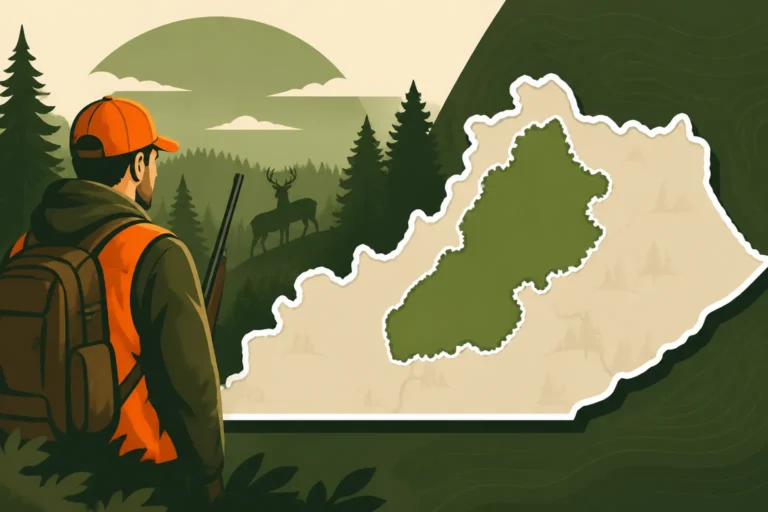
When you hear "public land hunting in Kentucky," your mind probably jumps to the vast expanses of Daniel Boone National Forest or the sprawling Land Between the Lakes. Lincoln County, sitting in the central-southeastern part of the state, doesn't boast those kinds of massive, contiguous public holdings. This can lead to a lot of head-scratching and wasted time for hunters trying to navigate maps and find legitimate access. The reality is that public land in counties like Lincoln often takes a different form, demanding a slightly different approach and a keen eye for detail. It's not about finding hundreds of thousands of acres; it's about identifying and maximizing the potential of smaller, often dispersed tracts that still hold game.
Small Tracts and Dispersed Holdings
What often constitutes "public land" in a county like Lincoln are smaller, sometimes fragmented parcels managed by the Kentucky Department of Fish and Wildlife Resources (KDFWR), or perhaps even state forest lands that might have a small footprint within the county boundaries. These aren't the kind of places you'll typically find a bustling main gate or a big, marked trailhead. Instead, they might be odd-shaped pieces of timber, old clear-cuts, or stream bottoms tucked away, sometimes only accessible by a small easement or through a forgotten dirt road.
The beauty of these smaller tracts, despite their size, is that they often get less pressure simply because they're not as obvious or don't fit the mold of what many hunters expect from public land. They require a bit more legwork in the scouting phase, but that effort can pay off with surprising solitude and quality hunting experiences. Think about a 50-acre block of woods that borders a large private farm – that small public piece can act as a crucial bedding or staging area for deer moving between feeding locations. Learning to identify these types of areas is key.
The Role of Neighboring Public Lands
While Lincoln County itself might have limited large public offerings, it's crucial to consider its proximity to other significant public hunting areas. For instance, parts of the Daniel Boone National Forest aren't too far east, and other Wildlife Management Areas (WMAs) like Green River Lake Public Hunting Ground are within a reasonable drive. Understanding how game moves out of these larger, more pressured areas and into adjacent private or smaller public lands in surrounding counties can be a game-changer.
Deer, turkeys, and even some small game don't recognize county lines. A big buck pushed off a heavily hunted national forest tract might seek refuge in a less disturbed, smaller public woodlot or a landowner's property in Lincoln County. Knowing this, you can adjust your scouting and hunting strategies. For example, if you know a particular WMA or forest tract gets hammered during opening week of gun season, those smaller, overlooked public parcels in Lincoln County that lie within a few miles could become sanctuaries for displaced game. It's about thinking regionally and understanding game movement patterns, not just focusing on what's explicitly within one county's borders.
Navigating and Scouting Lincoln County's Public Hunting Spots
Finding these smaller, often less-publicized tracts requires a blend of modern technology and old-fashioned boots-on-the-ground effort. You can't just drive down the road and expect to see big "Public Hunting" signs everywhere. Success here hinges on diligent research and a willingness to explore.
Leveraging Digital Mapping Tools
In today's hunting world, digital mapping tools are absolutely indispensable, especially when dealing with fragmented public land access. Services like onX Hunt and GoHunt are worth their weight in gold for identifying obscure public parcels in counties like Lincoln. These apps allow you to overlay property lines, view satellite imagery, and identify landowners for adjacent private parcels – a critical feature if you're thinking about asking for permission.
Here’s how to make them work for you:
- Identify Public Land: Start by using the public/private land layers to highlight every piece of accessible ground in Lincoln County. Don't just look for big blocks; zoom in and find those smaller, often overlooked tracts. Sometimes these are small KDFWR easements or public fishing access sites that allow hunting.
- Analyze Topography: Once you've found a public parcel, switch to the topographic view. Look for natural funnels, saddles, benches, and thick cover. These are the terrain features that deer and other game animals naturally use for travel and bedding. Even a small 20-acre woodlot can have a subtle ridge or a creek bottom that funnels game.
- Scrutinize Satellite Imagery: High-resolution satellite imagery can reveal old logging roads, forgotten food plots (even if grown over), water sources, and the edges of standing crops on adjacent private land. These details can be impossible to see from a road. For example, you might spot a dense briar thicket in an otherwise open woods that serves as an excellent bedding area.
- Identify Access Points: Don't assume road frontage means legal access. Use the mapping tools to identify official parking areas, easements, or walk-in access points. Sometimes, you might need to park a little further away and walk in to reach a less-pressured corner of a small tract. Scouting Kentucky Public Land Before Season is all about this kind of detailed pre-season work.
Ground Scouting and Interpreting Sign
While digital maps get you in the ballpark, there's no substitute for putting boots on the ground. Once you've identified a promising small public tract in Lincoln County, it's time to physically scout it.
- Walk the Boundaries: Even if you see a boundary line on your map, walk the actual physical line. Look for property markers, fences, or changes in vegetation that denote the edge of public land. This also helps you understand what private land borders your hunting area, which is vital for ethical hunting and game retrieval.
- Locate Water and Food Sources: Even small public parcels usually have some form of water, whether it's a small creek, a spring, or a low-lying area that holds moisture. Identify any mast crops (oaks, hickory, persimmon) or browse available. In agricultural areas, look for tracks or trails leading to adjacent crop fields.
- Find Natural Funnels and Bottlenecks: On smaller tracts, understanding how deer move through the landscape is even more critical. Look for places where terrain features pinch down their movement, like a narrow strip of timber between two fields, a creek crossing, or a saddle between two small hills. These are prime ambush points.
- Read the Sign: Look for fresh deer sign: rubs, scrapes, fresh tracks, and well-used trails. Pay attention to the size of the tracks and rubs – they can give you an idea of the quality of bucks using the area. For turkeys, look for scratchings, droppings, and potential roost trees, often large mature trees near water. Remember, Reading a Ridge for Cumberland Deer principles can apply to smaller ridges and elevation changes in Lincoln County as well, helping you understand how deer use those features.
| Feature | Large Public Forests (e.g., Daniel Boone) | Small Public Tracts (e.g., Lincoln County) |
|---|---|---|
| Size | Vast, thousands of acres | Smaller, 20-200 acres typically |
| Pressure | Can be high in accessible areas, but vastness allows escape | Varies, can be high if easily found, but low if obscure |
| Access | Often well-marked trailheads, forest roads | May be less obvious, easements, or walk-in only |
| Game Density | Good, but spread out. May need to cover significant ground. | Can be surprisingly good if bordering private agricultural land or dense cover. |
| Strategy | Deep woods hunting, long hikes, covering lots of ground | More focused, ambush hunting, exploiting funnels and edges |
| Tools | Maps, compass, GPS, physically demanding scouting | Detailed digital maps (onX Hunt), intense ground scouting |
| Solitude | Possible, especially deep in. | Possible if you find truly overlooked parcels. |
Strategies for Hunting Smaller Public Tracts in Lincoln County
Hunting smaller parcels of public land, like those often found in Lincoln County, isn't just about finding the spot; it's about employing smart strategies that account for size limitations, potential pressure, and game movement. You can't always just walk miles in and expect to be away from other hunters. It demands a more nuanced approach.
Adapting Your Hunting Approach
Since you're working with less ground, every move matters. Your hunting style might need to be more precise and less expansive than on larger tracts.
- Stealth and Entry/Exit Routes: On smaller parcels, your entry and exit can make or break a hunt. Plan your approach carefully, especially if you're coming in before dawn or leaving after dusk. Avoid walking through bedding areas or high-traffic zones. If possible, use natural terrain features or thick cover to mask your movement. You might only get one chance at a mature animal if you spook it on a small piece of ground.
- Ground Blinds and Natural Cover: A permanent treestand might not be feasible or legal on some smaller public tracts (always check specific WMA rules regarding stand placement). This is where portable ground blinds, or simply using natural cover, shines. Setting up a brushed-in ground blind on a field edge or in a thicket can be incredibly effective. Using a Ground Blind on Kentucky Public Land can provide excellent concealment and a contained scent cone, which is critical in tight quarters. Remember, in Kentucky, ground blinds on public land generally need to be removed at the end of the season unless specified otherwise.
- Still-Hunting and Mini-Drives: For truly small, thick pockets of public land, still-hunting can be very productive. Move slowly, taking one or two steps, then pausing and scanning for several minutes. Use your binoculars to pick apart thick cover. Alternatively, if hunting with a small group and it's permissible, a very small, quiet deer drive with two or three hunters can sometimes push deer out of a thicket into a waiting hunter. Just ensure everyone is on the same page regarding safety and property lines.
- Hunting the Edges: Often, the most productive hunting on small public tracts happens along the edges, especially where public land meets private agricultural fields or dense, undisturbed timber. Deer will often stage in the public timber before moving out to feed, or bed down just inside the public boundary after feeding. Focus on these transition zones during prime morning and evening hours.
Understanding Pressure and Off-Season Tactics
Public land, even small parcels, can experience hunting pressure, especially on opening day or weekends. Learning to anticipate and mitigate this pressure is key to success.
- Timing is Everything: If possible, hunt during weekdays when other hunters are at work. The woods will generally be quieter, and deer may resume more natural movement patterns. Hunting during less popular seasons, like the late muzzleloader or even the late archery season that runs into January, can also reduce pressure. Hunting the Late-Season January Lull can be a fantastic time to find success when other hunters have packed it in.
- Hunt the Overlooked: Don't just follow the most obvious trails. Look for the nastiest, thickest, most inconvenient places on your map – the areas that most hunters will walk past because they're too difficult to access or navigate. These often become sanctuaries for mature bucks. Finding Ground Others Walk Past is a principle that applies across all public lands, big or small. This could mean crossing a creek, climbing a steep bank, or pushing through a thorny thicket.
- Off-Season Scouting: The work doesn't stop when the season ends. Off-season scouting, especially in late winter or early spring, is invaluable for understanding game movement without the pressure of foliage. You can clearly see old rub lines, trails, and bedding areas. Shed Hunting on Kentucky Public Land is an excellent way to combine scouting with a potential bonus find. It helps you learn the lay of the land, identify new funnels, and plan future hunts. Pay attention to how the land changes throughout the year.
Rules, Regulations, and Respecting Land in Lincoln County
Hunting on public land, regardless of its size or location, comes with a set of responsibilities. It's crucial to know the rules, respect the land, and maintain good relations with neighboring landowners.
Kentucky Regulations on Public Land
While most general Kentucky hunting regulations apply statewide, specific public hunting areas might have additional rules regarding weapons, season dates, or other restrictions. Always double-check the KDFWR hunting guide and any specific signage or online information for the particular public tract you plan to hunt in Lincoln County.
- License and Permits: You'll need a valid Kentucky hunting license and appropriate permits for the game you're pursuing. Always carry proof of your license and permits with you. If you're hunting a WMA, there might be a Kentucky WMA Permit Requirement.
- Blaze Orange/Pink: During firearm seasons, Kentucky Blaze Orange Requirements are in effect for all hunters on public lands. Always wear the required amount of hunter orange (or blaze pink, which is also legal in Kentucky) for your safety and the safety of others.
- Harvest Reporting: After harvesting a deer or turkey, you are legally required to report it through the Kentucky Telecheck system. Kentucky Deer Harvest Reporting Rules are crucial to follow, and doing so accurately helps the KDFWR manage populations effectively.
- Property Lines and Boundaries: Be absolutely certain of the property lines of the public land you're hunting. Digital mapping apps like onX Hunt can show these lines, but it's your responsibility to confirm them on the ground. Never trespass onto private land, even in pursuit of wounded game, without explicit permission.
Ethical Considerations and Neighbor Relations
When hunting smaller public parcels, you're often in close proximity to private landowners. Being a good steward of the land and a respectful neighbor is paramount.
- Respect Private Property: Even if a deer runs onto private land after being shot, you cannot legally pursue it without permission from the landowner. This can be a tough pill to swallow, but it's the law. Develop a relationship with adjacent landowners if possible; knocking on doors before the season to introduce yourself and ask for permission to retrieve game is a great practice. Do You Need Written Permission in Kentucky? for game retrieval? Yes, absolutely.
- Leave No Trace: Pack out everything you pack in, including spent shell casings, food wrappers, and anything else. Minimize your impact on the land. Treat public land as if it were your own cherished private property.
- Minimize Disturbance: Avoid making excessive noise or leaving trash that could annoy nearby residents or other hunters. Park thoughtfully, ensuring you're not blocking private driveways or access roads. Your actions reflect on all hunters, so always strive to represent our community positively.
- Reporting Violations: If you witness illegal activity, such as poaching or trespassing, report it to the KDFWR. Protecting public land and its wildlife resources benefits all of us.
Hunting in Lincoln County might not offer the vast wilderness experience of some other parts of Kentucky, but with careful planning, smart scouting using tools like onX Hunt or GoHunt, and an adaptable hunting strategy, you can find some fantastic opportunities. It's about working smarter, not just harder, and truly understanding the landscape you're on, no matter its size.
Disclaimer
This article is for general informational purposes only and does not constitute professional advice. Laws, prices and regulations vary by location and change over time. Consult a qualified professional for guidance on your specific situation.